One thing I've come to understand after 20 years as a student is that learning how to learn is deceptively important. Problems present themselves all the time, and having an approach for tackling them, even the basic ones can be very helpful. Having a plan aids in directing our attention to things that will help solve that problem.
With this in mind, and considering some recent feedback I thought I'd share a basic template you can use for improving areas of your game.
Today I spent some time working on my play with pocket pairs after the flop with an emphasis on marginal situations. Here's how I decided to go about it.
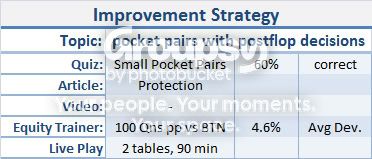
First i took a quiz that I expected would be difficult, and there are some good reasons for this.
Difficult tests, even ones that are nearly impossible to get perfect, have been linked to increases in long term learning. This has been supported scientifically, and is changing the way tests are administered in schools.
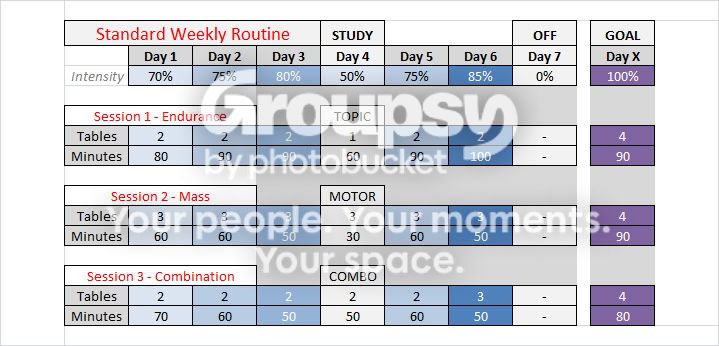
Second, I played the first session of the day 6 (see weekly plan) and made sure to use some of what i had learned after reading the justification for correct answers.
Then I used the equity trainer in equilab and used the Button ORC range vs all pocket pairs.
After that I read an article about protection (recommended from the Quiz results) to understand how I ought to play postflop with hands that are likely to be ahead BUT are unlikely to benefit from turn and river cards.
Having done these things I now know how to play pocket pairs better, and this is a fact. By taking an organized approach to learning I can be confident that I have in fact improved my game, and this confidence is important. Without knowing for sure I could easily squander my efforts to improve by failing to follow this approach next time around. Instead the confidence I've gained will aid me in future learning and will continue to improve my game in the long run.





 But what impressed me more when I look through your blog - is methodical way you learn and play poker.