

River
In This Guide
Quick Facts by PokerStrategy
- The river is where more money is won and lost than any other street in poker.
- A single river card can turn the best hand into a loser — or a bluff into a winner.
- River decisions carry the highest stakes: no more cards are coming.
- In Texas Hold’em and Omaha, the river is the fifth and final community card.
What Is the River in Poker?
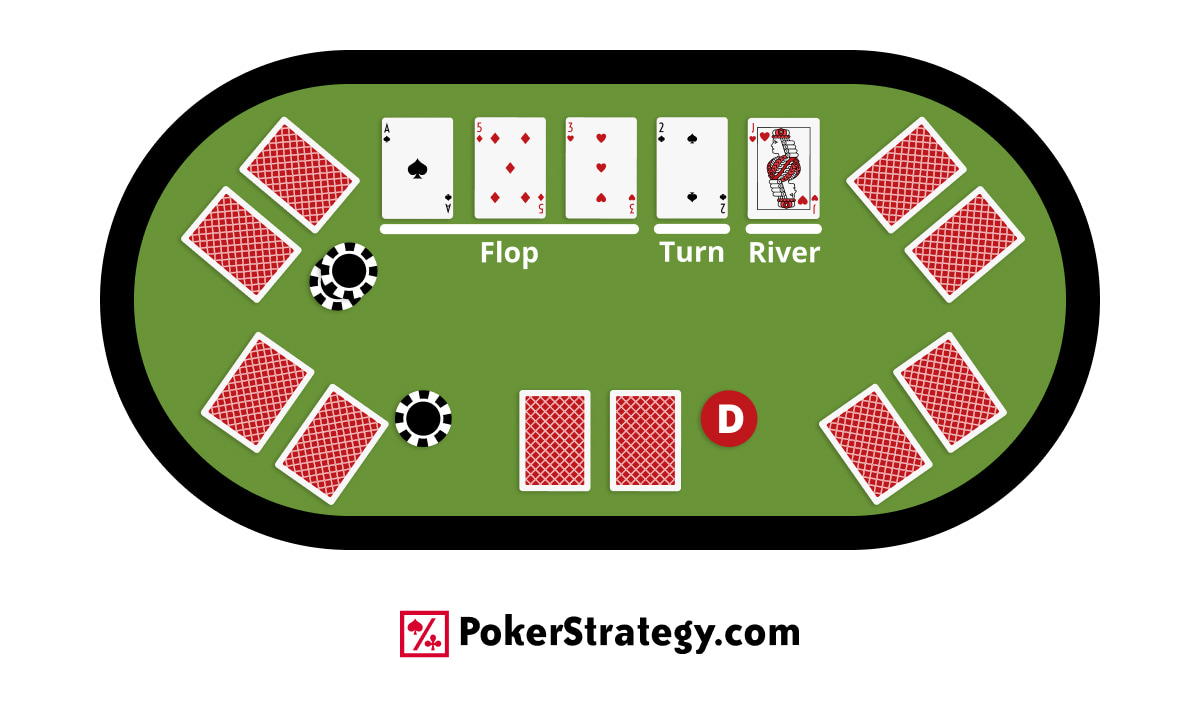
The river is the fifth and final community card in games like Texas Hold’em and Omaha — but more than that, it’s the card that settles everything.
Straights complete, flushes hit or miss, and bluffs either succeed or get called. By the time the river is dealt, there’s nowhere left to hide. Technically, the river (also called fifth street) is dealt face-up on the board after the turn and its betting round.
Players combine it with the four community cards already on the board and their hole cards to make the best possible five-card hand. Because no further cards are coming, every decision on the river — bet, raise, call, or fold — is made with complete information and carries permanent consequences.
River-Associated Terms
Several terms and phrases are associated with the river:
- Rivered: When a player produces an outstanding improvement in his or her hand through the river card, typically from behind. Example: Getting a flush on the river.
- River rat: A lighthearted expression when an individual appears to be getting lucky every time on the river.
- Bad beat: A strong hand that is defeated by an unlikely stronger hand that was created on the river.
- Sucked out: Similar to being rivered, this is where one loses a hand due to the fact that the opponent creates an improbable card on the river.
These terms come up regularly whether you’re playing live or on online poker sites, and they reflect the emotionally charged nature of the river card.
The River’s Strategic Significance
The river is the most consequential street in poker because all five community cards are visible and no further cards are coming — every decision is final.
A player must weigh their hand strength against likely opponent holdings and decide whether to bet for value, bluff, call, or fold with no safety net. Pot commitment also plays a role: players who have invested heavily may continue with marginal hands, making river decisions as much about reading the situation as evaluating cards.
River Rules & Etiquette
The river follows specific dealing rules and carries its own etiquette expectations.
- Dealing the river: After betting on the fourth community card (the turn) and the subsequent round of betting, one card is discarded (consequently burned) prior to dealing the river card face up.
- Betting on the river: A last round of betting follows. The first active player to the left of the dealer button acts first.
- Showdown: If two or more players remain after betting, there is a showdown. The best five-card hand takes the pot.
- Misleads and slow rolls: Deceptive behavior, such as pretending to have a better or inferior hand, is not tolerated. A slow roll – intentionally taking time to disclose a winning hand – is bad form.
Properly making river decisions and exhibiting good etiquette are necessary elements of poker professionalism.
The River in Different Poker Variants
Although the river may be somewhat standard across different versions of poker, there are certain differences that all players should be aware of. These help you understand how to bet and what to expect from your opponents.
Texas Hold’em
The river is the fifth and final community card, dealt face-up after the turn and its betting round. What makes it distinct is that all players share it — combined with two hole cards, it determines the final strength of every hand still in play.
Omaha
The river works the same way as in Hold’em — fifth community card, final betting round — but players must use exactly two of their four hole cards combined with exactly three community cards. This makes the river more volatile in Omaha, as more possible hand combinations means more draws are chasing to the end.
Seven Card Stud
In Stud, there are no community cards — the river is the seventh and final card dealt exclusively to each individual player, face down. Unlike Hold’em and Omaha, where all players share the river card, in Stud, your river card is private, making it impossible for opponents to know exactly what it contributed to your hand.
River Example
For instance, in a game of Texas Hold’em:
- Player A’s hand: A♠ Q♠
- Player B’s hand: 9♣ 9♦
- Community Cards: 2♠ 5♠ K♣ 9♠ [River: J♠]
At the river, the fourth ♠ gives Player A their nut flush with A♠ Q♠, over Player B’s three-of-a-kind (nines set). This shows how the river card in poker can completely change the outcome of a hand.
Poker History’s Legendary River Moments
There is one well-known moment that occurred in the 2003 WSOP Main Event:
- Chris Moneymaker vs. Sam Farha
- Moneymaker held 5♦ 4♠
- The board was J♠ 5♠ 4♣ 8♠ [River: 5♣]
Moneymaker got a full house on the river (fives full of fours), catching Farha and winning the hand. This was one of the highlights that contributed to the poker boom and illustrated the river drama.