Calling squeezes l Strategy with Barry
What hands play well when an opponent has squeezed, and a third player is still left to act?

I started doing a lot of work on multi-way strategy recently (very early spoiler alert) because there is a book coming down the line. This week I have been looking at how to respond to squeezes pre-flop.
When there has been a raise and a re-raise before you pre-flop, solvers like the one I'm using today GTO Strategy will almost never flat call. This is because the initial opener has the potential to re-open the betting action and come over the top of you, which solvers absolutely hate.
However, when facing squeezes, the solvers do typically have a calling range for the initial opener. It struck me as a very similar situation to the raise and re-raise one before because there is the potential for the next player to act to reopen the betting action. So why are they different?
Capped vs uncapped
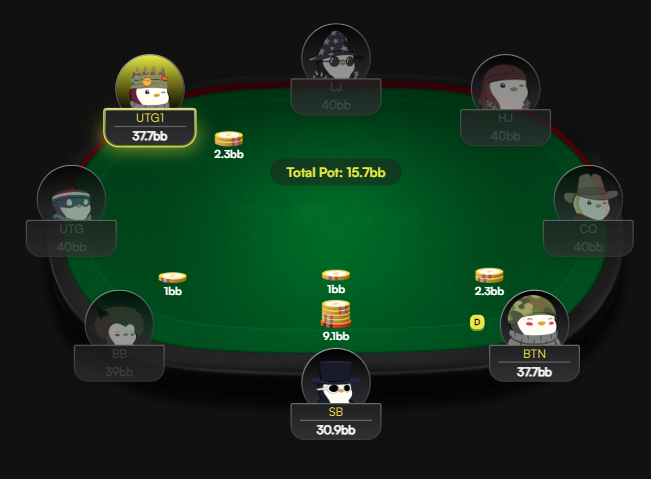
This is the spot we are looking at. It's 40bbs effective, and UTG1 has opened. The BTN has flat called, and now the SB has squeezed to 9bbs.
When it comes back around to UTG 1, this is what they do:
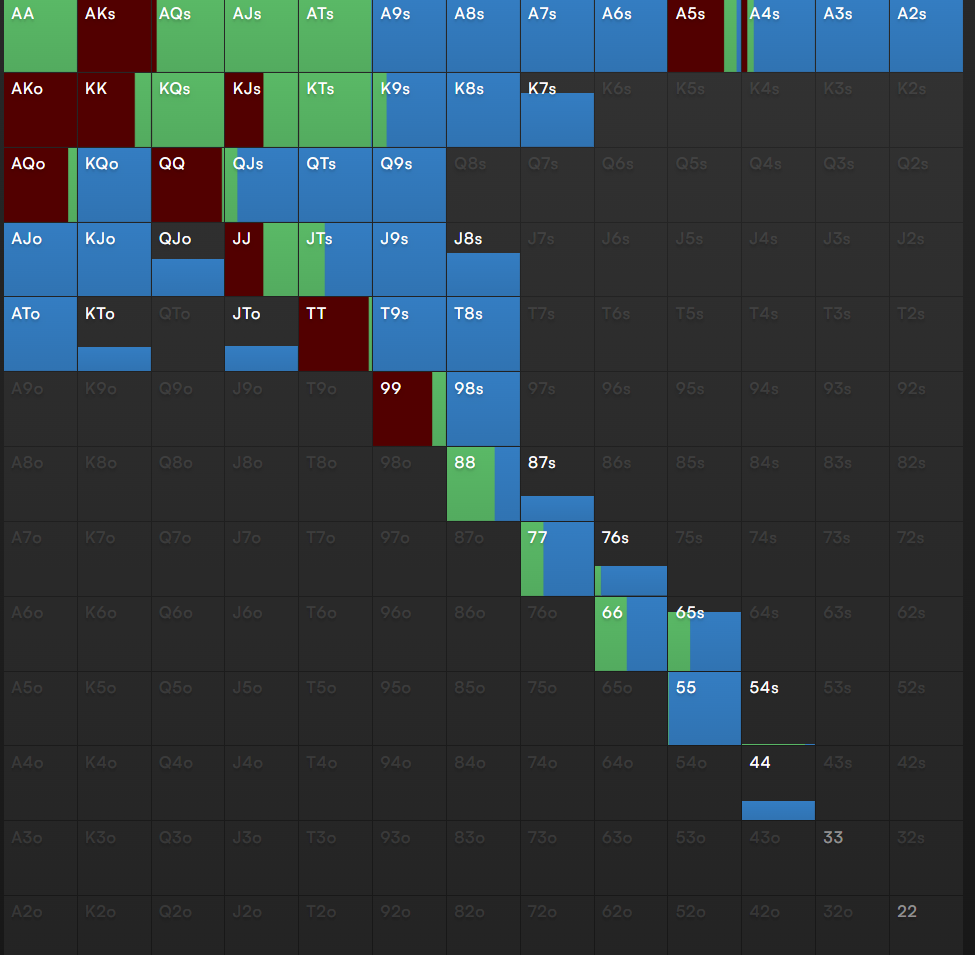
They mostly fold, but have an equal mix of shoving and calling.
You'll notice that the hands that choose to call fit the same criteria we have previously looked at for multi-way pots, which are hands with nutted potential, like suited broadway and medium pocket pairs.
You'll also see AA is in there as a trap. This is because the stack-to-pot ratio is going to be so low that we are not going to be concerned about getting the money in post-flop against two players.
When UTG1 calls, this is what the BTN does:
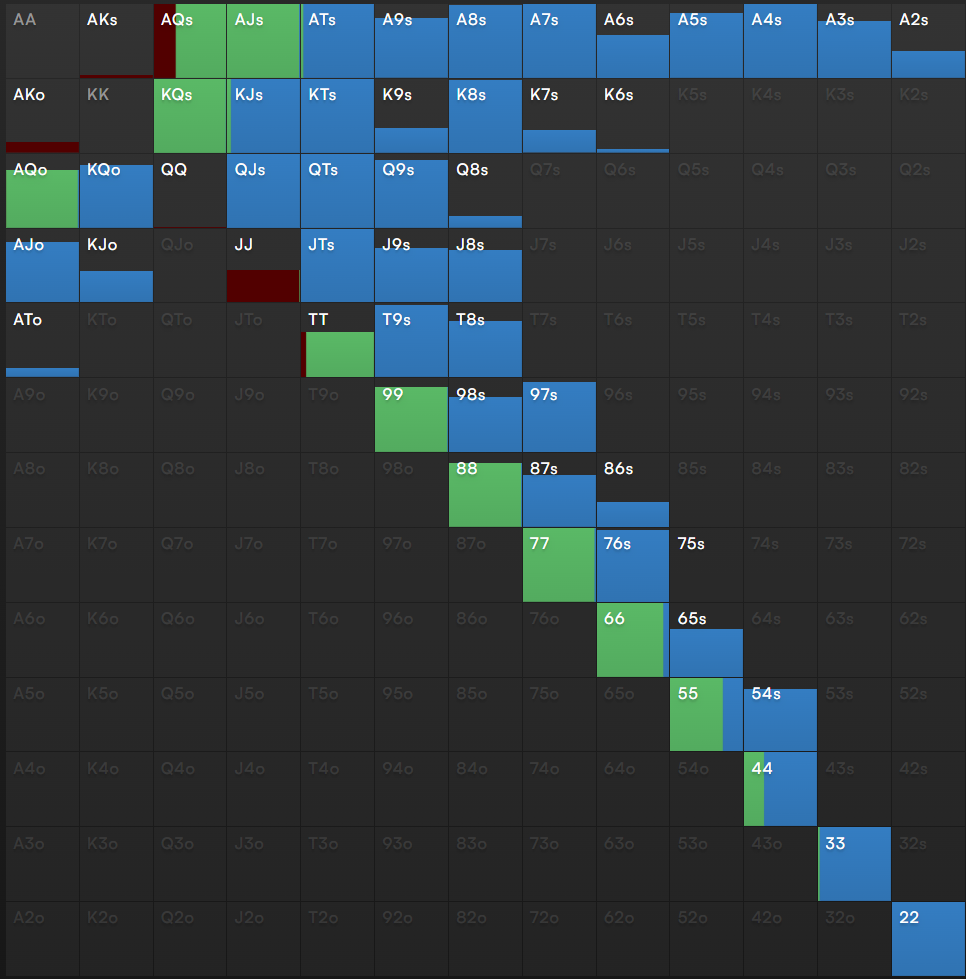
Even more folding relatively, but this time when they do continue, it is mostly calling, from the same types of hands. One of the reasons why we see more calling here is because UTG1 has protected their calling range by flatting with AA. The other reason we see more calling from the BTN is because in this instance they get to close the action.
So why is UTG1 happy to call even though the BTN could reopen the action?
The main reason is that the first player to act after the squeeze is far less concerned about the next player to act, by comparison, to a raise and re-raise scenario. When we are facing a raise and a re-raise, we don't flat because when the action returns to the initial opener, they are uncapped. By that, we mean they still have all the very strong hands in their range. They opened with AA, KK etc.
In comparison, UTG1 in this example is much happier to call the squeeze because they know the BTN is capped. They know the BTN is unlikely to have the very strong hands like AA and KK, because they would have raised with them initially.
The BTN, however, does not want to raise after the UTG1 calls because he is facing two uncapped ranges. We have already identified that the UTG1 is uncapped because they flatted the squeeze with AA. Likewise, the SB is uncapped because they squeezed with a very strong range that includes all the very strong hands. As a result, the BTN is forced to call with most of their continues, and UTG1 knows this, which makes it easier for them to call the squeeze.
This is a principal lesson of multi-way strategy. It's very important to know who is capped and uncapped at any point in the hand.