


How poker was played 10 years ago, part 2
Wow, really? Those were the winning strategies?
Overpairs and TPs are played for stacks with 100 bbs

This was a popular saying in the hand evaluation forum back in the day. The idea being that you shouldn’t 3bet a hand that you are not ready to invest in the whole stack with. If so, you should just call with it.
It is still more or less true today, but ugly boards and very weak kickers might change this assessment.
Aggressive play with weak to medium hands on the flop OOP w/o initiative

The idea was to protect the hand and take the pot right here, right now. We want to end the hand as quickly as possible because we are most likely ahead but very vulnerable and OOP w/o initiative so we have very few options but to play our hand well on the next street.
However, you should understand that when you called, you also risked finding yourself in a very difficult and expensive spot on the turn with a weak hand. You should always think in terms of equity and ranges, and these old rules are just too simplified.
Calling 4-bets is a no-no
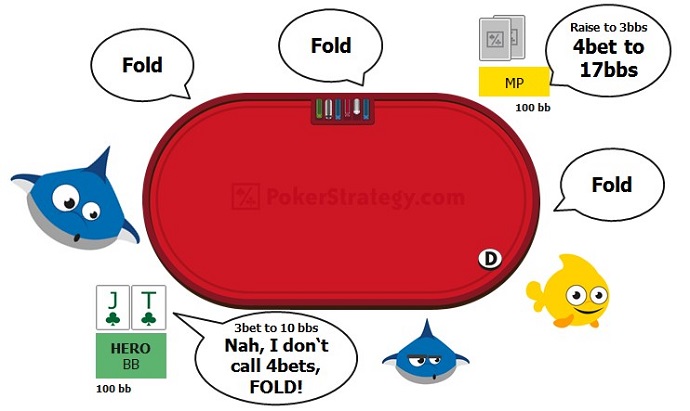
If we don’t have a calling range vs 4-bets, it’s easier for our opponent to develop a good 4-bet strategy against us.
He will simply 4-bet the best hands by value, call with hands that are too weak to 4-bet for value but still strong enough to call against our 3-betting range, while bluff with the hands that are even weaker and fold the rest. That’s a polarised 4-bet range.
But wait, there is an even easier strategy. If your opponent doesn't call 4-bets, just 4-bet with a very small sizing all of the time and you will make a ton of money!
However if we start calling his 4-bets, equity suddenly becomes very important, and he will have to depolarise his range which is not always that easy.
Changing and mixing your betting lines to confuse your opponent
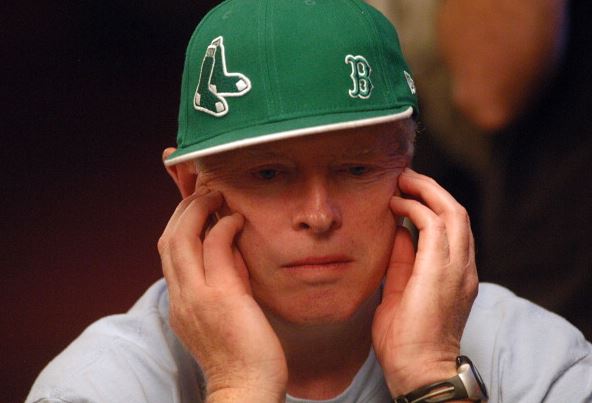
That was Harrington's advice in 2008.
Mixing makes sense when both lines are equally profitable. Otherwise, we should always choose the line with the highest EV. We can always adapt our lines if there is a reason to do so. For example, in order to exploit our opponent, but that’s a whole different story.
Today, instead of doing random stuff from time to time, we achieve the same goal by having balanced ranges.
The fundamental theorem of poker, Sklansky bucks and G-bucks
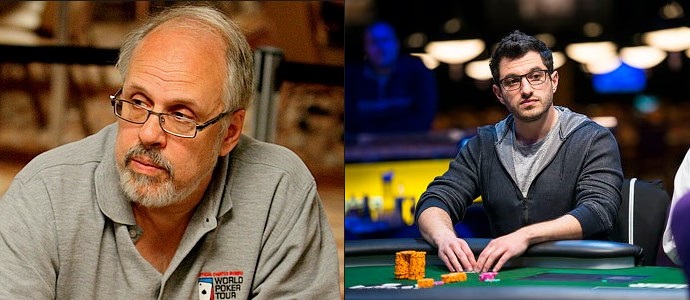
The fundamental theorem of poker: "Every time you play a hand differently from the way you would have played it if you could see all your opponents' cards, they gain and every time you play your hand the same way you would have played it if you could see all their cards, they lose", which leads to Sklansky bucks and G-bucks.
From a mathematical point of view, it’s still perfectly correct. However, its practical use nowadays is very limited. Even low limit players today are able to calculate EV. The right way to think is ranges, “range vs. range”, not certain hands.
How poker was played 10 years ago, part 1
More fun & facts

Check out our PokerBuzz Overview

