


Poker Basics - The Fundamental Theorem Of Poker
A classic theory from David Sklansky that still holds up today. How close is your play to somebody who knows what cards their opponent holds?

After looking at Sklansky Bucks previously today we cover another classic piece of poker wisdom from David Sklansky.
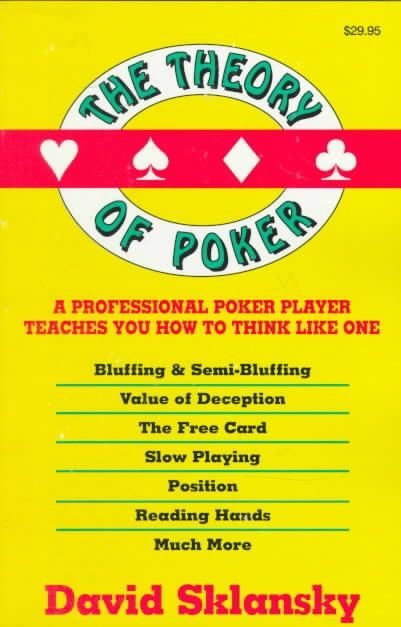
The Fundametal Theorem of Poker is the foundational concept from Sklansky's classic book The Theory of Poker.
To quote it verbatim from the book, the theorem states:
Every time you play a hand differently from the way you would have played it if you could see all your opponents' cards, they gain; and every time you play your hand the same way you would have played it if you could see all their cards, they lose.
Conversely, every time opponents play their hands differently from the way they would have if they could see all your cards, you gain; and every time they play their hands the same way they would have played if they could see all your cards, you lose.
A game of incomplete information
Poker is a game of incomplete information, you do not know which cards are coming and you do not know what your opponent has been dealt.
However, imagine if you could see your opponent's cards. You would be allowed to play perfectly. You could fold when they have a monster, bluff when you are behind but they also have a weak hand, and value bet when you have the best hand.
You will never be able to replicate this but it is a useful baseline for when you review your play away from the table. Ask yourself how you would have played if you had known the hole cards ahead of time. The closer you are to that, the better you are playing.
One really useful thing the Fundamental Theorem of Poker does if you spend a lot of time applying it to your own game is that it helps you deal with the uncertainty of not knowing what your opponent has. If you can develop a game that is close to how you would player if you knew the cards, you don't need to always know the cards.
Related Resources
Odds & Outs
Our regular Twitch coach LemOn36 makes this basic lesson fun and easy to follow
_227efd42.jpg)
Get our free software
Our Equilab tool will teach you everything you need to know about odds and equity in poker
