


Who has the most ICM pressure on them?
Dara O'Kearney dispels the myth that short stacks are the ones who have to most ICM pressure on them at final tables and bubbles.
A student was watching the finale of the Poker Masters and had an interesting question that touched on something I think a lot of players struggle with. At the bubble of the $50,000 buy-in event this is how the stacks lined up.
Scott Seiver was the leader with 1.8 million, Jason Koon was the 2nd leader with 1.5 million and Daniel Negreanu was the short stack with 325,000.
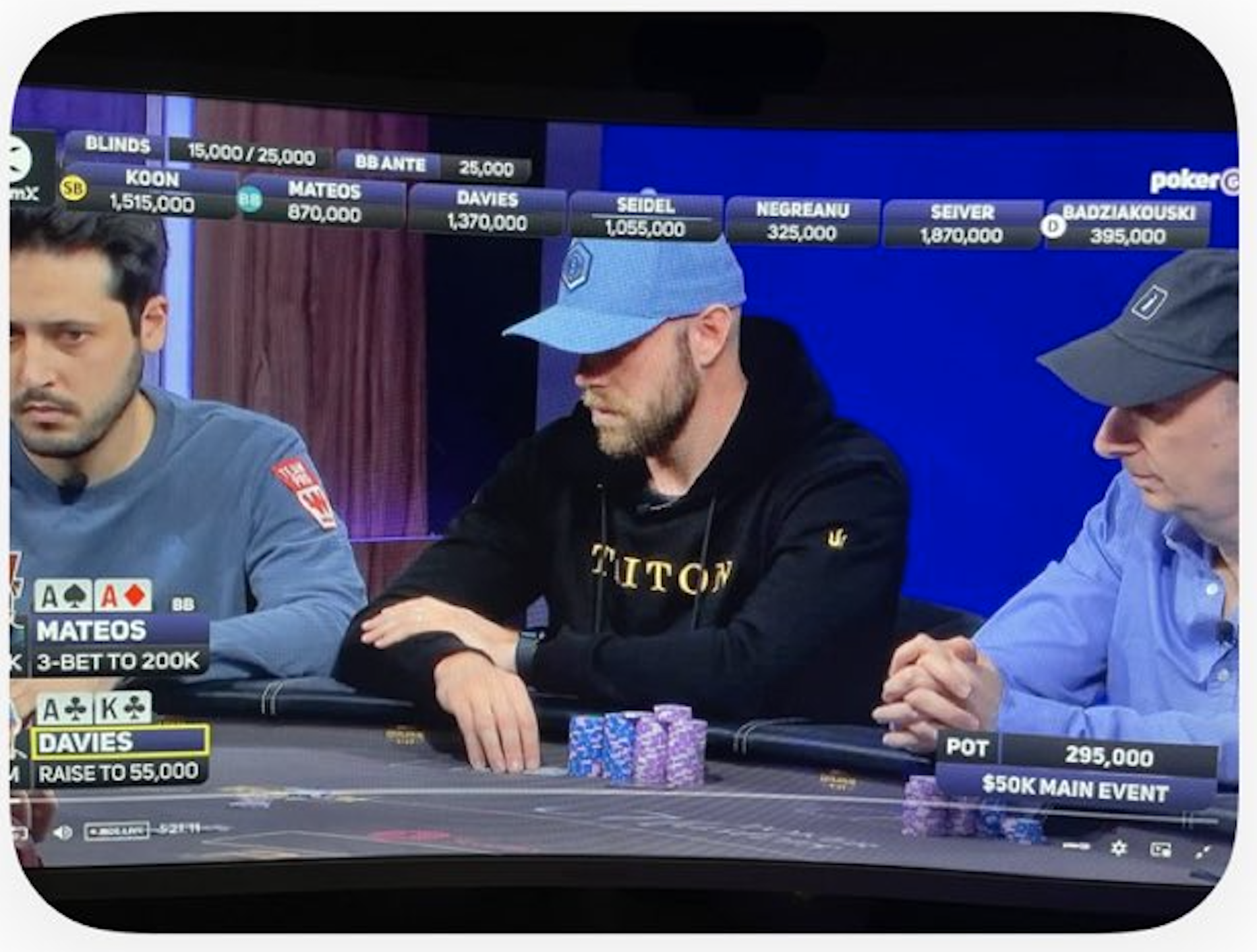
The commentators noted that Jason Koon, in 2nd place, had the most ICM pressure on him on this bubble. My student felt that it was Negreanu as the short stack who had the most pressure on him. She wanted to know if Koon had most ICM pressure on him because he had a better chance of winning the whole tournament?
She's not far off being right. Let's dive in.
Bubble Factor
This is the Bubble Factor for every player at the table, against every other player. Bubble Factor is a measure of how much equity you are risking in ICM heavy spots. The higher the number, the tighter you have to play.
Ignore the seat positions, just look at the stack sizes of each player. You can do this yourself using ICMIZER:
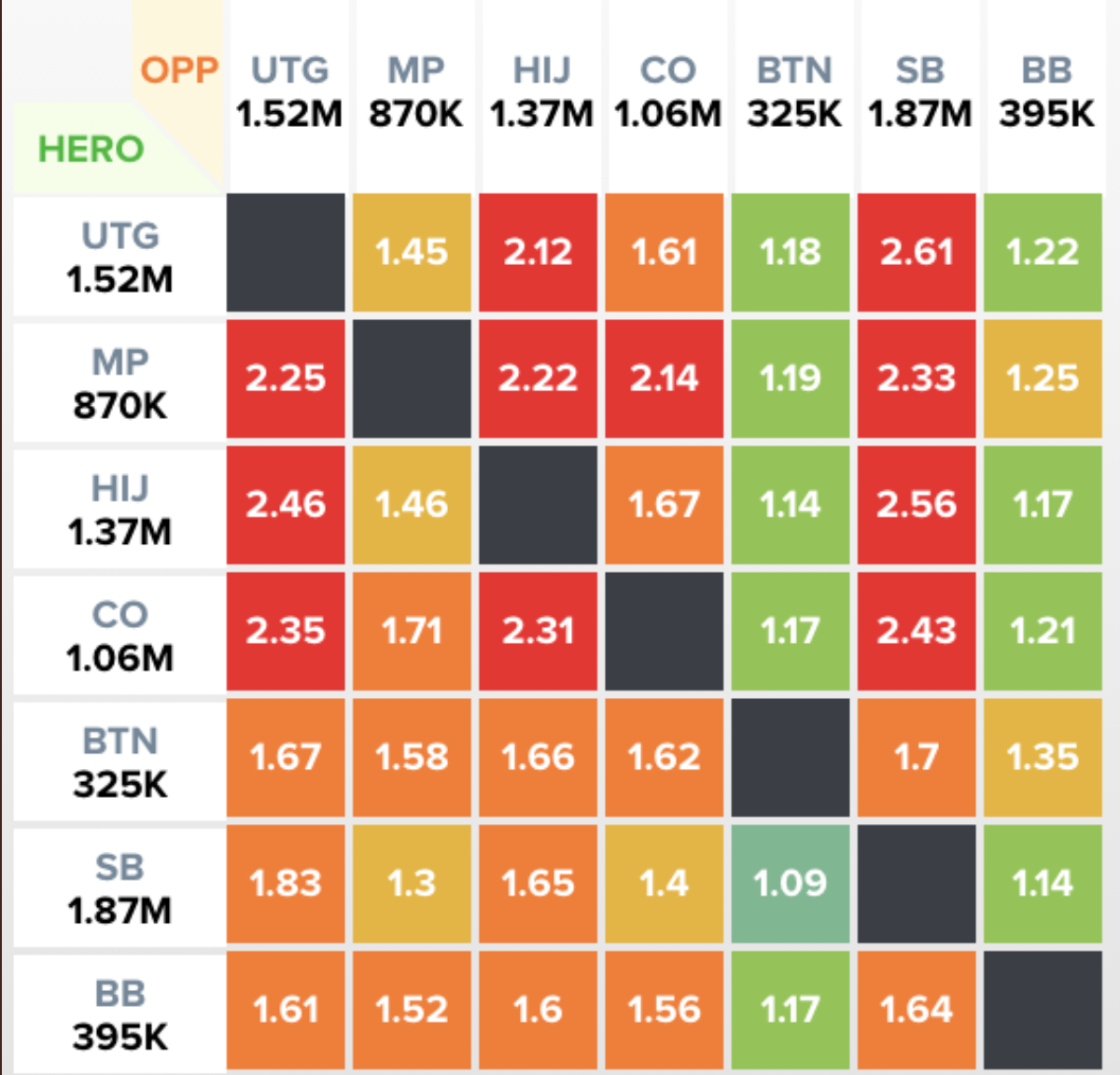
As you can see, Bubble Factor really depends on who the other player is. When Jason Koon is playing against the chip leader Seiver his Bubble Factor is 2.61, the highest at the table. That is because he is risking the most equity of anyone at the table in that confrontation.
Against Negreanu, however, his Bubble Factor is very low, 1.18. This is because he covers Negreanu and doesn't risk much equity playing against him. Negreanu also has quite low overall Bubble Factor at this table because, while bubbling is devastating for him, he is risking the least equity at the table.
So when Seiver is still potentially in the hand, Negreanu can play a much wider range than Koon can, despite the fact that Koon has so many more chips.
The overarching principle to remember is that Bubble Factor is greater against players who cover you and the more chips you have the higher it is. Bubble Factor is something that requires a lot of study, but broadly speaking it can be used to guide you on who to avoid (players against whom you have a high Bubble Factor) and who to bully (players against whom you have a low Bubble Factor).
Dara's latest book Endgame Poker Strategy: The ICM Book is out now.
