The Rise (And Fall) of Poker in America
In the next installment of our "Rise of Poker" series, we look at how the game developed in America. The current climate of government crackdown and anti-gambling legislation may paint a bleak picture, but it wasn't always like that. Let's find out more.
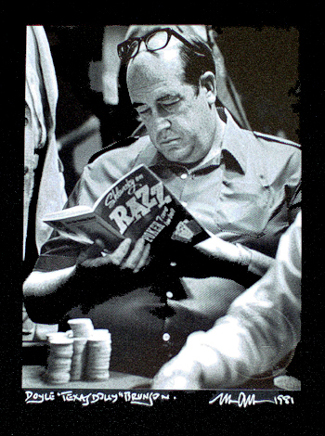 |
| A younger Doyle Brunson |
Early Beginnings
America's love affair with poker has been a rollercoaster ride.
Although the "bluffing" principle of poker was thought to have originated in Renaissance France, the game was tweaked on American shores. A basic version of "straight" or stud poker was established in the Mississippi River region by the early 19th Century.
By the end of the American Civil War, five-card stud, split-pot and lowball poker had become recognised variants. The Civil War saw a fusion of different cultures and communities, meaning that knowledge of recreational pastimes such as poker spread.
Robstown, Texas is officially recognised as the birthplace of Texas Hold'em, around 1900. But it was not until the early 1960s that the game, under the stewardship of Doyle Brunson, Amarillo Slim and Crandell Addington, began to receive more serious recognition.
As Doyle Brunson testifies, the early Hold'em games were often unsavoury experiences. Back-alley cash games were targeted by bandits and charlatans. Blackmail, robbery and assault were rife in a dog eat dog environment.
The WSOP Begins
It was in 1967 that an entourage of Texan gamblers and poker players, including Doyle Brunson, Johnny Moss and Puggy Pearson arrived in Las Vegas, with the aim of promoting poker.
After nearly three years of negotiations and setbacks, casino mogul Benny Binion and son Jack acquired the rights to the World Series of Poker (formerly known as the Annual Gambling Fraternity Convention) in the Binion Horseshoe Casino.
In its early years, poker struggled to escape its shady shackles and undesirable connotations. After all, casino owner Benny Binion was a prominent figure in the criminal underworld, and had been convicted of several felonies including murder. But, on the back of the release of Brunson's revolutionary "Super System" book, poker's popularity began to spiral. David Sklansky's "Theorem of Poker" and Mike Caro's "Book of Tells" also confirmed that poker was an intricate game involving theory and skill.
By 1991, the WSOP boasted over 200 players in its Main Event field.
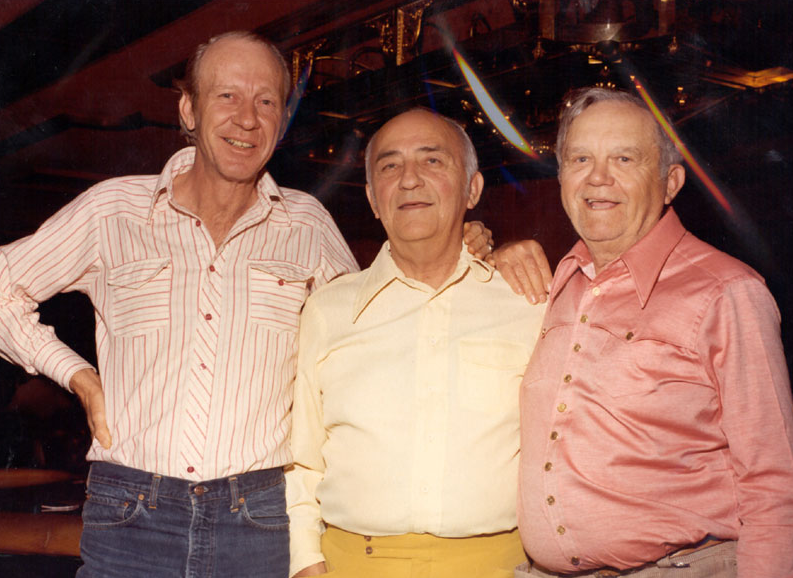 |
| A Few of the Founding Fathers...(left to right) Amarillo Slim, Johnny Moss and Benny Binion. |
Generations of Stars
 |
| Stu Ungar (right) with Jack Binion |
America has given rise to a stellar cast of poker players over the years.
The old guard of Moss, Brunson, Slim and Baldwin set the early benchmark, dominating the WSOP in the 1970s. Poker's first prodigy was Stu Ungar. Touted by Gabe Kaplan to be the most naturally gifted cards player of all time, Ungar won back to back WSOP Main Event titles in 1980 and 1981. Ungar was a flamboyant, generous character, however his life was crippled by drug and gambling addiction. A year after his third Main Event triumph in 1997, he tragically died of an overdose.
By the early 1990's, a new wave of pros were making headlines. Phil Hellmuth began his onslaught on WSOP bracelets in 1989, becoming the youngest ever Main Event winner at the age of 24. The New York based MayFair Club were also producing a talented crop of players, including Howard Lederer, Dan Harrington, and Erik Seidel.
Over the past decade, the impregnable Phil Ivey has emerged as America's flagship name. Young sensations including Tom "durrrr" Dwan, Jason Mercier and Dan "Jungleman12" Cates will be hoping to usher in a glorious new era once the online debacle is sorted.
Online Poker, Five Years of Disarray
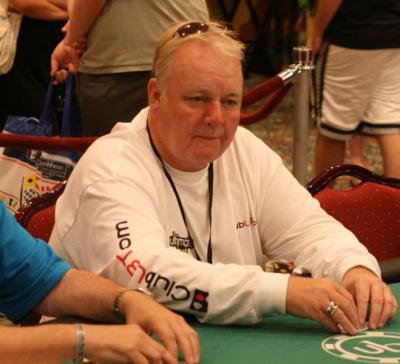 |
| Mastermind of the UB/AP Cheating Scandal, Russ Hamilton |
The likes of Mike Caro and Chris Ferguson were instrumental in launching the first real money games on mIRC and Planet Poker in 1998. The 2003 "Moneymaker Effect" triggered the online poker boom, and for the next three years, online poker in the US grew at an alarming rate.
Since the 2006 passing of the Unlawful Internet Gambling Enforcement Act (UIGEA), online poker in the US has undergone a torrid time. The 2006 UIGEA prohibits any poker/gambling website from making financial transactions with US banks and similar institutions.
In order to fit with public trading standards (such as the London Stock Exchange), several publically owned companies such as PartyGaming withdrew their US custom. Since PokerStars and Full Tilt Poker are / were privately owned companies, they continued to accept US players.
The ambigious nature of the UIGEA meant that US players continued to play. After all, the poker "house" was located off shore, in places such as Costa Rica.
Quite why the UIGEA was passed remains up for debate. Some political critics say that it was a Republican attempt to quash large, publicly traded companies, and pave the way for a monopoly amongst more ruthless, private companies. Pressure from certain government quarters, and questions as to whether the US government could gain financially from online poker in its current state, may also have led to its passing.
Online poker in the US was also dogged by the Ultimate Bet / Absolute Poker superuser scandals.
Current Climate
As we all know, the events of Black Friday put a stop to online poker in the US. Full Tilt Poker, PokerStars and the Cereus network were shut down for alleged money laundering, bank fraud, and violation of the UIGEA.
Unless the Department of Justice can be placated, and a new bill ensuring the legalisation and regulation of online poker is passed through Congress, the situation seems unlikely to change. This is despite the best efforts of organisations such as the Poker Players Alliance.
Hopefully, the expansion of live poker in the US in form of WPT, WSOP and NAPT circuits will prove a soothing remedy.
And one thing's for sure, there'll always be Vegas.
Here's more from our "Rise of Poker" series.