


Column: Should Tweeting Be Allowed At Live Streamed Poker Events?
Is it unethical to ask people on Twitter what your opponents had if you are playing in a live streamed poker game? Barry Carter takes on this growing trend at live televised poker events.
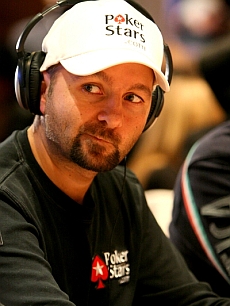 |
| Negreanu has been tweeting |
A friend of mine asked my thoughts on something which happened last weekend on a live stream. It was at the Premier League, which is taking place right now in London, and Daniel Negreanu was asking his followers on Twitter what his opponent had in a previous hand against him.
My friend asked me if this was unethical. In a normal game, the folded hand would likely go with that player to the grave, but here was KidPoker potentially finding out during the game.
The live stream has become very popular in poker; I am a big fan of them myself, and the quality of the broadcasts is getting better all the time. Many of them include full access to hole cards, usually with a short delay to avoid any chances to cheat.
It is not just the TV pros who are faced with this dilemma. Live streams are becoming more and more popular on just about every level of the live circuit.
I myself have played on more live stream feature tables than I can count, and I don't play a great deal of live poker (and haven't played a buy-in over £500 for at least four years) - so it is clearly something most live players will one day encounter.
Against the spirit of the game?
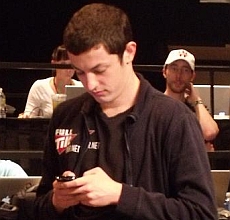 |
| Poker and mobile phones go hand in hand |
To answer the first question, is it unethical? That is a clear no for me. Not only was Negreanu doing something everyone else at the table has the opportunity to do, he was quite clear and transparent that he was doing it.
The only real advantage he had over the rest of the field is that he has a bigger Twitter following than pretty much everyone he plays against - but you can hardly call him out for being popular.
The other question is: does it go against the spirit of the game?
This is not as clear cut an answer. It does seem somewhat to go against the fundamentals of the game, whereby it's every man for himself and a game of incomplete information.
Getting a third party to assist you and finding out information you did not pay to see with your chips does feel a little bit off for some people - I haven't entirely made my mind up about that one myself.
Misinformation
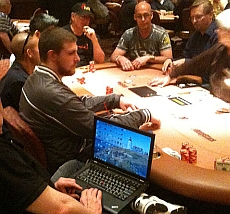 |
| You can't escape technology even in the live game |
One of the big reasons I don't really have a problem with tweeting during a live stream is that it might be more of a hindrance than a help anyway. Not only can everyone else do what Negreanu did, they can also use what he did to their advantage against him.
To begin with, Negreanu had no idea what people were tweeting him was actually the real hand (though he could probably draw a decent conclusion if enough people said the same hand), so when someone is getting assists on Twitter they are putting their fate in the hands of others, not their own reads.
More importantly, a good opponent would use that information to level the person tweeting for hand histories.
If they made a tight fold and their opponent knew it from Twitter, they can start to make looser calls in the future. If they were revealed to be bluffing a lot, they can start to tighten up their range and value bet more.
The players that will benefit most from this new phenomenon of tweeting during live streamed games are not necessarily the ones asking for the information, but the ones who use it most effectively.
The evolution of televised poker
 |
| TV poker is still evolving |
The truth is, this is just another step in the way the game has evolved on screen. Tweeting during a live stream might seem too unfair an informational advantage, but the same concerns were raised more than a decade ago when under-the-table cameras were introduced.
There originally was a lot of resistance to shows like Late Night Poker, because players were concerned it would be giving away their secrets.
Could you imagine what poker would be like if everyone had refused to play on TV? I think any of the players who initially had concerns are in no doubt today what a benefit it has been for the game.
Similar things happen in live poker on a daily basis now anyway. I can look at my table draw in an event and then get my smartphone out and look up all the names of the players on my table on results databases to see what sort of success they have had.
Some players make it even easier, by tweeting every hand they have played and letting the world know exactly what they had, completely unaware their followers might be sharing a table with them.
Then you have things like final table delays. Just about everyone who makes the November Nine uses the four month break to study ESPN footage of their opponents. Once again, everyone has the ability to do this, and how you use the information is a skill in itself.
Adapt
 |
| Adapt with the times |
This debate mirrors similar debates with things like tracking software. Some people believe tracking software is unethical, but everybody has the opportunity to use it, and so many people do use it you just have to accept it is part of the game.
Tracking software is similar also in the sense that over reliance on it, just like putting too much stock in the hands being revealed on Twitter, can actually harm your game and cause you to make mistakes based on misapplying the information.
I don't think that finding out information from live streams is unethical. I can understand an argument that it might go against the spirit of the game.
Ultimately it is just a natural evolution of the game - like online poker, televised poker and tracking software - where the best strategy for dealing with it is to adapt rather than letting it concern you too much.
By Barry Carter
Read more columns by Barry Carter l Follow Barry Carter on Twitter
