


Why Libratus ended the poker skill debate
Barry Carter makes some arguments that most lawmakers should understand about how AI has proven that poker is a game of skill.
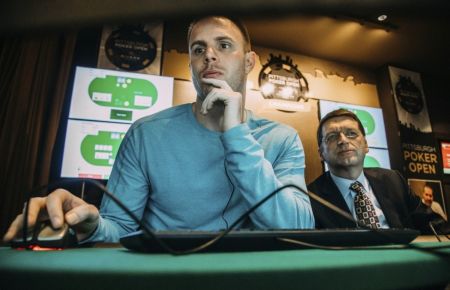
I’ve written a lot about the no doubt iconic Libratus vs humans poker match so far this year, mostly because it is proving to be a big story outside of poker but also because I am fascinated and quite scared about the implications of Artificial Intelligence.
I’ve argued at length that I don’t think it will dramatically change poker, but since writing that, one area where I think it could have an impact is the never ending debate over whether poker is a game of skill or a game of chance.
You and I know that poker is indeed a game of skill and for the most part people who do not play poker realise this too. You and I also know that the gambling element of the game is significant, and when a brand new player sits at the table for the first time they are doing nothing other than gambling. It is only when you improve does the skill start to overtake the chance, in the long term.
The skill debate is over?
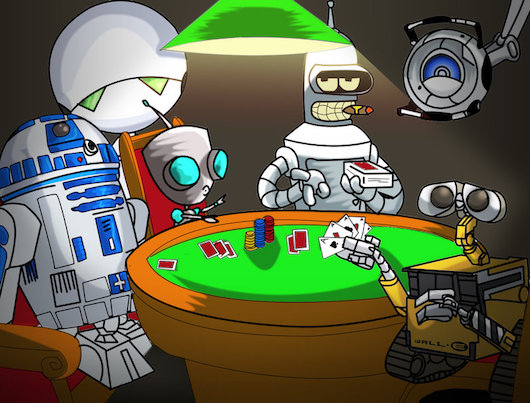
But lawmakers do not always appreciate this delicate balance between fate and ability. Right now there is quite a significant skill debate around poker taking place in India, as well as another in New York. The game is constantly under this scrutiny and we have seen the skill debate in pretty much every country, and it takes centre stage when the regulation of the game is being debated.
Surely Libratus has proven beyond doubt that poker is a game of skill, by virtue of the fact it has beaten four elite players by such a huge margin? The tendency in poker at this point is to discuss things like statistical significance, survivor bias and other concepts that we wouldn’t expect lawmakers to understand greatly. Instead I’d like to make a few points that I feel anyone outside of the game could get on board with, which could easily be explained to those who govern over the game.
Of course any donk can get lucky but after 120,000 hands against players most of us would agree are superb, this is pretty concrete evidence. Given the human inclination, especially in poker, to blame all our defeats on bad luck, the fact that all four players conceded that Libratus was simply too good, is another big sign of how skill was at play.
General intelligence
.jpg)
Nobody doubts that chess is a game of skill and that Deep Blue defeating Garry Kasparov proved that AI was overtaking human endeavor in that game. Surely the fact that it took a further 20 years and many attempts to do the same in poker is a testament to how much skill is involved? This is not to say poker is harder than chess, this is because poker has so many more moving parts. To beat the pros at HUNL, Libratus had to develop ‘General Intelligence’, which is a way more advanced reflexive form of intelligence than that which beat Kasparov in 1997.
Finally, I think the greatest argument you could put to a layman about why Libratus proves the skill element in poker is to point to how much mainstream and tech media interest this has attracted. If poker were just a game of luck it certainly would not have garnered as much attention as this, especially from the great minds in Academia and Silicon Valley that are talking about this right now. As poker people we are obviously pretty biased about this game we hold so dear, so don’t take our word for it, take the word of the geniuses who create smartphones and are working on giving the world driverless cars.
The skill debate will always rage on, perhaps rightly so, because although you can get very good at the game, when a newbie deposits for the first time they are still gambling. But if it hasn’t been already, surely Libratus has put to bed the suggestion that there is no skill in poker?
Do you think Libratus will be used to defend the skill element of poker where regulation is concerned? Let us know in the comments:
Related news
- Why AI will not kill poker (yet)
- Why the mainstream media cares about AI and poker
- Libratus beats the humans for $1,766,250
<
