


Column: How much responsibility do sponsored players have?
Following the recent scandal at Lock Poker, Barry Carter asks how much responsibility should fall on sponsored players when a poker room conducts itself badly?
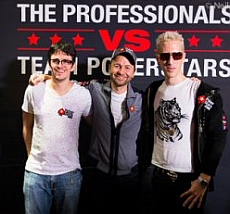 |
| What does it mean to represent a poker room? |
The latest scandal in online poker appears to be taking place at Lock Poker, as players have been trying to withdraw their funds for months. More and more information has begun to surface which suggests that the financial stability of the site is in trouble.
For many this has been a long time coming. Lock Poker was one of the few poker rooms to still offer real money poker in the US after Black Friday, and have essentially been operating illegally. More importantly they have been consistently linked to shady behaviour for a number of years now.
I don't really want to cover what caused this scandal and what they are doing to fix it, because there are many more informed resources available than myself.
Instead, I wanted to turn my attention to the backlash that their sponsored pros have faced in the light of this scandal.
Calling out the sponsored pros
 |
| Annette came under fire |
On Two Plus Two, a huge thread emerged calling out the sizable roster of sponsored players who continued to endorse the site while players were having trouble withdrawing.
There was an understandable anger at these players encouraging new deposits with their endorsements when the solvency of the site was under scrutiny.
What didn't help matters was that it was revealed that all the Lock Pros were away enjoying a luxury retreat in Portugal on the company's money, seemingly oblivious to the fact that players were having trouble getting their funds, and not responding to tweets and forum threads about them. If not that, many were still continuing to wear the poker room's logo at live events - some as recently as the EPT Monte Carlo this week.
The poker community called on these players to acknowledge the problems that were happening on the site; to stop promoting it at a time of crisis and in some cases suggested they should give back some of the money they earned.
It is natural to pick on sponsored players at a time like this. They are, after all, the public face of the poker room. They are much more accessible to poker players, whether online or at live events, than the faceless suits behind the scenes; on the face of it they appear to benefit the most from the player's hard-earned money.
Just an employee?
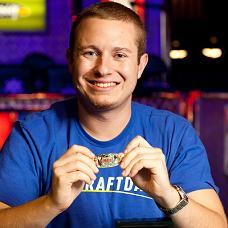 |
| Brian Hastings called out the Lock pros |
Should sponsored players face such scrutiny? Do they have a responsibility to stop promoting (and benefiting from) a site when there are problems in the back end?
One argument some people have made is that they are just members of staff. If McDonalds did something bad, you wouldn't expect the service staff to quit their job or give their earnings away, so why should a sponsored pro?
I completely agree that any money which has been earned in good faith should not be returned, as the pro did what was asked of them and didn't cause the issues themselves.
However there is a line that has to be drawn when the site in question acts in a less than proper manner. If someone continues to promote a site that has known problems which could impact player funds, then it is the time to stop promoting.
In this respect the sponsored pro is more than just a member of staff; they are an ambassador. It is their reputation which earned them the sponsorship, and it is their reputation which is being leveraged to introduce new players to the site and assure them that their money is safe.
Just turn up and wear the patch
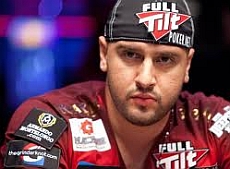 |
| It's about more than patches |
This is where I think there is a big disconnect between what most sponsored players believe their role is, and what being an ambassador means. I have written about this before, but I don't believe most players pay any consideration to their image and the responsibility which comes with endorsement. Most just think their role is to turn up and wear a patch.
The poker players who care about their own image and what they put their name to are few and far between. For every player whose endorsement means something, like Tom Dwan or Daniel Negreanu, there are probably 20 players who would wear any patch without considering what it meant. That is why you had players still representing UltimateBet after the most horrific cheating scandal in online poker.
I understand the difficulty some of these players must be facing right now. They are probably in the dark about a lot of the important details about the solvency of Lock Poker as much as we are. They don't want to jump the gun and decry the site while there is still a chance it could make good on their errors, and they are also under contract. At the time of writing only two players, Chris Moorman and Paul Volpe, have elected to step down as Lock pros.
The role of the ambassador
 |
| durrrr set a good example |
I actually don't believe that sponsored pros are as influential in the playing decisions as many people make out.
Many of the Lock Pros are virtually unknown anyway; I can't imagine they genuinely made much of a difference in whether players deposited there or not. In fact if there are money troubles at Lock Poker right now, it would not surprise me that it is in part due to their willingness to sponsor a ridiculous amount of players with little to no marketing leverage.
I don't think the Lock pros should be scapegoated for the troubles at the site; that blame falls squarely on the people that run it. However I do believe all sponsored pros need to understand their roles as ambassadors much better.
Brian Hastings, a former Full Tilt Pro, called out the Lock pros this week on Twitter and in doing so also highlighted how he thought sponsored players should act, and how he had wished he had acted as an FTP pro. During Black Friday, Tom Dwan also set a great example of how to conduct himself when his sponsor came under fire.
That doesn't mean I think sponsored players should instantly abandon their poker room or publicly denounce it at the first sign of trouble. Ideally they should acknowledge the issues and share what they know. At a bare minimum, they certainly should have the common sense to pause actively promoting the poker room and living it up on the company's money until the situation is resolved.
By Barry Carter
Read more columns by Barry Carter l Follow Barry Carter on Twitter
