


Do we still need the November Nine?
Barry Carter looks at the World Series Of Poker Main Event final table delay and asks if we still need it?
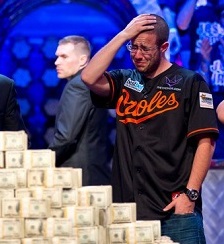 |
| Greg Merson's story was a big November Nine success |
Next week the sixth WSOP Main Event final table to feature a three-month "November Nine" delay will take place.
The decision to pause the action at the Rio in July and recommence it in November seemed absurd when it was first proposed, but it has already become a part of poker tradition.
The poker world has changed dramatically since the November Nine was introduced. In the first three years, most "November Niners" likely earned more from endorsements than they did at the actual final table.
The guaranteed television exposure that came with making the final of the biggest tournament of the year, and to have the journey there dragged out over three months, was mouth-watering to online poker rooms. As a result, they drove a great deal of money and hype towards the final table.
However that all changed in 2011 after Black Friday - suddenly the most appealing thing about the delay had disappeared, or at least significantly diluted. This will be the third November Nine in a post Black Friday world, so is the delay still worth it?
The pride of a November Niner
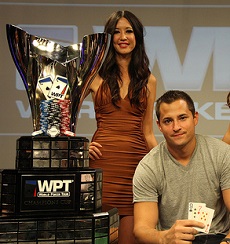 |
| Matt Giannetti became a WPT champion during the break |
Even though you can't expect life-changing sponsorship deals now, the players have still really taken the November Nine concept to heart. Becoming a November Niner is an accolade in itself, on a par with winning a (smaller) bracelet. Giving a name to someone who made the final table of the big one has really elevated the achievement.
In fact, lots of players who are now established made their names by making the final table:
Dennis Phillips, Scott Montgomery, Ivan Demidov, Chino Rheem, James Akenhead, John Racener, Joseph Cheong, Martin Staszko, and Jeremy Ausmus have all gone on to become well-known names in the game after making the final table.
The combination of momentum and the locked up 9th place cash has also meant that we tend to see at least one of the November Niners win big during the three-month break. Ivan Demidov came third in the WSOPE in 2008, and both James Akenhead and Antoine Sauot made the final table of that very event the following year. Joseph Cheong notched up several six-figure results during his break in 2010, as did Matthew Jarvis. In 2011, perhaps most impressively, Sam Holden won Late Night Poker and Matt Giannetti won a WPT title during the break.
Continuity and hype
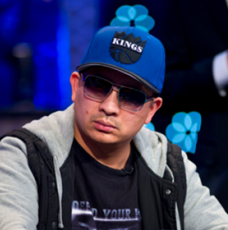 |
| Should JC Tran have got more media attention for making the final? |
One thing that the break certainly does is provide a feeling of continuity between the WSOPE and WSOP. Instead of feeling like two separate events, the WSOPE now does feel like part of the series as a whole. This is also helped by the fact the WSOP Player of the Year race is usually still being contested at the WSOPE and the Main Event might shape the outcome.
Perhaps one of the biggest reasons to have the final table delay is to create hype for the broadcast of the final table.
I'm not sure if it is doing that as well as it once did.
Without the presence of major online sponsors like in the pre-Black Friday days, there isn't the same sheer quantity of marketing dollars being thrown at the final table from the online side of poker or the poker media.
For example, it is fair to say JC Tran is a huge name in poker; after Phil Ivey and Michael Mizrachi he is the biggest name to become a November Niner. However, we haven't heard a great deal from or about him since he made the final table (I've tried to get an interview myself to no avail).
The fact that such a big story like his making the final has not created a huge buzz is disappointing. However, in general, the viewing figures have improved since the introduction of the delay - that is one of the main metrics that matter.
Making televised poker a spectator sport
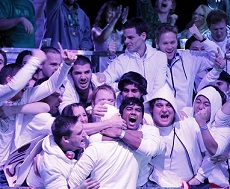 |
| The live audience element makes the November Nine a unique experience |
One good thing about the marketing side of the delay is that it does help tell a story and create characters. One of the biggest challenges facing poker TV producers is making a table of unknown players interesting, and the delay allows us to get to know the players in more depth than if we had just the one ESPN interview to go on.
People remember the "everyman" characters like Darvin Moon and Dennis Phillips; or Greg Merson, the guy who beat drug addiction to become champ; or maybe this year the nightclub promoter Jay Farber, who promises to make it a party no matter what happens.
These delays provides us with a much greater context as to who these players are.
Perhaps the single most exciting thing about the November Nine is that it creates the closest thing to a sporting spectacle we will ever see in poker. The delay is long enough for the players to fly out 50 of their friends, dress them up in matching colours, get them drunk, then get them cheering and singing at every pot they win. This really is unique and exciting for poker, and if we are ever going to sell the game as a spectator sport, this is the way to do it.
The November Nine may not be the promised land it once was, and it may not achieve the objectives it initially set out to, but I think it is here to stay. It has already become part of poker history and if nothing else it makes the final table itself much more like a sporting occasion than anything else in poker.
