


Harvard Professor: Availability of Online Gambling Does Not Encourage Addiction
Harvard Psychologist Howard Shaffer has published a study that claims to find no correlation between the availability of gambling on the internet and raised levels of gambling addiction in the USA. The claim that online gambling promotes addiction is no more than a myth, he reports.
 |
| Classic casino gambling |
Howard Shaffer is an associate professor at Harvard Medical School and one of the leading experts in the area of gambling and addiction.
He and co-author Ryan Martin recently published a study in the "Annual Review of Clinical Psychology" entitled "Disordered Gambling: Etiology, Trajectory, and Clinical Considerations."
This study focuses on the question of whether the fundamental availability and strong expansion of internet gambling has been followed by increased occurrence of addiction as well.
Their findings: Despite a boom in online gambling and greater availability of the games, the ratio of "pathological gamblers" (those addicted to gambling) has remained relatively stable in the last 35 years and has not grown even during the era of strong growth in the online gambling industry.
Increased addictive quality of internet a myth
This seems to contradict one prime argument of opponents to internet gambling: Many politicians (and scientists) argue that the gambling and poker on the internet are addictive and that their strong availability increases the number of addicts. This argument, drawn upon by the US government as justification for its regulation of online gambling, is shown by the study to be just a myth.
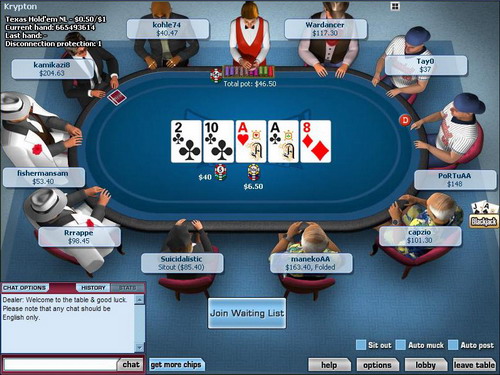 |
| Online poker: Not so interesting for gamblers after all |
The authors themselves expressed surprise at the results. Their previous work has been quoted regularly by proponents of regulation for online poker.
They had described internet gambling as a "gateway to addiction." In their current study, however, the scientists determined that gambling on the internet has nowhere near the draw that it is claimed to have, at least not from the perspective of potential addicts.
Ban on online poker ineffective
By this same logic, a ban on internet gambling is ultimately ineffective. People who would potentially have a problem with gambling will find a way to feed their addiction regardless of the ban. Many addicts will even deviate to other "replacement drugs" if legal (or illegal) gambling is no longer available at all.
The study also found that gambling addictions are only a small fraction of addictive behaviour in the USA but are paid disproportionate attention. The study claims that approx. 5% of all Americans have ever had a problem with gambling. By contrast, 8.5% suffer from alcoholism, 25% are addicted to nicotine and as much as 30% abuse drugs (or have done so at least once in the past).
