

Quick facts by PokerStrategy
- The hijack is a position at the poker table.
- The hijack is two seats to the left of the dealer button.
- The hijack offers the third best position in terms of strategic importance.
- Caution is required when playing out of position against the button or cutoff.
What Is the Hijack Position in Poker?
In poker, the “hijack” refers to a position at the table. It is the seat that is situated two spots to the right of the dealer button. The dealer button orbits around the table, so players take turns in each position.
The term hijack is thought to refer to the idea that you can hijack the pot from this position, specifically by raising first before the cutoff or button gets the chance. Understanding this poker strategy, whether you are playing live or at online poker sites, can give you a strategic edge in late position play. Position at the poker table is very important because it determines who will act last in the pot, giving you insight into your opponents' moves.
If you are in a late position preflop, such as in the hijack, you can enter the pot first when other players fold. This can provide opportunities to steal the blinds or to play pots in position when the small or big blind calls.
However, from the hijack, you still have the player in the cutoff and button to think about. If they call or raise, you’ll have to play the pot out of position, which is not nearly as desirable.
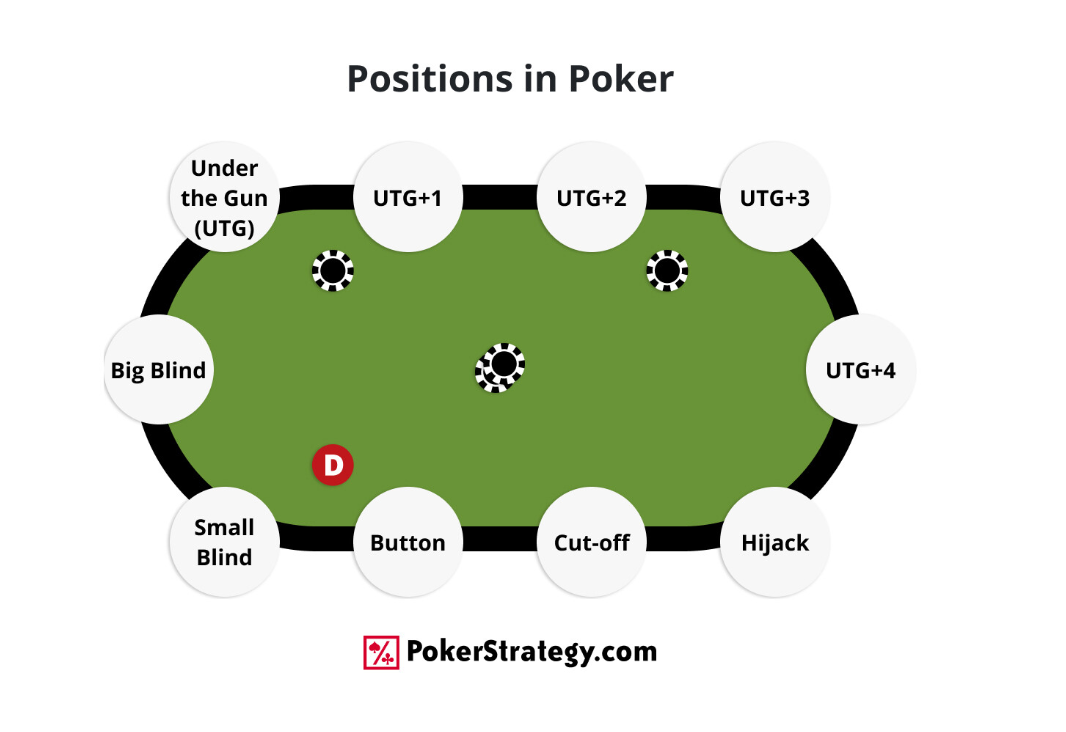
The Strategic Importance of the Hijack
The hijack is a decent position at the poker table, sitting as the third strongest behind only the button and cutoff. As one of the late positions in poker, the hijack allows you to enter the pot with a relatively wide range of hands.
If everyone else folds before you, there are only four players to think about behind you. Your main concerns are the players in the cutoff and the button positions. If they fold to your raise, you will take the positional advantage for the rest of the pot.
When it comes to the players in the small and big blinds, if they fold, you will win the pot uncontested. If they call, you can play in position postflop and stand to gain more chips than you lose if you play position well.
The hijack doesn’t offer much strategic importance against earlier position players. If one or more opponents have already entered the pot, you’ll usually have to keep your calling and raising range tight, as mediocre hands won’t play well.
Here are the key points:
- Open-raise with a reasonably wide range of hands from the hijack position.
- Look for opportunities to play in position against the blinds.
- Don’t be too loose against early position players who have entered the pot first.
- Adjust your hijack ranges depending on your opponents, especially those in the cutoff and button positions.
Hijack Postflop Hand Examples
Here we’ll show you the difference between playing out of position and in position. Both of these hands are from the hijack position. The only difference is that in the first example, the big blind calls, while in the second example, the button calls.
Example 1:
You open-raise from the hijack with ♣Q-♣T.
The cutoff and button fold, whilst the big blind calls. The flop comes ♣J-♠9-♠2. You’ve picked a straight draw and decided to semi-bluff.
The big blind checks, you bet, and they fold. You win the pot!
Example 2:
You open-raise from the hijack with ♣Q-♣T and the button calls.
The flop comes ♣J-♠9-♠2, and you’ve got a straight draw. You bet, but this time the button decides to make a big raise. This puts you in a tough spot, and you are forced to fold.
This is one of the main pitfalls of playing from the hijack seat in poker. If the other late-position players fold, you’ll often be in a great spot. If they call, you’ll have to proceed with more caution.
Hijack Opening Hand Ranges
From the hijack, you’ll typically be open-raising around 18 percent of hands. This includes any pair, broadway hands, any suited ace, offsuit aces down to A-T, and strong to medium suited connectors.
To compare this to the cutoff, it should typically raise around 25-28 percent of hands, which includes a significant number of high offsuit hands, as well as smaller suited connectors and one-gap suited connectors.
So, as you can see, the hijack opening ranges are nowhere near later positions, but you’ll still want to play quite a lot of hands when the action folds around to you.
Adjusting Your Ranges from the Hijack
You should always be adjusting the percentage of hands you play from the hijack you enter, depending on other factors, such as stack sizes and especially the tendencies of opponents who are still left to act behind.
When it comes to stack sizes, deeper stacks can allow you to open up your range with additional hands. You may also be able to use a big stack to put pressure on opponents and steal blinds from the hijack.
This will ultimately depend on the other players, though, especially the cutoff and the button. As the only ones who can claim a position from you by calling or raising your bet, they are your biggest threat in the hijack.
Here are a few tips for adjusting to different opponents from the hijack:
- Exploit Tight Opponents: Play a wider range of hands against tight opponents who fold too often. This will allow you to steal blinds and win pots with small postflop bluffs.
- Respect Tough, Aggressive Players: Play a little tighter against tough, loose opponents in the cutoff and button positions, or consider fighting back if they get out of line.
- Adjust to Loose Middle Positions: If the lojack and middle position players are particularly loose, you may find some spots to three-bet a little looser.
- Stay Tight vs Early Position Raises: Be conservative against early position raises.
How Does the Hijack Compare to Other Positions
In a full-ring game of nine players per table, you can break the position down into early, middle, and late:
- Early position: This includes the under the gun (UTG) and UTG+1 players. From an early position, you will act first preflop and are likely to be out of position postflop. As such, it’s recommended to only play a tight selection of hands.
- Middle position: The middle position player and lojack player occupy the centre seats at the table. So it’s possible to start playing a few more hands than in early position. Still, there are a good few players left behind who could wake up with a hand or call and take position.
- Late position: Late positions include the hijack, cutoff, and button. By this stage, you play a much wider range of hands to steal blinds. If you’re called by players in the blinds, you’ll have the positional advantage postflop.
Hijack vs Cutoff and Button in Poker
The button is the most desirable position in poker, and it is much more advantageous than the hijack because you are guaranteed to have position postflop. The button provides the most opportunities for stealing blinds, value betting, and bluffing.
The second most advantageous position is the cutoff, as it is only one to the left of the button and so only has one opponent who could potentially take away the positional advantage.
The hijack is the third strongest seat at the table. The players in the early and middle positions have already acted. You have two players behind the cutoff and button, who could claim position. The other two, the small and big blinds, will be out of position.
Common Hijack Position Mistakes
The hijack is an interesting position in poker. It provides great opportunities to steal blinds and claim the positional advantage postflop. At the same time, the hijack also requires care when navigating marginal spots and adapting to opponents.
Here are some common mistakes to avoid when playing from the hijack:
- Raising too many weak and mediocre hands.
- Missing opportunities to steal or raise.
- Calling too often against early position opponents.
- Losing chips out of position with marginal hands when the button or cutoff calls.
Frequently Asked Questions
Why is it called LoJack and Hijack?
The “hijack” is a position in poker, and the term refers to the possibility of hijacking the pot from the later position players. The Lojack is positioned to the right of the hijack and is less desirable, hence it is lower.
What hands should I play from the Hijack?
From the hijack, it’s recommended to play strong hands, along with some suited connectors and smaller pairs.
Is the Hijack position considered good in poker?
The hijack is a relatively favourable late position in poker. However, it is not as strong as the button or the cutoff.
Can I bluff from the Hijack?
Yes, you can start to incorporate bluffs into your hand from the hijack seat in poker, especially when you have weak players to your left.