


GTO Poker Theories: The Cobra Effect
Today we look at perverse incentives and how they can impact poker, especially when it comes to promotions.

One of the real gifts poker has given me is that it has been a great jumping off point to learn things from other disciplines like economics, AI, psychology and Game Theory. So here is a series of articles where I bring some of the most interesting things I have learned from other subjects outside of poker which are applicable in this game we know and love.
Anyone who has any role in changing policy should be award of perverse incentives and the law of unintended consequences. This is something which has been observed in economics time and again - when you give the wrong type of incentive to solve a problem, it may create new problems.
A typical example of a perverse incentive is agreeing to expensive hourly billing, for example with a lawyer or a tradesperson. Then that person is not incentivised to do a good job, they are incentivised to do a long job so they can bill more hours. The lazy A-holes who decorated my living room last year know exactly what I am talking about.
Then you have an effect I find very entertaining which is the Cobra Effect, which is when a solution to a problem actually increases the problem. When the British government was concerned about the amount of poisonous snakes in India during its colonisation, they offered a bounty for every snake killed. Rather than killing off the snakes, this led to their farming by the local population (in order to make more bounties) which made snake population increase.
In Bogota, Columbia, the government tried to reduce car pollution by rationing when cars could drive, if your license plate ended in 1,2,3 or 4, for example, you could not drive on a Friday. Rather than reduce pollution, this policy increased it, as everyone bought multiple cars so they could drive every day. They also had to buy cheap cars, which were more dangerous to the environment.
There is also an infamous cousin of the Cobra Effect called the Streisand Effect, which is when you attempt to silence something, the attempts to censor become newsworthy and draw more attention to it. It was coined after Barbara Streisand’s $50 million lawsuit to prevent aerial images of her mansion being accessible online led to millions more people seeing them.
Promotional incentives

You can see perverse incentives at play in poker particularly where it comes to the promotions live and online poker operators put on to entice you to play.
The most common one that online poker has been battling with forever is the appropriate amount of rewards to give to high volume players. It is true that the most loyal customers should be rewarded in any business, but when the rewards are too high they make the incentive playing more, not playing the game as the operator and rest of the player pool would perhaps like.
The best example of this was insanely high rakeback deals. About 5-10 years ago it wasn’t uncommon to see 60%+ rakeback deals offered by some brokers. An attempt to get more people at the tables, what this largely did was get more good players at low stakes tables, playing very tight and slowing down the game because breakeven poker would make them a healthy profit. This made the game tough and slow for the casual players who deposit all the money. This is why today most operators have flipped their policy and taken measures like reducing rakeback benefits for volume, increasing them for things like playing more hands and speeding up the tables in general (which also may have unintended consequences we can’t yet see). This same practice also caused a problem for the industry in that they were designed to bring more new customers to the game, but what actually happened was they just encouraged the same customers to switch poker rooms.
Satellite incentives
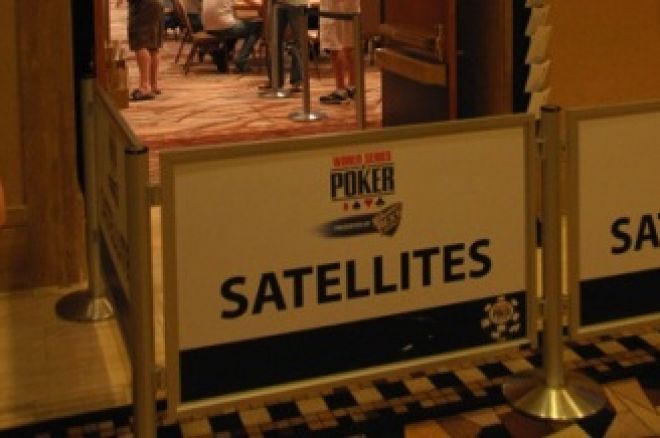
A similar example can be seen with poker satellites. The goal of a satellite is to get more players to a bigger buy-in event than they would otherwise not play. So for a long time operators encouraged people to play in satellites by letting them take the cash value of the package if they won multiple packages, or letting them unregister and keep the value in ‘tournament dollars’ to be used elsewhere on the site.
This has increased the traffic to satellites but what a lot of operators discovered was that the people who won them were often going to play the target event anyway or had no intention of playing it, because they found satellites themselves a profitable format. This meant that the very recreational players they wanted to attend these events were being squeezed out and target event fields were not increasing. Now almost every poker room has some variant where satellite winners are forced to use their token/package won either for the target event or a similar one.
Look out for the Cobra Effect and perverse incentives everywhere in life because it is really interesting (especially when politicians are arguing about policy change). It’s really useful, however, in poker when you are deciding which games to play and which promotions to participate in, because you can make good estimations about who else will be enticed by them.
What theories from outside of poker have really helped you with your game? Let us know in the comments:
Related
- The Matthew Principle in poker
- Why you have to let weaker players win
- The Tragedy of the Commons and poker
- Why AI beating poker players is important
- Poker and Gambler's Ruin
- Poker and The Pareto Principle
- Poker and The Ultimatum Game
- Poker and The Survivor Bias
