Strategy changes with field size l Strategy with Barry
Your ranges in a large-field tournament should be different to your ranges in a smaller-field tournament, even when the spots are identical.

Not all bubbles are the same. There are a lot of factors that influence your strategy in a tournament, including:
- Seat position
- Your chip stack
- Your opponent's chip stacks
- Stage of tournament
- Payout structure
One factor that often gets overlooked is field size. We have written many times about how field size has a great impact on the variance you should encounter in a poker tournament, but it also has a massive impact on the strategy itself.
Small vs large field
Here is a simple example. In this spot, we are on the bubble, and two shallow-stack players have got all in against each other, and we are the BB with just four big blinds.
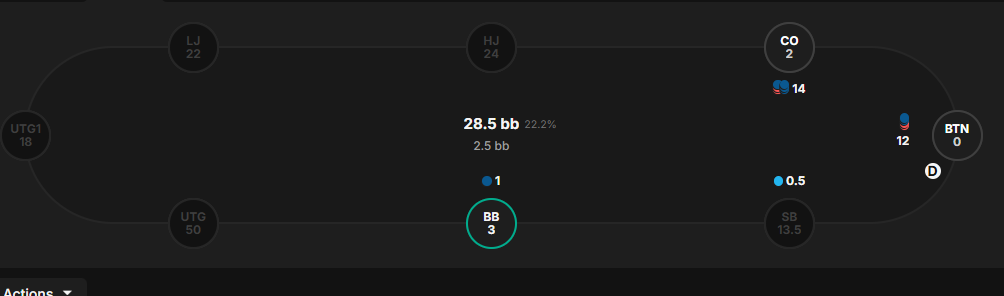
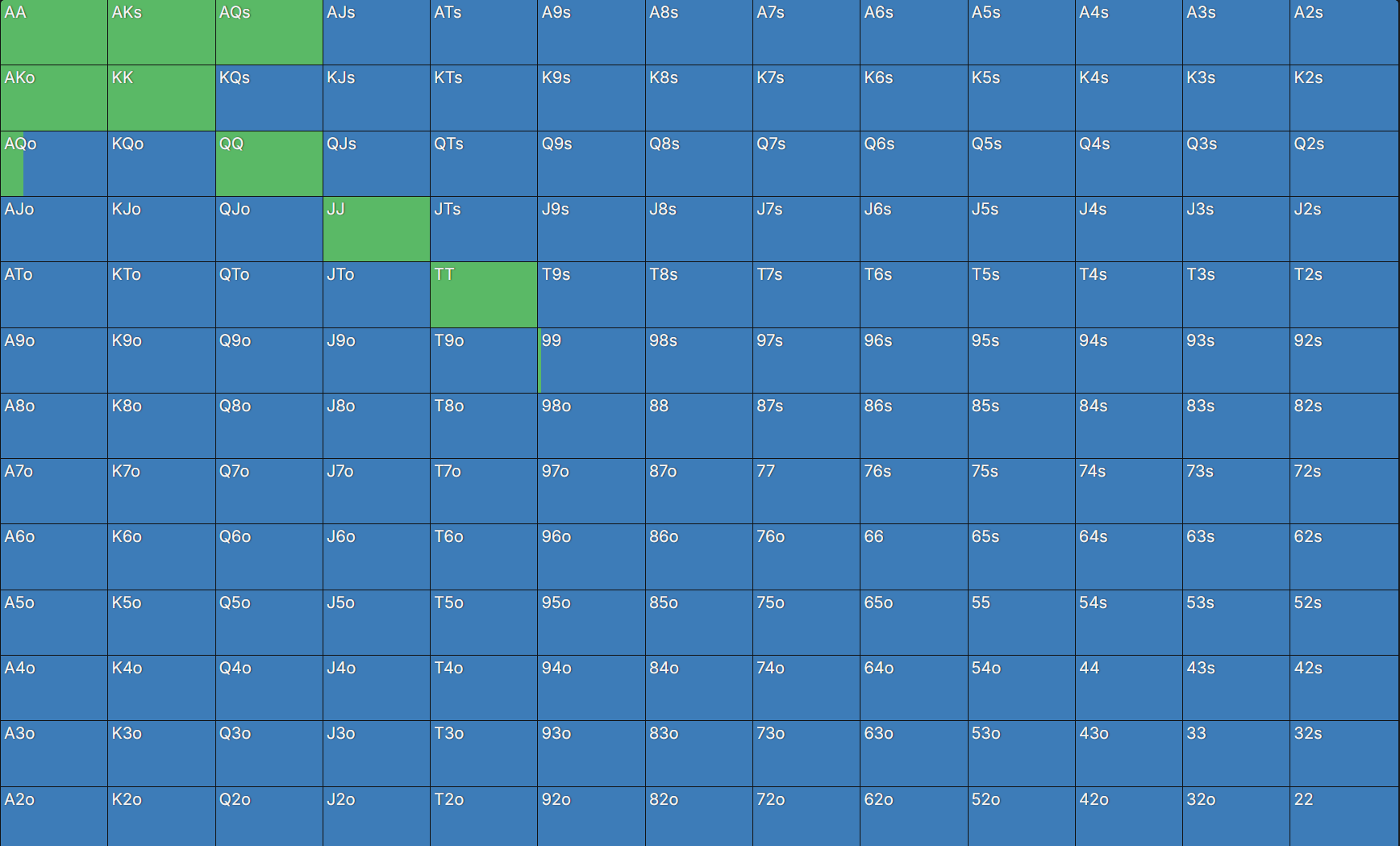
Obviously, in this spot we need a very tight range because there is a very good chance that we will survive the bubble by simply folding. This is what the GTO calling range would be for us in a tournament that started with 200 runners, on the bubble.
And this is what the calling range would be in the exact same scenario, but we are on the bubble of a tournament that started with 1,000 players.
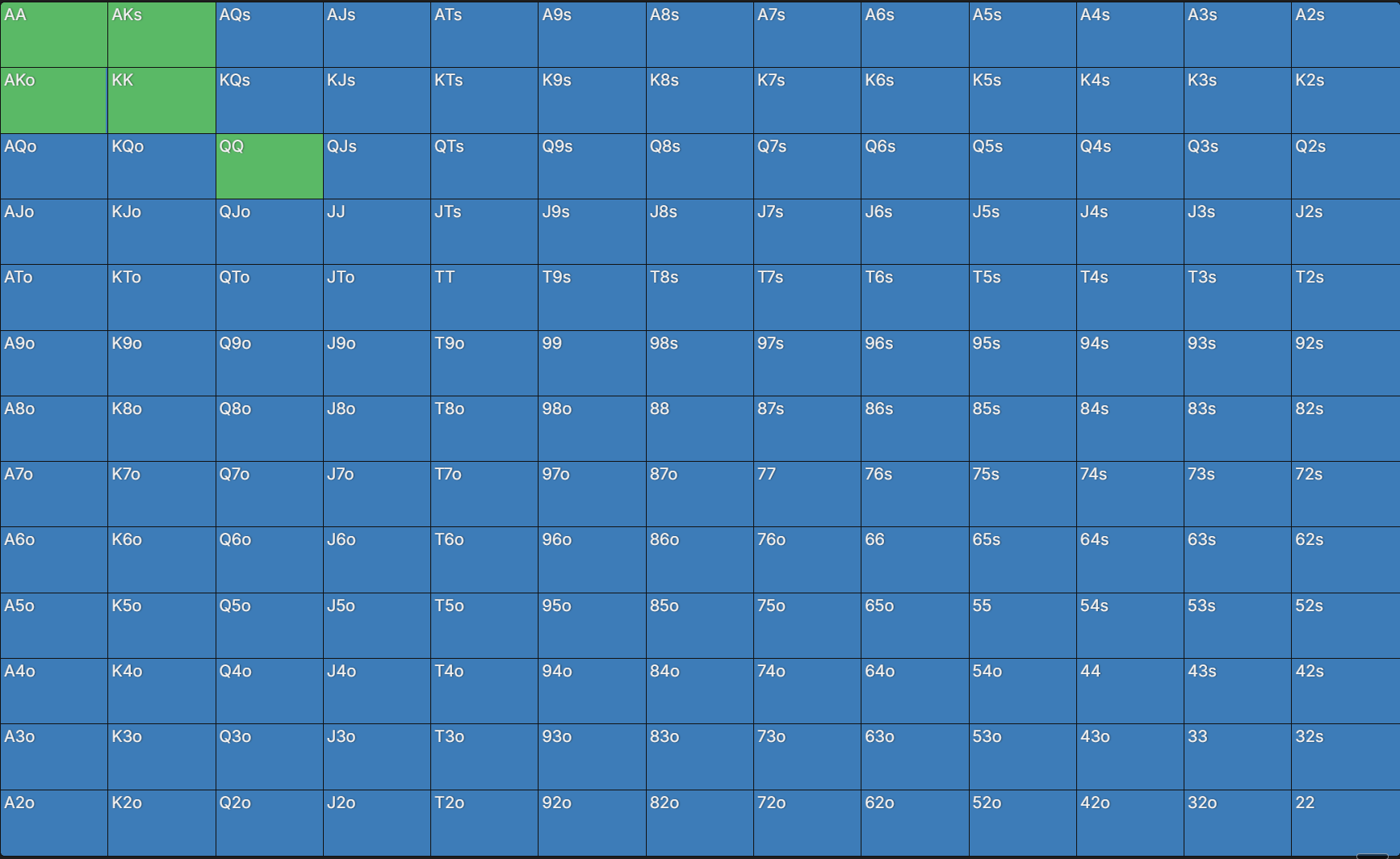
A lot of people will be surprised that the range is different at all, and others, if you ask them, would have gone in the other direction. They would argue that it's better to play looser in the large-field tournament because you have to take risks to do well when there are a lot of players.
However, the opposite is true. You can get an idea of what this is by looking at the Risk Premiums in both scenarios. On the left, we have the Risk Premiums for the 200-runner tournament, and on the right are the Risk Premiums for the 1,000-runner tournament.
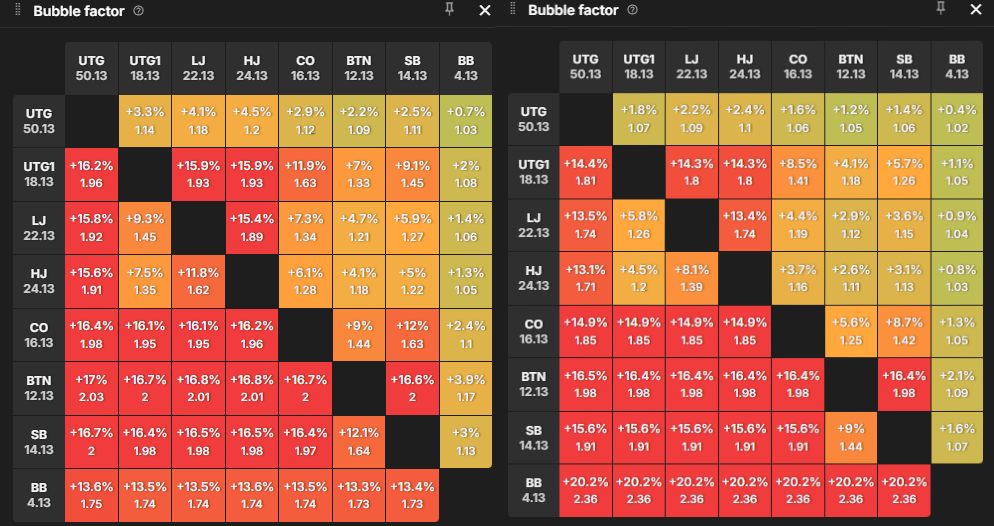
As the BB, our Risk Premium is 13.6% in a 200-runner tournament and 20.2% in the much larger field tournament.
The reason for this is that an ICM calculation is essentially an estimation of how often you will come first in a tournament, how often you will come second, and so on. It is primarily based on the percentage of the overall chips you have in the tournament.
When you double up on the bubble of a 200-runner tournament, you win a much bigger proportion of the overall chips in play than when you double up on the bubble of a 1,000-runner tournament. Doubling up in the 1,000-runner tournament practically is meaningless, but when you double up in the smaller field, you put yourself in a better position to win the whole thing.
So the larger the field, the more important it is to min cash when you are the short stack. The smaller the field, the more you have competing motivations of chip preservation and also trying to win the whole thing.