The Limp-Stab l Strategy with Barry
A simple strategy for playing the Small Blind, but does it stand up to solver scrutiny?

The Limp-Stab is a simple, effective strategy for playing the Small Blind vs the Big Blind.
Quite simply, you limp from the Small Blind, and if your opponent checks behind, you bet small (1bb) on every flop.
It works because the Big Blind is unlikely to have a strong hand, because they would have raised preflop. Most players miss most flops most of the time, so bet.
It also works so well because players in the blinds have no emotional investment to a hand they were forced into playing. Had they opened from middle position, they would not get pushed off a hand so easily.
The default strategy
Let's see if a solver agrees.
Below it is 50bb effective, the SB has limped, the BB has checked, and the flop is Q62 rainbow.
Below is what the SB does on the left (Green is check, red is bet small) and on the right the BB's response to the bet (Green is call, red is raise, blue is fold):
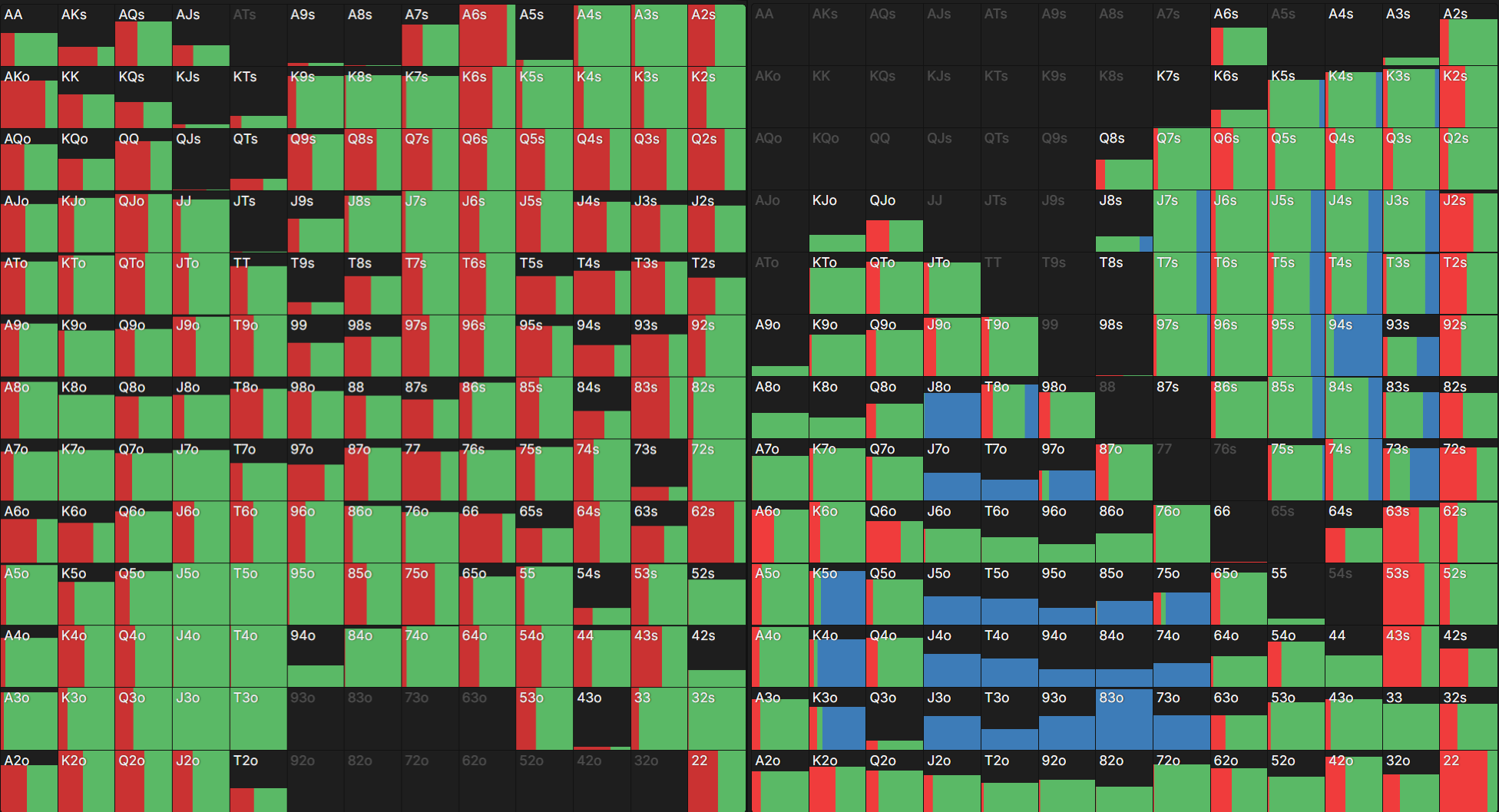
The SB does not limp-stab often; they only bet 31% of the time. This is because the BB is supposed to call wide, they call as wide as Ace high and King high.
But what if we made a simple node lock, and had the BB fold King high, which a lot of live players would here. Many would fold Ace high but we will leave those calls in.
.png)
A very small adjustment to the range, and now the SB bets 100% of the time. When our opponent has no investment or interest in the pot, the Limp-Stab becomes the default strategy.