


Explained: Why do poker tournaments have guarantees?
Today we explain the guarantee system in poker, what happens when a guarantee is missed, and red flags to look out for as a player.

We have a lot of new players at PokerStrategy.com and we have to therefore remember that a lot of the conversations that experienced players take for granted will sometimes go over their head. So when stories in the poker world come up that only make sense to experienced poker players, I am going to spell out what we are talking about for the newbies.
This weekend marks the start of the biggest month of the year for online poker tournaments with WCOOP and Powerfest, to name but two of the online festivals. WCOOP is guaranteeing over $116 million and PowerFest is guaranteeing over $60 million. On top of this, at the end of the year partypoker are hosting the biggest single online MTT in history with a $20 million guarantee.
But why do tournaments offer guarantees?
A tournament may have a guarantee essentially as a marketing tool. Nobody likes to show up to a tournament, especially a live one, to discover it has a low attendance and thus small prize pool. When a tournament guarantees a prize pool, let’s say $1 million, then everybody playing in it knows they will be playing for a meaningful amount of money (even if nobody else turns up).
When not enough people buy-in to cover the guarantee there is what we call an overlay. Let’s say it’s a $1,000 buy-in and a $1 million guarantee, if 600 people play that tournament then $600,000 has been collected, leaving a $400,000 shortfall. This is the overlay. When there is an overlay, the organiser of the event is expected to make up the difference.
This is actually a preferred outcome for the players, because rather than having to navigate through 999 other players, they only have to navigate through 599 but for the prize pool of a 1,000 runner event. It effectively turns that $1,000 buy-in into being worth $1,666.66 before you even start. Another good outcome is if the guarantee is exceeded, for example if 1,500 people play then the prize pool is $1,500,000, because obviously there is more than expected to play for.
Overlay controversies
Tournament organisers will sometimes put up a huge lofty guarantee as a way to entice players who think they cannot make it. The allure of an overlay is so exciting it often gets people out of their houses to play in it. Think Field of Dreams and the line “If you build it, they will come”. Then sometimes an organiser will create a guarantee so big they know they cannot make it, but do so anyway as a loss leader to promote other aspects of their business (I personally think partypoker want to boast the biggest online MTT in history and are happy to eat an overlay to do so).
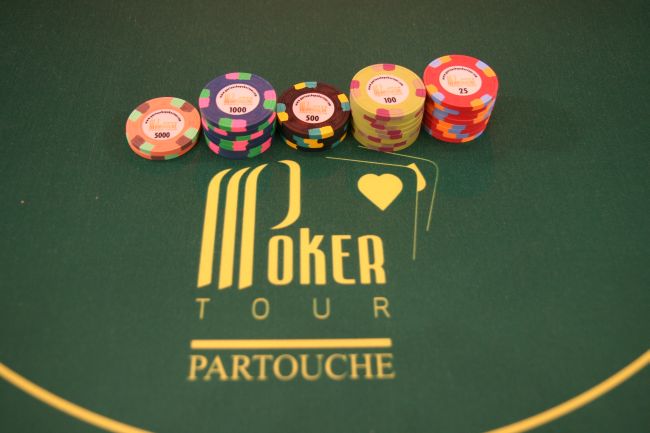
A guarantee becomes a sticking point in poker when an operator does not honour it. There have been numerous scandals in poker where an operator welched on the guarantee. The Partouche Poker Tour came under fire (and ceased trading) after trying to renege on a €5 million guarantee. The International Stadiums Poker Tour repeatedly changed their guarantee before they were taken over by Dusk Till Dawn. The Gardens Poker Classic tried to mitigate a guarantee by adding unscheduled Day 1s at the last minute. And the Heartland Poker Tour infamously let players buy in for less than the advertised amount to make up a shortfall. Whatever the tactic, reneging on a guarantee usually does nothing but destroy your reputation in poker.
Guarantees = good game selection

Another red flag to look out for is when a poker event advertises an ‘expected prize pool’ rather than a guarantee. This is a completely meaningless figure and a cynical attempt to use the marketing power of a guarantee without taking any of the risk. Most of the time, if the operator is experienced and professional they have a decent idea of how many runners their event will get. Overlays are rare in poker, but avoid the events where the operators don’t put their money where their mouth is.
The cousin of the guarantee is the money added event, which rather than predicting a certain prize pool, instead an additional prize is added at no cost to the players. The $1 million added to the PokerStars Players No Limit Hold’em Championship, for example. Or on a smaller scale, this weekend we are hosting a $10 buy-in event with an EPT Sochi package added. On the face of it these are always better value promotions because it is added value regardless of how many players show up. A guaranteed tournament is only added value if there is an overlay.
Game selection in tournaments is not as easy as it is in cash games, where you can sometimes pick your seat, but a good long-term strategy as a tournament player is to only play in MTTs with generous guarantees and it’s always worth hopping in the ones with an overlay at the last minute. And when an operator doesn’t honour the guarantee, vote with your feet and don’t play there again.
What other poker concepts do you hear everyone talk about but you have no idea what they mean? Let us know in the comments:
Related
- Explained: What is poker markup?
- Explained: What is softplay in poker?
- Explained: Why do good players need staking in poker?
- Explained: Why you don't talk in multi way pots
- Explained: Why slowrolling is bad
- Explained: What is a regular?
- Explained: Why do professional players still gamble?
- Explained: Why do poker players care about rake?
- Explained: What is a DDoS attack?
- Explained: Why do good online players not play live?
