


GTO Poker Theories: The Sunk Cost Fallacy
Investing time and money makes it much harder to abandon something or, in the case of poker, fold the loser.
One of the real gifts poker has given me is that it has been a great jumping off point to learn things from other disciplines like economics, AI, psychology and Game Theory. So here is a series of articles where I bring some of the most interesting things I have learned from other subjects outside of poker which are applicable in this game we know and love.
The Sunk Cost Fallacy is something you have almost certainly heard of if you have learned the game of poker, but it is certainly worth repeating as it is useful in the game and life. Quite simply the Sunk Cost Fallacy is a bias whereby we find it hard to abandon something where we have invested a lot into it and have an emotional attachment towards it.
In economics a sunk cost is a cost that has already been paid and cannot be recovered.
The Sunk Cost Fallacy is the reason why we don't throw out junk with sentimental value, why we continue to burn money fixing that old car we should have scrapped years ago and sometimes why we stick in relationships that are not working for either party.
Pot odds and chasing losses
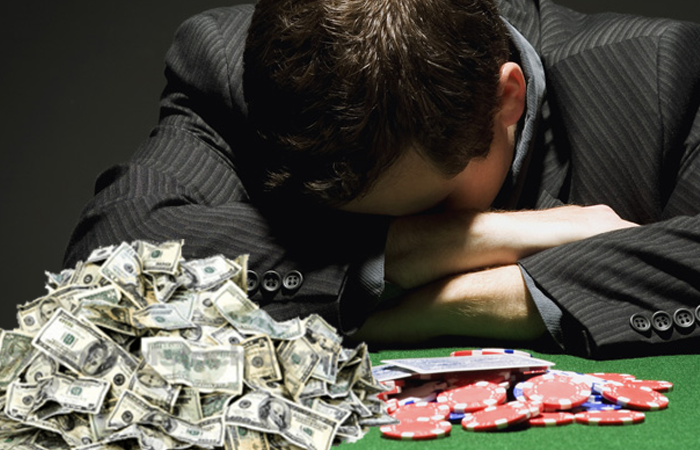
The most obvious way this arises in poker is in a hand of poker itself. If you get to the turn or river and have invested 30 big blinds already into the pot, it is hard emotionally to give up. If you have missed a draw, even if it is obvious your opponent has a strong made hand, it is very tempting to attempt a gutsy bluff to try and win back what you have invested. The decision becomes much less about what you potentially could win and more about claiming back that which you once had.
The reality is the second your money crosses the line in poker, it's not your money anymore, but that is very hard to realise in the moment.
In poker we learn early about pot odds. Sometimes the return on our investment the pot is giving us, when it doesn't cost much to call, means we are correct to get our money in the middle with the worst of it because in the long term we profit. The Sunk Cost Fallacy is a difficult concept to reconcile with understanding pot odds, because we can often justify making a terrible call because the pot is laying a good price, when in reality we are chasing losses. It takes experience to distinguish between the times we are getting the right odds and when we should be cutting our losses.
A risky way to be risk averse
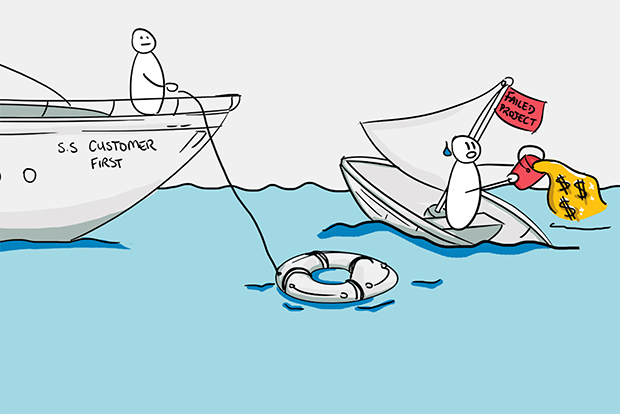
Perhaps a more pernicious way the Sunk Cost Fallacy manifests in poker is in the way we treat our bankroll. One of the hardest and most necessary skills in poker is being able to have the humility to drop down in stakes when our bankroll takes a hit. Let's say you have a $500 bankroll and play $10 SNGs. At some point you should have a stop-loss where you drop down to $5 SNGs, maybe at the $250 stage in your roll. The Sunk Cost Fallacy might be the thing that stops you from doing that or, even worse, playing $20 SNGs in the hopes of clawing that bankroll back.
The funny thing about the Sunk Cost Fallacy is that it is born out of the risk aversion we have seen in some of the previous articles (below), but ironically it is often the much riskier prospect to continue investing in something that is a proven loser.
What theories from outside of poker have helped your game? Let us know in the comments.
Related articles
