




Following the recent news of two-time bracelet winner Dutch Boyd struggling to find minimum wage work, Barry Carter asks if life as a professional poker player is a big opportunity cost?
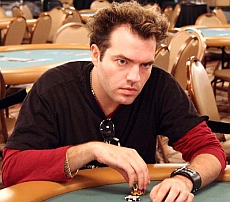 |
| Dutch Boyd |
Last week we brought the news that former poker star Dutch Boyd has hit hard times. Despite having over $2.2 million in live earnings, two bracelets, founding one of the first online poker sites and completing a degree aged just 15 years old; Boyd has been turned down for a minimum wage job.
Many in the poker community think that this is karma for Boyd, whose failed poker site PokerSpot closed down owing around $400,000 to poker players, which to this day has never been paid back.
Whether you think he deserves what he is getting or not, Boyd's precidement represents one of the most nightmarish scenarios a young professional poker player can envision - finding themselves broke, out of the game, unable to get a job, and wondering if they have just wasted their best years.
This happens to poker players, and people in other careers, all the time of course. Boyd is just a very high profile example. We also had another high profile instance of poker players finding themselves out in the poker wilderness after Black Friday, where not only were their bankrolls taken away from them, so was their only way of making money in the future.
There is a small percentage of people for whom poker has set them up for life. But for the majority of young players who take up the game professionally, is poker actually a massive opportunity cost?
Opportunity cost
 |
| durrrr probably hasn't updated his CV in quite a while |
I must say I do fear for young guys for whom poker has been their only ever job. Online poker has been around long enough now that there are a lot of well educated young people who go straight into playing professionally from higher education, without ever having a 'real job'.
If you were born to play poker and you are very good at it, this is not a big deal. The chances are Tom Dwan will never need to worry about writing up a CV, but the same can't be said for everyone.
I foresee there being a problem if poker becomes boring or too hard for a professional poker player later on in their career. Both very real problems in this game.
We all know how much tougher poker is these days and although it is hard to imagine it getting any tougher, there is no guarantee that it won't. Players like Boyd made their money in the glory days of poker and will no doubt have seen their earn rates diminish rapidly over time.
Although there is always the chance of that big score being just around the corner, professional players shouldn't expect to see monumental jumps in their earn rate. So while what they earn at the tables is currently probably a lot more than they could get in a 'real job', it might not be more than what they could have got in say 10 years time had they climbed the ranks at that real job.
It is not the high stakes elite I am worried about here, their bankrolls in theory could be a big enough buffer to support them while they find their feet in a new vocaction. It is the $1/$2 rakeback grinders and guys who are staked who should probably think about this very carefully.
Other than the money, one of the best things about poker is the sense of freedom and autonomy you have. However one of the biggest drawbacks is possibly a lack of a sense of purpose. It is quite a selfish career after all, and I know quite a lot of players who have become disillusioned with the game later on, even if they are still winning.
There can still be a great sense of purpose to a career as a poker player, especially if it includes travelling the world, coaching players, supporting a family, winning major accolades or becoming famous. It is just that sense of purpose is not always as clear as it is in other careers where you are usually servicing someone or creating something.
The CV gap
 |
| Does poker prepare you for job interviews? |
If they face either problem later down the line and want to enter the world of work, they could potentially be left with no relevant work experience, a big gaping hole in their CV and a potential culture shock when they start having to work for someone else.
Having a boss, getting up first thing in the morning, wearing a suit - there are some poker players who will really struggle with having a workplace mindset, especially if they went straight from college to poker.
There are also some pro players who frankly would struggle having to work with people at all, having spent most of their time alone in front of a PC.
Another problem arises just by the fact that poker is on their resume at all, this is why I called it a CV gap, because some employers simply won't recognise it as a career.
There is still a stigma in lots of corners of society where gambling is concerned and for every person who understands that poker is a legitimate career choice, there are probably three or four others who immediately think degenerate.
But the biggest problem has to be just the sheer fact that they have spent what could be argued to be their best years outside the realm of 'normal work'. Although by no means final, your twenties and early thirties are often the time you aquire the work experience needed to secure good jobs in the future that will hopefully set you up for a good life, rewarding work and a comfortable retirement.
A poker player returning to work after many years has a lot of catching up to do if they didn't quit the game with a big bankroll behind them.
The life skills poker teaches you
 |
| Pro poker players are small business owners |
There are some transferable skills which poker teaches you that are vital to finding your way in the world of work.
First of all, whether they realise it or not, a professional poker player is a small business owner. They manage their own hours, their education, game selecting, studying Hold'em Manager, bankroll management - these are all examples of you being an effective CEO of your poker career.
This is a tremendous skill set in any employer's eyes which should not be overlooked.
There are a number of careers where playing poker can be an advantage. Most notably anything within the poker industry itself and also trading.
The world of trading is said to closely mirror poker more than just about anything else, and if this interests you it is perhaps a good reason to visit our sister site Tradimo.
If you are really into the statistical side of poker and things like Hold'em Manager, analytical jobs like a research analyst could also be one of the paths where poker is seen as a strength rather than a drawback.
The biggest life skill I think poker teaches, at least it has for me, is with dealing with adversity. Poker puts you in situations where you can do everything right and still lose again and again.
Even though we all moan about bad beats, I find poker players deal with setbacks in life better than most. Just being able to refer to unfortunate life events as 'bad beats' seems to add some perspective to them that people outside of poker perhaps don't appreciate.
A serious hobby
 |
| Vanessa Selbst is still studying to become a lawyer |
Most players have at some point aspired to be a professional poker player, but after being around poker for nearly a decade I can tell you the happiest people in the game are those who don't rely on it as their sole income.
Being able to walk away from a losing session knowing you still have a way to pay the bills really makes life a lot easier.
This is not to say don't embark on a career in poker, simply to say don't burn all your bridges. Having a second way of making money doesn't just provide a safety net, it also gives you options if you ever find yourself becoming bored with the game.
If you are struggling to find that elusive 'second thing' in your life there are plenty of options to consider that could simultaneously help your poker career.
Studying maths or economics, trading, investing, setting up a poker related business, coaching other players, blogging, working in a card room, working for an online poker room - all examples of things you could do outside of poker which both help your game and give you valuable skills for other potential careers.
Poker players are among some of the most intelligent and talented people I have ever met in life and in that regard I don't worry too much about their ability to be successful in other areas of life. It's getting their foot in the door that could be the problem.
By Barry Carter l Barry Carter on Twitter

