


GTO Poker Theories: The Lindy Effect
The longer something lasts, the longer it will continue to last, is it the same with poker?
One of the real gifts poker has given me is that it has been a great jumping off point to learn things from other disciplines like economics, AI, psychology and Game Theory. So here is a series of articles where I bring some of the most interesting things I have learned from other subjects outside of poker which are applicable in this game we know and love.
The Lindy Effect was first coined by Albert Goldman, but popularised more recently by Nassim Taleb. It is the idea that non-perishable things like ideas or technology can expect longer life-expectancies the longer they have been around. So while a person can expect their life-expectancy to decrease the longer they have been alive, the opposite is true for technologies and ideas.
As Taleb put it:
If a book has been in print for forty years, I can expect it to be in print for another forty years. But, and that is the main difference, if it survives another decade, then it will be expected to be in print another fifty years. This, simply, as a rule, tells you why things that have been around for a long time are not "aging" like persons, but "aging" in reverse. Every year that passes without extinction doubles the additional life expectancy. This is an indicator of some robustness. The robustness of an item is proportional to its life!
Classics stay Classics
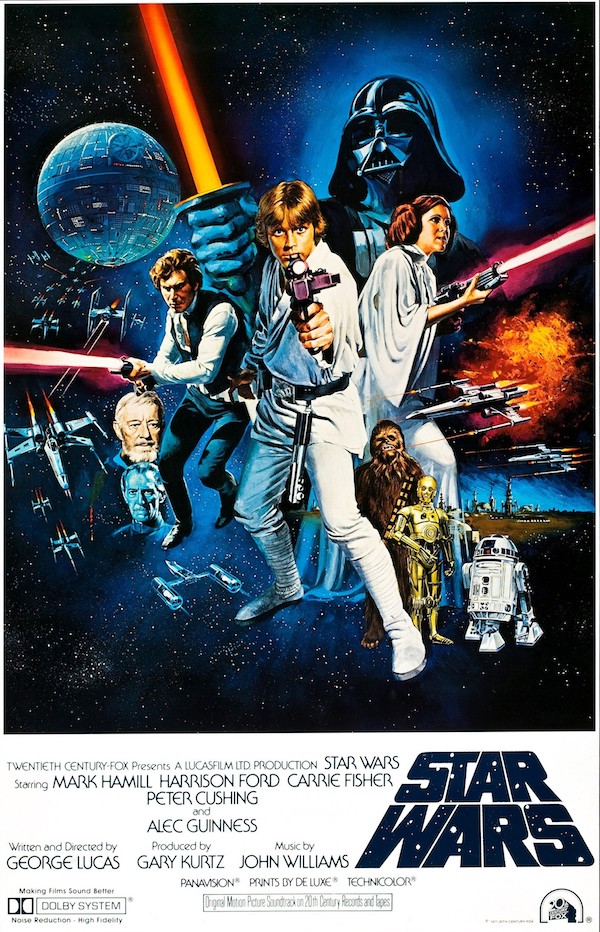
It's as if the longer something has survived gives it a compound interest effect. This is why a movie like Star Wars, which was probably the first truly great Sci Fi picture, still captures the imagination today. In a lot of respects the Lindy Effect is closely linked to the Matthew Principle, where success begets more success, and the Pareto Principle, where a small number of performers in a field horde the majority of the rewards.
It’s why the Harry Potter books will still be on display in book stores years after their initial release – they sell more in part because they survived, so people want to see what all the fuss is about. Last year I had a personal mission of reading classic authors like Orwell for the same reason, they have lasted this long so they must be good, is the deduction (and it’s right, George Orwell is excellent).
It is also a good reminder why you are probably better off spending your time reading books rather than browsing Twitter and the news in general, as often whatever is being cast as the biggest story in the world today is forgotten about next week (just think of all the Trump stories we have already forgot that seemed huge at the time), but a book by comparison is timeless.
Survive year one and you'll stick with poker

I like the Lindy Effect as a metaphor for a long standing theory I have about poker. I personally believe that anybody who plays poker seriously will have had a seriously large amount of good variance in their first 3+ months when they were learning the game. I believe anyone who has been around poker for more than a year will have hit a lot of three outers and won their set over set battles way more than expectation. The reason I believe this is because poker is cruel and expensive at times, but gives us the illusion of skill when we are winning. I believe the new players who also ran badly after their first deposit will have almost certainly given up poker forever and tried something else. If you are in the game today, you probably experienced ‘beginner’s luck’.
The Lindy Effect complements this idea. If you have played poker for a day, or two, or a week, that is no guarantee you will be playing poker in a year, or two, or a decade. But if you have been playing poker for two years, it seems highly probably you will still be playing ten years from now. Not winning necessarily, simply if you had an early run of good variance that tided you over in year one, you are much more likely to love the game ten years later.
Look at how few established players manage to effectively retire from poker. A lot will explore other things and make it a smaller part of their life but we have had a lot of high profile retirements from people like Vanessa Selbt, Fedor Holz and Doug Polk, where all of them are still involved in poker in some capacity.
The lesson of the Lindy Effect is that once something is established and survived for long enough, it’s very survival adds value to it, making it more likely to stick around. I think the same is true for our love of poker, if we can survive the early uncertain periods and come out the other side a fan of the game, we will probably stay a fan of the game for a very long time. It’s much easier to do that if you run like God at the start.
What theories from outside of poker have helped your game? Let us know in the comments.
Related
- The Matthew Principle
- The Tragedy of the Commons
- Gambler's Ruin
- The Pareto Principle
- The Ultimatum Game
- The Survivor Bias
- The Cobra Effect
- Black Swan events
- Prospect Theory
- Marginal Utility
- Illusion of Control
- The Bike Shed Effect
- The Peter Principle
- Commitment Devices
- Flow
- The Dunning-Kruger Effect
- Poverty Traps
