Skip to forum
Notifications
Clear all

[Closed] [coaching-feedback] NL SSS Gold with xarry2 - wednesdays at 7pm CET

303 Posts
50 Users
0 Reactions
89.8 K Views
Yoghi
Joined: 10.09.2007
BlackMember

Wow, what a post

Originally posted by xarry2
If your raise gets called once and you have to show a weak hand your foldequity will also increase in future.

Doesn't your foldequity decrease? They know you push weak hands, so they will call weaker hands?

And isn't 55 vpip and 1.8 AF pretty agressive?


xarry2 Topic starter
xarry2
Joined: 02.01.2007
Elite Grinder

lol, what a spelling mistake... decrease of course

I shouldn't rely too much on the AFs here. simply not enough hands. but together with such a big VPIP 1.8 is, as you say, way more than with a 15 vpip for example. Nevertheless the board and our holding doesn't speak for a push. So even against a rather aggressive opponent I would fold my hand.

thx Yoghi


Hello Xarry! im really soory for doin it here but i waiting for u a few days by now.
i asked u a couple of questions :
question for Xarry

Thanks! :)


xarry2 Topic starter
xarry2
Joined: 02.01.2007
Elite Grinder

Adv SSS Coaching - 07/09

Yesterday's session was probably the worst coaching session I ever had. Imo I did play a good game without noteworthy mistakes. Nevertheless I wondered wether its really worth moving in against 2 outers
This inspired me to talk a bit about downswings and how to deal with them - especially how to avoid tilt.

First of all: downswings and bad beats belong to poker as sweet mustard to "Weißwurst" :) Bad comparison but both things are intrinsically tied to each other. So it's really essential that you can stand big losses even when you played correctly. To be honest it is however true that you can only learn to stand them by experience. I just learned it the hard way which is imo a very positive thing about poker. You won't make the same mistakes very often if you have to pay for them. But let's come back to downswings. If you play SSS you've probably chosen the most swingy type of poker. We constantly push All-In in situations with just 2-10% edge which has an immense variance. To illustrate this just think of playing dices. How often did you get the 6 several times in a row when playing Ludo ("Mensch ärger dich nicht" in german)? And there the chances stand 5:1. If you now think of pushing AKs vs TT+, AQ+ with only 1.6% edge you can imagine how likely its is to loose many times in a row. To understand the variance is the first thing. Then it comes to coping with it. It has been a great help for me to understand my whole bankroll as winnings which is actually true. I never invested money to build it up. That's why I can never really loose money, even if I go broke. Of course this can be annoying when we planned to move one limit up but have to go one down. But this should rather challenge your ambition than your ego or emotions. If you start to get angry about losses which aren't your faults then you will just make it worse and loose more in the end.
So we've reached tilt. Everyone will tilt in some way if he's loosing to much money/hands but in an individual shape. Some players just don't tilt so much that it leads to noticeable losses. The most part however really has to think about avoiding tilt. There are many approaches so I will just name some. Don't play when you don't feel well or are troubled. Your emotions will seize power quickly and so much for that... Never plan a session to make up with losses. Just play and If you feel like you've lost to much take a look at pokertracker (imo you shouldn't constantly take a look at your game balance, this just makes you nervous and distracts you from playing) If the actual amount doesn't bother you you can continue but if it does you should stop. That's imo the only real help (for me it sometimes helps to go to the bathroom and pour some cold water into my face, which I besides do many times a day anyway... so I'm used to it) But stopping to play and banning all thoughts about poker into the depths of your mind is probably better :) No need to worry about things that can't be undone. That's simplay -EV because your chances to succed are 0, so any efforts are wasted. (if you've lost because of own mistakes then it's something different of course. You have to rework these situations to avoid them in future which is imo +++EV)
Before I totally drift away let's finish: Actually you can't really loose money you just can loose the chance to a cashout or a limit advancement maybe. Imo its not worth beeing angry about that. Far from it, this should rather motivate you to even get better and improve your game since own mistakes are often the last straw when you got some bad beats before.

Known players: (for a description of vp$ip, pfr, ats, folded bb, af, wts, wsd or hands click here)      
[tg]Position_Stack:hands/vp$ip/pfr/af/wts/ats/foldbb/w$sd;MP1$748.50:2391/26/8/0.5/23/39/12/47;Hero$200:///////;[/tg]
5/10 No-Limit Hold'em (8 handed)
Hand recorder used for this poker hand: Texas Grabem 1.9 by www.pokerstrategy.com.

Preflop: Hero is BU with Q♠, J♠
UTG+2 folds, MP1 calls $10.00, 3 folds, Hero raises to $45.00, 2 folds, MP1 calls $35.00.

Flop: ($105.00) 6♠, 8♥, 7♣ (2 players)
MP1 checks, Hero checks.

Turn: ($105.00) Q♥ (2 players)
MP1 checks, Hero bets $60, MP1 folds.

Final Pot: $165.00

In this hand I isolated MANH60, a loose regular who is imo a loosing player in the end. With his high VPIP he will limp a very loose range in MP and he is also not too passive to limp strong hands very often. This flop is however not a good spot for a cbet. Especially if you've got the read that your opponent doesn't fold very often to cbets you should check behind here (I just want to add that the continuation bet is nothing coherent to a preflopraise. It is just an additional possibility to take the pot away even unimproved. But not on 100% of all Flops, if you cbet more than 80% of all flops you really need to have a reason to do so)
Okay, I said check behind the flop because we probably haven't got enough FE. In this spot I however think we don't really have to worry about that. Just take a look at good turncards (about 45%):

- every spade
- every Q and J
- every A and K

Even though the latter don't improve our hand we can nevertheless represent them with a delayed cbet if MANH60 checks to us again. The check behind is often good because with this bluff we give up our remaining equity if we get checkraised (unless we're not calling because of reads, pot odds...) We could still think of betting the flop if we face an opponent who doesn't checkraise but only calls (and isn't too loose so that we've at least got some FE. Then we could push every good turn and avoid a donkbet which will often make it hard for us to push a FD on the turn for example when we checked behind.


xarry2 Topic starter
xarry2
Joined: 02.01.2007
Elite Grinder

Adv SSS Coaching - 07/16

Known players: (for a description of vp$ip, pfr, ats, folded bb, af, wts, wsd or hands click here)        
[tg]Position_Stack:hands/vp$ip/pfr/af/wts/ats/foldbb/w$sd;Hero$227:///////;BB$200:2422/10/9/0.0/41/47/12/52;[/tg]
5/10 No-Limit Hold'em (10 handed)
Hand recorder used for this poker hand: Texas Grabem 1.9 by www.pokerstrategy.com.

Preflop: Hero is MP3 with A♦, Q♠
5 folds, Hero raises to $35.00, 3 folds, BB raises to $200.00 (All-In), Hero folds.

Final Pot: $240.00

I want to examine a preflop equity decision again since these are usually the spots where most money is on stake.

As always with closer preflop decisions you should first calculate the pot odds for an All-In and conclude to the break even equity.
We get: 200+5+35-3/165 = 1.44:1 which equals 41% be-equity

You can find a small equity calculator in this chart. You just have to type in the potsize (always assuming you get raised all-in) and the amount you have to call. You will instantly get the be-equity. just take a look at the first post of this thread to find the links.

Now let's think of some possible ranges for BB who is btw a SSSP however not from PS.com. He's usually looser and more aggressive than most other shorties.

(1) JJ (TT)+,AKs/o and maybe AQs

(2) TT+,AQs+,AQo+

(3) 99+,AJs+,AJo+

Against (1) we have an easy fold. This would be a standard range for a SSSP from PS.com vs an MP3 open raise from an aggressive player like we are. Even if he sometimes resteals TT or AQs we can't call with only 28-32% equity.

Against (2) we have 34.4% equity and this is still not enough to call.

Against (3) we have 42.7% equity and we can call.

I think that even though BB is more aggressive than most other SSSPs he won't often get looser than (2) in a BBvsMP3 resteal. That's why I folded. I also did not have information about how loose he's restealing vs MP3 steals which often speaks for a safe fold instead of risking your whole stack for just 1.7% edge - only based on estimations.

EV vs (3): 237*0.427 - 165*0.573 = +6.7$

This should illustrate why its not smart to risk your whole stack if you're absolutely not sure where you stand. 165$ for an average of 6.7$. Of course we can only maximize our winrate in the longterm if we also play many marginal situations. But I hope you understand why this goal should sometimes be not most important - in particular if we can't really tell if its marginally +/- EV.

Please don't forget to take a look at the poll about postponing my coaching!


xarry2 Topic starter
xarry2
Joined: 02.01.2007
Elite Grinder

Adv SSS Coaching - 07/23

Hand 1:

Known players: (for a description of vp$ip, pfr, ats, folded bb, af, wts, wsd or hands click here)      
[tg]Position_Stack:hands/vp$ip/pfr/af/wts/ats/foldbb/w$sd;CO$318.63:12/58/17/0.4/14/67/0/0;Hero$37:///////;[/tg]
1/2 No-Limit Hold'em (8 handed)
Hand recorder used for this poker hand: Texas Grabem 1.9 by www.pokerstrategy.com.

Preflop: Hero is BU with T♠, A♠
4 folds, CO calls $2.00, Hero raises to $9.00, 2 folds, CO calls $7.00.

Flop: ($21.00) J♦, 5♥, T♥ (2 players)
CO checks, Hero bets $13, CO calls $13.00.

Turn: ($47.00) Q♣ (2 players)
CO checks, Hero bets $15 (All-In), CO calls $15.00.

River: ($77.00) Q♦

Final Pot: $77.00

Question from the channel concerning this hand:

"To ur AT hand: But even a straight-draw with a Q is beating u now? I would have checked behind. Do u think that is a leak?"

Let me first say something to flopplay. We have a 28$ stack left in a 19.5$ pot (it is already raked). This euqals a pot to stack ratio of 1.44:1. Basically it is very often possible to push directly up to a ratio of 1.5:1. It is often profitable but not optimal! Imagine situations where you have only air and almost no outs if your bluff gets called. Very often a normal cbet achieves a comparable foldequity as a direct push. Why should we then risk our whole stack if half of it already creates good foldequity and we can easily play bet/fold (a good example is A72 board an we have pocket 66)
Because I however want to balance my b/f, normal (small) cbet line I often have to play my made hands similar.
That's why I made a 2/3 cbet but plan to also call a c/r because of the good pot odds and our remaining equity (2 ten outs, 3 Ace outs and 1 backdoorstraightdraw out). I have to admit that this is however a close spot. The board is drawy and we face a loose opponent which often speaks for a direct push. With a remaining stack like 26$ and less I would always push directly.
If I'm commiting myself with the flopbet I'm also commited on the turn. So folding is no alternative. But there is a difference between checking behind and pushing. With the push we can create at least a bit foldequity and there are still worse hands or draws where we need to protect.
If we get called in 100% we need at least 20% remaining equity to make proftit. Against a rather loose turnrange (with flushdraws/gutshots or OESDs) we easily have that.
If you don't like the unpleasant turn decisions then push the flop in these spots where you anyway plan to go broke.

Hand 2:

Known players: (for a description of vp$ip, pfr, ats, folded bb, af, wts, wsd or hands click here)      
[tg]Position_Stack:hands/vp$ip/pfr/af/wts/ats/foldbb/w$sd;SB$215.96:7228/21/6/0.5/24/41/13/50;Hero$40:///////;[/tg]
1/2 No-Limit Hold'em (8 handed)
Hand recorder used for this poker hand: Texas Grabem 1.9 by www.pokerstrategy.com.

Preflop: Hero is BB with 8♠, 9♠
6 folds, SB calls $1.00, Hero raises to $7.00, SB calls $5.00.

Flop: ($14.00) 8♥, 5♠, T♣ (2 players)
SB checks, Hero bets $8, SB calls $8.00.

Turn: ($30.00) J♦ (2 players)
SB checks, Hero checks.

River: ($30.00) 3♥ (2 players)
SB checks, Hero checks.

Final Pot: $30.00

I really like hands with playability and potential to raise opencompletes.
On the flop I will cbet but fold to a c/r. If you raise completes with a loose range than you will have to be tighter if you're getting action.
Imo I missed a bet on the turn. Since we have a pair and picked up a OESD we shouldn't play b/f. Either we checkbehind in order to get a free river. This is a good line if you face an opponent with a very high WTS. If he does not fold anyway betting would be burning money. I however decided to bet. We should push the turn with only 25$ in a ~28$ pot. MANH60 - my opponent - will call the flop quite loose. With any T,8,5 with medium pockets or with 97, 76, J9 and maybe with low pps or weak gutshot draws or only with OCs (of course also with 2pairs+).

I assume around 20-25% remaining equity in average when I get called. How much foldequity do we need then?

Pot to be won directly: ~28$ (raked)
Pot to be won after a call: ~52$ (raked)
our remaining stack: 25$

EV = 28$*FE + (1-FE)[0.20*52$ - 0.8*25]
= 28$*FE + (1-FE)(-9.6$)

=> FE for EV>0 = min. 25.1%

EV = 28$*FE + (1-FE)[0.25*52$ - 0.75*25]
= 28$*FE + (1-FE)(-5.75$)

=> FE for EV>0 = min. 16.4%

This should be realistic. He will often fold 22-44, 66,77, 5x and some weak draws. Key point is however that the flopcalling range is loose. If your cbet only gets called with at least medium pair or an OESD I prefer the check behind an reevaluate the river.


xarry2 Topic starter
xarry2
Joined: 02.01.2007
Elite Grinder

Adv SSS Coaching - 07/30

Let's first deal with an interesting question from the channel:

Have you ever calculated some squeeze plays? depending und our stack, the openraise size and the range of the cold caller and
openraiser. to my mind it is kind of diffcult and you cant really use a chart for this situations, because they are so dynamic.

I never did and I don't think I will. Making a chart always requires to simplify situations. Squeezing is however such a dynamic and specific situation that making simplifications would greatly effect on our achieved winnings. Maybe a basic chart is possible but I rather recommend to gather experience with squeezen slowly. You will soon get better and better. In particular in putting your opponents on ranges and determining the foldequity. Both things are essential for our EV. As well as the raisesize and our stack. Besides this our hand is of course important but again you should first concentrate on your opponents and then on your holding.
For more information you should take a look at the new strategy article about squeezing in the platin strategy section.
I will give some general hints now:

We like to squeeze

- against aggressive openraisers who are however not that loose so we can achieve FE
- against loose but not too passive coldcallers
- with a stack which gives us foldequity but is on the other hand not too big
(your all-in should be at least about 4 times the raise but on the other hand not bigger than 7 times the raise)
- the more often the later the postion of the raiser is (best BUvsSB we in BB)
- with hands that have an edge against the PFR
- with hands that have a good equity against the calling range and get profitable if we create enough FE
- according to our image/history => achieved FE is very dynamic!

The edge hands would usually be those who have more than 50% equity against the PFR. Nevertheless we can sometimes squeeze with a SC or a PP because these hands usually have good equity when we get called but create the same FE preflop. If our opponents fold often we can compensate for the fact that we are behind when we get called. For doing this you should however be more experienced and especially take into account how much foldequity you need/can create. This is of course based on your own estimations so be aware that this type of squeezing is very swingy. If you have to show a loose squeeze your foldequity will of course decrease in future! (and the other way round)

Hand 1:

Known players: (for a description of vp$ip, pfr, ats, folded bb, af, wts, wsd or hands click here)      
[tg]Position_Stack:hands/vp$ip/pfr/af/wts/ats/foldbb/w$sd;MP3$562.20:140/50/6/0.1/23/40/12/33;BB$368.50:20/40/0/0.0/57/25/0/25;Hero$81.70:///////;[/tg]
2/4 No-Limit Hold'em (9 handed)
Hand recorder used for this poker hand: Texas Grabem 1.9 by www.pokerstrategy.com.

Preflop: Hero is BU with T♦, K♣
4 folds, MP3 calls $4.00, CO folds, Hero raises to $18.00, SB folds, BB calls $14.00, MP3 calls $14.00.

Flop: ($56.00) J♦, 2♠, 2♥ (3 players)
BB checks, MP3 checks, Hero bets $63.70 (All-In), 2 folds.

Final Pot: $119.70

Even though we face two opponents I like the push here. First we show more strenght if we push against to and second I don't think that we'll get calls very often. Key point is their probably very loose calling range preflop. That's why both opponents will have so many hands which missed the flop. The percentage which has is of course smaller the bigger their total range is in this spot. In fact only a Jx a 2x and PPs beat us (of course A-hi but I don't expect them to call A-hi against a PS push on this flop. In addition I think that even in case we get called we're not drawing dead. Against PPs we still have 6 outs and against most J at least 3 with maybe a bdsd. I have to admit that I would rather like to have KQs/AQs/AKs here. It has 6 outs even against a J and we have an additional bdfd. But I think even KT is good enough.

As always we first have to consider the pot odds abd our remaining stack. Since the pot is almost as big as our stack we should either push or fold.
Without remaining equity we would need the following FE:

EV = 0 = 56*FE-63.7*(1-FE) => FE = 53.2% (our bet / pot+our bet)

This would equal about 73% FE for each of our opponents. I don't think we can achieve so much but because we have remaining equity we also don't need that much. I think something between 60-65 FE for each of them is very realistic. But let's simply take a look at the break even FE when we consider 20% remaining equity (with KQs/AKs/AQs you would have about 25%)
(with rake of 3$)

EV = 0 = 56*FE + (1-FE)[116.7*0.2 - 63.7*0.8] => 33% break even FE

This would again equal 57.4% FE for each of them. You see its usually profitable to push here even with a weak hand like KT if the calling ranges of our opponents are big enough to provide enough FE for us. With KQ/AQ/AK or many PPs we could however push easily and get an even better EV.

Hand 2:

Known players: (for a description of vp$ip, pfr, ats, folded bb, af, wts, wsd or hands click here)     
[tg]Position_Stack:hands/vp$ip/pfr/af/wts/ats/foldbb/w$sd;BU$501.35:2630/27/10/0.7/30/61/13/43;SB$400:1133/13/11/0.0/28/35/17/48;Hero$68:///////;[/tg]
2/4 No-Limit Hold'em (8 handed)
Hand recorder used for this poker hand: Texas Grabem 1.9 by www.pokerstrategy.com.

Preflop: Hero is CO with 8♠, 8♥
4 folds, Hero raises to $14.00, BU calls $14.00, SB raises to $50.00, BB folds, Hero ?

I would like you to take a look at this hand. Determine the pot odds we get for an all-in (treat the BU coldcall as deadmoney) and the range of SB. (PS.de TAG having an aggressive history with me). Then decide wether to push or not. I will post my analysis next week.

Solution:

The Pot Odds we get for an all-in are: 68$ for SB's squeeze (I assume he raises us all-in), 14$ for the coldcaller, 14$ for my raise and 4$ for the BB. In total 100$. Minus 3$ rake it would be 97$. we have to call 68$-14$=54$ and thus the pot odds are: 97:54 or ~1.8:1. this euqals a break even equity of 35.76% (see equity calculator in the chart calculation or simply build the reciprocal value of the sum of the pot odds => (1.8+1)^-1. Let's now give SB a squeezerange where 88 has 36% equity and where we are ~breakeven: already against TT+,AQs+,AQo+ we have 37.3% equity. since there is history with SB and deadmoney SB will surely raise more and we will make a good profit with calling 88. Thus I would definetely go broke in this hand.


xarry2 Topic starter
xarry2
Joined: 02.01.2007
Elite Grinder

Adv SSS Coaching - 08/06

Hand 1:

Known players: (for a description of vp$ip, pfr, ats, folded bb, af, wts, wsd or hands click here)    
[tg]Position_Stack:hands/vp$ip/pfr/af/wts/ats/foldbb/w$sd;MP1$964:244/23/8/0.8/25/38/15/64;Hero$156:///////;BU$307:4872/9/8/0.0/36/44/15/52;[/tg]
5/10 No-Limit Hold'em (7 handed)
Hand recorder used for this poker hand: Texas Grabem 1.9 by www.pokerstrategy.com.

Preflop: Hero is MP2 with A♠, J♣
MP1 calls $10.00, Hero raises to $45.00, 2 folds, BU raises to $307.00 (All-In), 3 folds, Hero raises to $156.00 (All-In).

Flop: ($488.00) 3♠, Q♠, 9♦
Turn: ($488.00) K♠
River: ($488.00) 5♦

Final Pot: $488.00

Let's start with a mistake. I like to isolate the loose MP1 with AJ even in MP2. I'm in front of his limping range and I have position. My stack is imo too big to push directly. Even though the pot will be very big on the flop if i get called I can sometimes get out of the hand on ugly boards. In all other cases I will push as cbet.
Well, now maxzefir reraised me. I made an instacall because of apparently good pot odds and our history (he's really reraising me loose)

Pot odds for our call are:

156+15+10+45-3 / 111 = 2.09:1 equals 33.2% break even equity.

Giving him JJ+/AK is too tight. I think because of our history and the fact that I try to isolate loose players very often I think he will have something like TT/AQ, maybe 99, too.
agains this I have 29.6% equity so I should have folded. Even if I add AJs/(AJ) which is possible I only have 30.3%(32.4%) equity.

Its usually a minus EV call, if it runs best for me and he's on a really loose range i'm flipping => fold

Hand 2:

Known players: (for a description of vp$ip, pfr, ats, folded bb, af, wts, wsd or hands click here)      
[tg]Position_Stack:hands/vp$ip/pfr/af/wts/ats/foldbb/w$sd;Hero$185:///////;CO$211.25:865/35/3/0.1/28/35/6/42;[/tg]
5/10 No-Limit Hold'em (8 handed)
Hand recorder used for this poker hand: Texas Grabem 1.9 by www.pokerstrategy.com.

Preflop: Hero is MP2 with J♥, A♠
2 folds, Hero raises to $35.00, MP3 folds, CO calls $35.00, 3 folds.

Flop: ($85.00) 8♥, 8♦, Q♠ (2 players)
Hero bets $50, CO raises to $176.25 (All-In), Hero folds.

Final Pot: $311.25

CO's AF was about 1.5. He could really call with a very loose range preflop that's why I prefer to cbet on this flop. I will usually only get called by PPs, a 8 and a Q. because he's rather passive I also like b/f. I think if I get raised i'm beat. On the other hand if he only calls I could try to push some turncards. of course every J and every A but also i like a K or a T because they give me a gutshot. Key point is however that I assume many PP-calls on this flop which really have a hard time calling again. however CO seems to be very loose postflop that's why we have to be careful with 2nd barrels.
Against many other players the 2nd barrel is however often profitable.
Some guys in the coaching channel suggested a c/r AI on this flop because we could a) induce bluffbets and b) create some FE against low pps.
Imo our opponent is too passive to use this line. If he bets he won't fold to a c/rAI. If i faced a more aggressive opponent i could however give it a try.

Hand 3:

Known players: (for a description of vp$ip, pfr, ats, folded bb, af, wts, wsd or hands click here)     
[tg]Position_Stack:hands/vp$ip/pfr/af/wts/ats/foldbb/w$sd;Hero$58:///////;BU$394:1785/16/3/0.3/31/47/16/54;[/tg]
2/4 No-Limit Hold'em (7 handed)
Hand recorder used for this poker hand: Texas Grabem 1.9 by www.pokerstrategy.com.

Preflop: Hero is CO with J♠, T♣
3 folds, Hero raises to $14.00, BU calls $14.00, 2 folds.

Flop: ($34.00) Q♦, 3♥, K♣ (2 players)
Hero bets $44 (All-In), BU folds.

Final Pot: $78.00

with just below 1.3:1 pot to remaining stack ratio I always push, especially with an OESD. I also mentionend that I would also push AA or KQ here in order to balance. There was the suggestion to play a different line namely: b/c with OESD and balance by b/c made hands/monsters.
Imo thats a good line however only with bigger stacks. with such a small stack we're usually commited after a cbet (as long as I wouldn't bet something like 15 to 16$). With a draw its usually best to maximize foldequity that's why I preferred the push. if I had more than 50$ here I would definetely play b/c though. something like 17$ cbet.
What's your opinion?

Summer Special

I just had the idea of providing something like an additional content with my reviews. off-topic. Maybe I can draw more attention to it by doing so ;) no, but I sometimes would be really happy about more feedback (I always want to improve my coaching and without feedback, no matter if positive or not, this is on my own and quite hard to do).
Well, since its summer, most of us have plenty of time and are maybe rollling in money anyway I'll come up with a perfect solution bringing both things prefectly together:

Xarry's favourite cocktails (week 1)

Let's start with a basic one which must be part in every bartenders repertoire: The Mojito

The Mojito is of cuban origin and became famous something in between 1910 and 1920. Yet, Ernest Hemingway felt in love with this drink. Of course there are many different ways to mix this cocktail. I will describe my favourite recipe and mix it up with some tips/deviations.

You need:

- some mint leaves
- 2-3 teaspoons of white cane sugar
- 1 Lime
- 2cl Lime Juice
- 4-6 cl white rum (Havana Club, white or 3 years or Ron Varadero are just fine to start with)
- Soda (which is alkaline water with sodium bicarbonate (NaHCO3), but sparkling mineral water will do, too)

Usually you take a highballglas. But imo anything is fine as long as its not too big or thin. Should have about 30 to 37 cl volume.

Well, start with the mint leaves. Depending on their size and flavour you need more or less. But usually it should be at least 6. There are loads of mint species to use. Each one has its own flavour. If you can get hold of Nana Mint from Morocco (its not far away from gibraltar tribun ) then get it! Its best to have a plant in your garden btw! But try as many species as possible to find your favourite. Add like 2 to 3 teaspoons white cane sugar, depending on how sweet you like it. Well, then squeeze limeeights into the glass but don't put them into the glass before you muddle the mint/sugar/limejuice mix. Citrus fruits contain bittertastants in the paring. I often add like 2cl of Lime Juice (Rose's) because it makes the cocktail more fruity and compensates for too sour young limes. Now I mix it with a barspoon so that the whole sugar dissolves (If you don't do this before you add ice the solubility of sugar will decrease greatly and you'll have sugar cristals on the bottom of the glass...) After that you need to muddle the mint/lime/sugar mix gently. Just press with the muddler and don't turn around because this will frazzle the mint. We just want to drink their flavour not their leave parts. You could also use a gentle Mojito-muddler (see image, I don't want to advertise bacardi btw :)) The solubility of mint flavour is also increased by adding like 1cl of rum before. Well, then we need ice. Imo the mojito hast to be an icy cocktail. In the cuban original they use just ice cubes. In Europe the crushed-ice variant is more common. But don't confuse it with a Caipi! Fill about half to 2/3 of the glass with ice and now pour the 4-5 cl rum over it (even though most of you will maybe like much alcohol a good cocktail is distinguished through non-alcohol taste) Now stir up the mix to disperse the rum and mint leaves throughout the whole glass. If you want you can now add some of the limeeights. Float the drink (fill it up because some ice already melted) with 2-4cl Soda or sparkling water and its ready. Maybe you add something like a lime slice on the glasses edge or a mint twig for decoration. Of course you need a straw and if you don't have those sugar crystals this is just perfect.

It should look like this but be free to try what you think fits the drink! Everyone has a different taste!

I'm also happy for other suggestions (even though I've been experimenting a lot with this drink)
Another variant is the pineapple mojito. You don't have to change much but simply add some pieces of pineapple to the mint/lime/sugar mix and muddle them together with the mint.


TribunCaesar
Joined: 29.04.2007
Elite Grinder

Hehe, nice one!

But now I am pretty thirsty...


xarry2 Topic starter
xarry2
Joined: 02.01.2007
Elite Grinder

Adv SSS Coaching - 08/13

Hand 1:

Known players: (for a description of vp$ip, pfr, ats, folded bb, af, wts, wsd or hands click here)       
[tg]Position_Stack:hands/vp$ip/pfr/af/wts/ats/foldbb/w$sd;SB$492:1537/15/1/0.1/28/42/14/51;Hero$68.70:///////;[/tg]
2/4 No-Limit Hold'em (9 handed)
Hand recorder used for this poker hand: Texas Grabem 1.9 by www.pokerstrategy.com.

Preflop: Hero is BB with A♥, 5♥
7 folds, SB calls $2.00, Hero raises to $14.00, SB calls $10.00.

Flop: ($28.00) A♣, 5♠, 7♦ (2 players)
SB checks, Hero bets $18, SB calls $18.00.

Turn: ($64.00) 9♥ (2 players)
SB checks, Hero bets $36.70 (All-In), SB calls $36.70.

River: ($137.40) 4♥

Final Pot: $137.40

vs: SPARTO2

the ats is imo not correct. he's also very passive in late position. well, i like to raise A5s here. of course he can oft call with better aces but he will also do this with many weaker holdings than mine. and in addition there's a chance that we're winning the pot preflop. if not we still have a cbet and often good drawing outs.
well, this is a nice flop for us... of course we cbet. the cbet could even be a bit smaller. like 16$. our hand is of course strong enough to go broke but after the flop call we should think about how to maximize our winnings. during the coaching there was the suggestion not to push the turn. to be true, pushing the turn is as we will see not always optimal. in this spot it however is because of our history. i often made 2nd or 3rd barrels against him before because he's calling the flop very loose (fold to cbet 54%). thats why i wanted to balance this bluffs with a good hand.
against many other players the push is however not optimal. even if the call the flop quite loose they will fold many weaker hands to our push. since the board is not very drawheavy I think we can sometimes just check behind the turn and either call/push or just push the river. especially against aggressive opponents we will get much more value from worse hands which will often punish our "weak" check behind with a bet on the river which is actually or profit.
So, if you have a good hand on a rather dry turn you can often get more value if you check behind (which besides that also balances your check behinds if you've got nothing or a marginal hand). Against very loose players I would nevertheless just bet through. They will call with all sorts of hands on the turn, too.

Hand 2:

Known players: (for a description of vp$ip, pfr, ats, folded bb, af, wts, wsd or hands click here)   
[tg]Position_Stack:hands/vp$ip/pfr/af/wts/ats/foldbb/w$sd;MP3$196.45:53/21/0/0.0/20/33/17/100;BB$203:1388/11/5/0.9/24/50/21/49;Hero$42:///////;BU$66.10:319/20/6/0.5/26/28/12/21;[/tg]
1/2 No-Limit Hold'em (7 handed)
Hand recorder used for this poker hand: Texas Grabem 1.9 by www.pokerstrategy.com.

Preflop: Hero is SB with A♦, 5♦
2 folds, MP3 calls $2.00, CO folds, BU calls $2.00, Hero calls $1.00, BB checks.

Flop: ($8.00) 2♣, 3♥, Q♦ (4 players)
Hero checks, BB checks, MP3 checks, BU checks.

Turn: ($8.00) K♦ (4 players)
Hero checks, BB checks, MP3 checks, BU checks.

River: ($8.00) A♥ (4 players)
Hero bets $6, 2 folds, BU calls $6.00.

Final Pot: $20.00

Preflop I like to complete A5s because of good pot odds. theres no reason to bet the flop multiway with a gutshot/bdfd/1overcard. imo we could make a bet on the turn. we now have up to 15 outs and there was no action on the flop which speaks for weak hands. nevertheless they all are pretty passive (the AFs aren't that wrong here) which means they could check behin a Q for example. maybe thats why I just checked the flop. against 4 opponents i really wonder wether a bet creates enough foldequity. i think its therefore okay to check and if possible call a bet. on the river we pick up the ace and i instantly thought of making a bet. afterwards we had a discussion in the coaching channel wether this bet is good at all. do we really get calls from worse hands? in this situation i think we do. but just because our opponents are so passive and could check a weaker Q or K in a multiway pot (I saw the BU checking behind on the river with an overpair... before) I think we can therefore make a bet but fold to a raise. it should be around 50-60% potsize (as played it was too big) so that we get more calls from weaker hands. bet/fold because such passive opponents won't make a riverraise with anything worse. if we faced more aggressive opponents I would however just c/c the river. first because its then really unlikely that someone has a K or a Q (after this action) and second because there's the chance that someone wants to take the pot away with a bluff/unimproved hand.

Xarry's favourite cocktails (week 2)

This week I want to present another classic which is not as versatile as for example a Mojito but still good enough to be part of this. And btw its the perfect cocktail to negotiate the faint aversion to alcohol some girls show. The Sex on the beach.

Its a very easy but famous cocktail. You need:

- 8 cl Orange Juice
- 4 cl Vodka (you can use almost any Vodka here)
- 8 cl Cranberry Juice
- 2 cl Peach Liquor (Peach Tree, DeKuyper)

Just add all of this and some ice cubes into a shaker and shake it. Strain (some cocktail shakers already include a strainer) the melange into a glass which is filled with 3-4 Icecubes. You need a glass with around 37cl volume, just the typical cocktail glasses you get everywhere (and optionally you could also use a tropical glass). As decoration you need a slice of oranges and a cocktail-cherry on a stick. Btw you can change the ratio of Orange to Cranberry Juice. If you take more of the latter the cocktails colour turns from orange to red and gets sweeter. Again you won't taste the alcohol but thats what most girls want... Last time I made cocktails on a party I think the customer ratio was about 9 girls to 1 men.

You can see how the colour differences. Btw, the foam is created through shaking. Anddon't use a decoration as in the first image...


xarry2 Topic starter
xarry2
Joined: 02.01.2007
Elite Grinder

Adv SSS Coaching - 08/20

Yesterday we talked a lot about stealing, restealing or defending against small steals. In addition we talked about the Restealing Chart. It is a decent tool for quick and easy resteals. Usually the chart provides us with profitable moves but in some cases it either gives us only one profitable play and not the most profitable one or it gives us a play which has a marginal +EV or even -EV.

Lets make some calculations to illustrate these problems:

NL 200: 3$ max rake

CO steals we are on the BU with ATo
Our stack: 20BB
Stealraisesize: 4BB
ATS of our opponent 25

Because he's stealing from the CO I can't take the total 25% stealrange. Usually players steal tighter from the CO than BU. In this case I assume 20% CO stealrange (and about 30% BU stealrange)
Pokerstove says: 20% = 66+,A4s+,K8s+,Q9s+,J9s+,T9s,A9o+,KTo+,QTo+,JTo

The resteal chart tells us to resteal ATo now. This is our general EV:

EV = Foldequity*(Blinds+Stealraise) + (1-Foldequity)[Our Equity*(Blinds+opponents stack - Rake) - (1-Equity)*Our stack]

100% calling range:

EV = 0*(1.5BB+4BB) + 1[0.517*(1.5BB+20BB-1.5BB) - 0.483*20BB] = +0.68 BB

70% calling range: (~14%)

EV = 0.3*(1.5BB+4BB) + 0.7[0.449*(1.5BB+20BB-1.5BB) - 0.551*20BB] = +0.222 BB

40% calling range: (~8%)

EV = 0.6*(1.5BB+4BB) + 0.4[0.348*(1.5BB+20BB-1.5BB) - 0.652*20BB] = +0.868 BB

This should illustrate that our EV stays profitable within normal stacksizes/stealraisesizes if we play according to the Resteal Chart. Of course as already stated in the resteal article, this is not always optimal but usually profitable.

Lets now just change our stacksize and the stealraisesize:

NL 200: 3$ max rake

CO steals we are on the BU with ATo
Our stack: 25BB
Stealraisesize: 3BB
ATS of our opponent 25

100% calling range:

EV = 0*(1.5BB+3BB) + 1[0.517*(1.5BB+25BB-1.5BB) - 0.483*25BB] = +0.85 BB

70% calling range: (~14%)

EV = 0.3*(1.5BB+3BB) + 0.7[0.449*(1.5BB+25BB-1.5BB) - 0.551*25BB] = -0.435 BB

40% calling range: (~8%)

EV = 0.6*(1.5BB+3BB) + 0.4[0.348*(1.5BB+25BB-1.5BB) - 0.652*25BB] = -0.34 BB

Now even though the resteal chart tells us to reraise we have a negative EV. This is because:

- we have a bigger stack
- the stealraise is smaller

If we push and our opponent calls us tighter (he will usually fold the weakest hands in his stealrange) our equity in case we get called is decreasing and we are behind if we get called. Usually this effect is compensated by the fact that everytime he folds (gets tighter) we win his raise and the blinds. If the raise gets smaller this compensation gets smaller too. Having an even bigger stack amplifies the effect, too.

So be careful if you face small steals or have a big stack! In this cases I recommend to calculate a safety margin in order to avoid -EV. E.g. if you're opponent has a 25% ATS resteal with the range according to 20% ATS.

To be continued...

Please read this with caution if you're just starting with adv SSS! Also I don't think these plays are important below NL 400 or if you just face average aggressive opponents.

Another big party of yesterday's coaching was about defending against minstealraises. Especially some very aggressive shortstacks or regulars apply this tactic against us (mostly) ultra tight shorties. They know we're just playing the top hands and usually fold to steals very often. In addition they know that we're almost never only calling a raise. That's why they minsteal against us. The following is only a good tactic against these types of stealers. Against other minstealraises from tight or loose passive opponents we usually have to be much more careful.
As should've become clear now we cannot always push directly to these. That's why we have to think about different ways to defend. Possible is either a call or a smaller reraise not committing us if we get pushed.
Let's deal with calling first. We have to distinguish wether we are OOP or IP. IP I often prefer to call. We get good pot odds (3:1 against a minraise, 2:1 against a 3BB steal). If the SB minsteals and I'm in the BB I often like to call hands which have either good implieds/playability or simply dominate the stealers range. The first would be hands like a PP or SC the latter hands like K9+ or A8+ or Q9+. suitedness is not obligate but makes it a bit easier. with 3:1 odds you could basically play hit or fold. Nevertheless I think you should start to make some moves, e.g. floating or bluff/semibluffraising their cbets or turnbets. The latter is easier.

Flop: Ks9c3h we have QJss or AJss or maybe TT
Theory here is: aggressor will cbet 100% of his (often 100% stealing range) on this flop. thats why we achieve much foldequity on the one hand and even if we get called by Kx or sets/2pairs we are not dead.

Flop: T32 2suited we have AJ/KQ/QJ suited but not essentially the flushdraw suit. usually we will get cbets here very often and we could raise him with like 6 remaining outs if we get called. maybe also with medium PPs.

Besides this you can of course raise any good draw. Nevertheless if you replay at you opponent you have to really understand concepts like balancing. You also have to call with AA oder KK or AK preflop to balance your range. Also you have to balance your flopraises/pushes.

Another possibility is to just call your opponents bet in order to either bet if he checks the turn (Floating) or to raise his turnbet all-in if you maybe picked up a draw. Again I can't go into detail. Its just too much for one post. You should consider a private coaching/ public coachings in order to see how these concepts are realized. Learning these plays without help usually costs much time and in addition much money. In general you alyways have to think: how would I play my strong hands here, if you ca n figure out this and also figure out that you're opponent is "bluffable" in this spot then you can float/bluffaise. Maybe I can introduce some examples in the next weeks.

We'll you see how complicated this can get so please be careful if you're not experienced with determining ranges/remaining equity/fold equity! Then you should start with just calling hands like PPs on setvalue (its okay because we get 3:1 and on almost every flop 2-3BB cbet which makes it 6:1 with implieds the rest of 1.5BB will come through second barrels or pushcalls) or you call hands like KTs+ or QJs (where you are in front against a loose stealing range) to get used to postflop play and starting slowly to make some moves. You also have to read some BSS articles concerning postflop play.

I said we can also make a smaller raise not commting us but on the other hand not giving our opponents the odds for a call. I usually don't apply this play. Thats why I won't give concrete recommendations here. But basically you have to consider that:

- you really face an aggressive stealer
- you never make a reraise which is more than 30% of your stack, else you will be commited very often and the raise is too expensive
- your opponent shouldn't get very good pot odds
- the reraise shoul therefore be about 2.5x-3x the steal, but never invest more than these 30% of your stack
- you balance your bluffs, or better: your valuereraises are balanced by some bluffs. always raise the same no matter if you bluff or have aces
- you are always aware of your image, don't overdo bluffrestealing!!! you will loose money then, because you're opponent will adapt.

Well, all this is just a brainstorm out of my mind. Please take this as inspiration or tips not as a standard strategy. all these advanced concepts are very dynamic and swingy! But imo it is good to at least think about them and maybe slowly including them into your game.

Btw, this is pretty basic stuff but also related:
05/07 Adv. SSS Coaching - Calling Resteals

Xarry's favourite cocktails (week 3)

This week I want to present a cocktail which is imo coming in vogue currently. Its something like a new version of the Caipirinha but imo more elegant and versatile concerning taste: The Bombay Crushed

You need:

- 1-2 teaspoons of brown cane sugar
- Kumquats (depending on their size, the size of the glass and your taste between 3-6)
- 6cl Bombay Sapphire Gin! Only this one...
- 2cl Lime Juice
- Crushed Ice

First add the lime juice and the sugar and mix it with a spoon so that the sugar dissolves mostly. If you like to have more fruity taste then you can also add some real lime juice, but not the limes itself. Then you have to cut the Kumquats into halves. Kumquats are citrus fruits which resemble pretty small oranges. Their taste is however much more interesting as just limes in a drink like the Caipi. You can get them in a well-assorted supermarket, but often only between autumn and winter. Put the halves into the glass with the sugar/lime mix and now press some juice out of them with a muddler. But be careful, the paring is quite bitter. So just muddle gently to get some juice but not the bitter tastants. Now you fill up the glass with crushed ice and add the Bombay Sapphire. Most of you will know it, its used in many clubs for Gin Tonic e.g. Others Gins just don't harmonize with this cocktail. Take a long spoon and stir up the drink so that the Kumquats disperse. Imo this looks much better than if all of them are lying on the bottom of the glass. Well, that's it. Maybe you can add some decoration, a piece of a Kumquat or a limeslice. Of course you need a straw...
The Bombay crushed is a very refreshening coacktail but has its own taste. Mostly due to the gin and the Kumquats its bitter, however I don't want to describe with just this one word. Try it, maybe you'll find more. (If you want to have more fruity taste or sweetness then add 2cl Orange Juice but you shouldn't try usuing loads of sugar. imo thats raping the drink)

As always some pics:


Yoghi
Joined: 10.09.2007
BlackMember

No cocktails :(


xarry2 Topic starter
xarry2
Joined: 02.01.2007
Elite Grinder

To be continued...

I'm currently mixing some in order to find out which I'll present today ;)


Gerv
Joined: 07.05.2008
Elite Grinder

Next time, i will join your coaching, I only have been teased with your reviews and I think i can learn loads of you . Especially math:heart:

Looking forward to and Im gonna try your last cocktail out :)


SoyCD
Joined: 20.02.2008
Oldschool Grinder

Aside from learning a lot about SSS strategy, im finding a whole new reason to start keeping track of this thread

I need to try the last cocktail - I like Bombay saphire mixes ;)


xarry2 Topic starter
xarry2
Joined: 02.01.2007
Elite Grinder

nice :) its imo the perfect cocktail for Bombay Sapphire!


xarry2 Topic starter
xarry2
Joined: 02.01.2007
Elite Grinder

Adv SSS Coaching - 08/28

Unfortunately I left home with my laptop but forgot that I played yesterdays session on my new desktop computer which is still at home. That's why I don't have the HHs here.
However I still remember what we were talking about yesterday. The most important topics were:

- determining the limping range of opponents
- getting a feeling of your own table image

In this review I want to focus on the first topic. If you remind me the other one will be topic of next weeks review. Its also really intersting.

There was a question about how to determine the range of a limper. If you have a program like holdem manager there's an own stat for this. You get the total limp% as well as the limp% for every position. In addition we also have the limp/call% which makes it even easier to evaluate how much foldequity we have preflop. Especially for isolationraises this value is very important.
Well, if you don't have a HM (or the PS Elephant which will soon include this stat, too btw) you have to take a look at VPIP and PFR. The VPIP tells us how many hands an opponent plays alltogether, the PFR how many hand he plays aggressively (raise/3bet/4bet...). Thus the difference between these two stats tells us how many hands our opponents plays passively. Unfortunately this difference is usually not equal to the limp%. This is because coldcalls (calling a raise) are also included. Therfore we will never be able to determine the accurate limp% just through this difference. Nevertheless this difference is the most important indicator for you if you don't have position stats, it doesn't tell us the exact range but with some practice and experience you will get better and better evaluating the opponent and his limping range with this difference. I think some examples illustrate this:

VPIP: 12%, PFR: 10%

These are the stats of a typical tight regular on limits like NL 50 - NL 200. The difference is really small. Usually this opponent just limps some low PPs like 22-66 or maybe up to TT if hes pretty passive. Some of these guys also limp some monsters in order to limp/reraise. Against these opponents I wouldn't isolate - unless I have good reads e.g. that he almost never limp/calls or limp/reraises against a shortstack iso-raise.

VPIP: 14%, PFR: 3%

Sometimes you meet this opponent. He's usually weak/tight. The difference of VPIP and PFR in this case is much bigger. This means the limping range is usually pretty wide. It as well includes many PPs but now also medium to high PPs. Imo this opponent could limp 22-AA. 22-JJ because he's too scared to raise and QQ-AA because he often likes to trap. Besides this you will find hands like AJ+ or good (suited) connectors, like 98(s) - KQ(s) and sometimes a suited ace (A2s+). Against this range isolation seems to be very decent - in particular since the opponent is pretty weak and we can move him out postflop even if we don't hit. We have to be careful though. The problem is that he also often limps, limp/calls pretty strong hands like KQ or AJ+ as well as 88-JJ or even better hands (because his PFR is so low). That's why we have a problem when we isolate with like A8s. We are too often dominated because lower aces usually fold to a raise but the AT+ type aces call. You should therefore rather concentrate on hands which aren't dominated and where its often pretty easy to get out of the hand if our cbets gets action, e.g. lower PPs or suited connectors like 76s-T9s. These hands are profitable because we first have the possibility to hit a strong hand (set/draws) and since these weak/tight guys are often pretty weak postflop. So, take a look at the WTS and foldtocbet value. If the are pretty tight go ahead with your isolationraise but really try to think of domination. Don't isolate probably dominated hands. As before with reads the whole thing gets even better because you can adjust further.

VPIP 24%(or higher), PFR: 9%

This guy is often a rather loose/passive or loose/semi-aggressive player. Its obvious that his limping range cries for a iso-raise. If postflop stats are okay and he's not a calling station and he is able to limp/fold some hands we love to isolate. However we again have to think about his possible range. Its really big now which on the one hand makes it very interesting to raise many hands against him but on the other hand makes it very difficult to determine his range. It could be literally anything. Well its nice that he's not very passive that's why he usually raises strong hands like TT+/AQ+. Now he could have any PP, any suited connector, well I think any two soooooooooooted cards (but they were suited...) and also many gap-connectors and Ax and much much more. This makes it important for us to shift the focus of our isolation range from playability (which it was against a rather tight/semi-loose opponent) to value. Since suited connectors aso are also often in his range suited connectors can often dominate us. Besides that these players often have a high WTS which is really bad for iso-raising-hands like low to medium PPs/suited connectors since these typo hands only make profit whith decent foldquity. If we don't have it we shouldn't raise speculative hands - but we should exploit his looseness with raising hands which dominate him and make it possible for us to go all the way with if we hit. I mean hands like A8s+ (if you're a good postflop player also offsuited is okay but it's a bit more difficult). Also K8s+ or Q9s+ as well as high suited connectors like T9+ are decent. With low pps you have to be careful they are simply hard to play without foldequity because with 22-66 there will always be overcards and we will often gat called on the flop. Even though we know that this doesn't mean much usually its really hard to push 55 on a K76ss/2 board... you know what i mean. with like 77-88 i usually play if the opponent is pretty bad and higher pairs are a standard raise. If we now hit a passable made hand our opponents looseness usually justifies to go broke. Key point is simply that we arent dominated on a AT6 board if we have A9 or with QJ on a Q82 flop. villain could have any ace or any queen and because hes not very passive stronger kickers are pretty unlikely.

And last but not least: position. position. position. well thats really hard to describe without position stats. but in general the limping ranges greatly differ from UTG to MP, CO/BU. Usually most players limp tight UTG and get looser in MP. Yet in UTG as I said before you'll find monster more often. Crucial is also the ATS. without position stats this is the only indicator which tells you something about how much your opponent loosens up in later positions. 10% PFR, 20% ATS means that the incline isn't yery high. 10% PFR and 35% ATS however speak for a huge difference of UTG/MP/late PFR. Especially if you face a middle position limp the ATS is very important. An opponent with a 25+% ATS must have a rather weak hand if he just decides to openlimp or to overlimp instead of isolating in MP2 or MP3.

Okay, I hope this helps you evaluating your opponents and their limping range. Please make sure you understand that isolating is nothing like a standard play. Its always adjusted directly to your opponent. You have to be able to estimate his range hand thus determine if your hand can be played profitable. Btw, if you're not familiar with isolationraises take a look at my older reviews, I worte plenty about isolation.

04/11 SSS Adv. Coaching - Low PPs in late position and isolation raises

03/12 SSS Adv. Coaching - 2nd Barrels and Isolationraises

and also many sample hands in this thread. please feel free to ask when you're questions are still answered. If you make iso-raises you should know what you're doing.

Xarry's favourite cocktails (week 4)

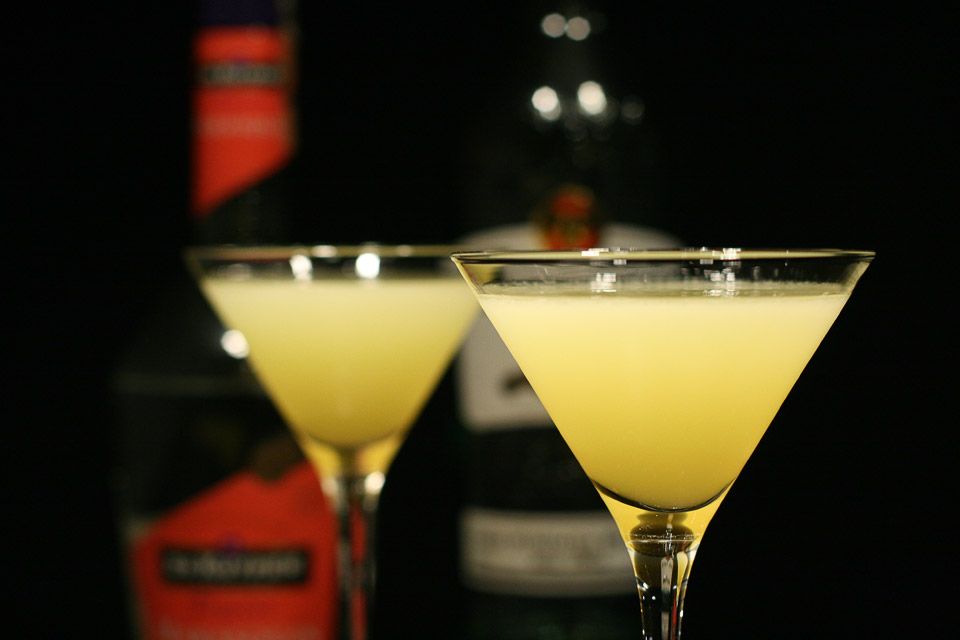
Today I'll present a classic again. Invented just before the turn of the 19th century in Havanna, Cuba, equally elegant and declicous as cocktails as the Mojito or the Cuba Libre and also typical for its origin: The Daiquiri

simply beautiful

I won't write much about how to make this one. Just take a look at this, its simply great. (btw, there are so many good vids about mixing cocktails there...)

http://de.youtube.com/watch?v=A4NKH9He66U

Chilling the glass is really important. Since this should become an original Daiquiri we don't have ice in the drink and without a cold glass the drink would soon become warm. Also double straining the drink is very important. This really keeps all the small lime pulp or crushed ice from ruining the "flawless perfection of the drink".

Finally I want to present a fantastic variation of the Daiquiri, the basil Daiquiri. When I first read about it I thought, well some thing for greenies and, arrrrghhhhh, that doesn't fit together. Well, I tried it and its amazing.

You need:

- basil leaves
- 6cl white Cuban Rum
- 1 Lime
- 2cl Sugar syrup
- lots of ice cubes (as many as fit into the shaker)

Its really important that you first put all the ingredients into the mixing glass (if you have a limepress then just add one whole halve, like he's doing it in the vid). Concerning the sugar syrup, you could either use a bought sugar sirup or a simple syrup ( http://de.youtube.com/watch?v=mLfsgkyLKrg&feature=user ) The latter tastes a lot better but its more work, as you like, but if you use the 50:50 syrup you add 1 party syrup to one party lime juice, else the 2cl bought syrup. Concerning basil leaves how many leaves you take depends on their size ans tast. Just try out and balance until you've found you're perfet mix (this is btw always true for mixing coacktails for yourself)But no ice so far! Just muddle the whole mix thoroughly now and let it infuse about 8-10 minutes so that the tastants dilute into the drink. After that you proceed as seen in the vid. By changing the duration of shaking you take influence on the concentration of the drink btw, the longer you shake the more ice will dissolve (but don't overdo that...). I personally like icy and a slight bit watery drinks since I can thus drink them more persistently and they taste better imo :). That's why I count to 15 when shaking. As you like. You can also do this drink with many different fruits/spices, like strawberries or mint or water melon. You just need to add these things before shaking, muddle them, let it infuse and then mix the drink. and always use a martini glass, if you order a Daiquiri and get it served in a tumbler or so, its not the original and you should disabuse the bartender
Cheers!


xarry2 Topic starter
xarry2
Joined: 02.01.2007
Elite Grinder

Adv SSS Coaching - 09/03

To start with let's talk briefly about your table image. This is what the glossary tells us:

"The image of a player is what others think of his style. They could believe him to be passive or aggressive, to be a bluffer, or one that only bets if he has a good hand, and so on. The image has a direct impact on the actions taken by the other players, and on how best to provoke a certain reaction from them.
The image becomes increasingly important as the level of play increases. The aim of building up an image is to lead the opposition into incorrect beliefs and moves. Hence, a player with a solid, conservative image can bluff more often since his opponents will believe him to have a good hand, whereas a player who is believed to be wild will have an easier time getting his good hands to pay off."

In particular I want to emphasize the last paragraph. If you want to beat high limits this should be your goal. That you can handle the SSS and its advanced strategies goes without saying - usually It doesn't change greatly on higher limits. But the opponents do. Thats why you should lay the focus rather on building an image and deceiving your plays. This means, keep an eye on your image and your table image. The latter can be monitored by displaying your own stats for every table. Thus you can easily see how active you've been on a table. As should have become clear in the definition of image you always want your opponent to believe something which isn't true - at least not always. E.g. I make many loose raises from late position. If my opponents do not adapt I'll continue. But if they do (i.e. reacting to your image, or their perception of it) I adapt, too. I'll always try to determine how they perceive me and my plays. Especially if theres a history between you and an opponent thats great. If I have shown a pretty loose resteal for example and maybe sucked out with 76s against his QQ in SBvsBB battle he will note that. Usually I won't get much credit from him in future for my resteals. But thats great. I can now use my aggressive image to my advantage. How? Well, making loose resteals against him wouldn't be smart. But by now only restealing value hands (and maybe add the one or the other looser steal in order to keep my image alive [well against some players even that isn't necessary since they keep your image very long and don't see that you may have changed your play...]) you give him the chance to make a fault, which is always the reason why you win btw. (fundamental theorem of poker...)
Its just so funny when you push AK as a resteal and he insta calls A2o. You have to realize how to keep your opponent always in a guessing game. Then he'll make faults since he can never be sure how you play. If you then manage to switch gears very often its nearly impossible for your opponent to play optimal against you which is your profit.
You can apply this to all parts of your play but with steals/resteals its very esay to start with. Give it a try. Its not about maintaining your 40% ats all the time. its only about leaving the image that you steal that loose. get a feeling for this dynamics and you'll be able to beat even NL 5k without much efforts.
(btw, very good opponents think the same way so its a guessing game on both sides, but still better than just on your side )

Hand 1:

Known players: (for a description of vp$ip, pfr, ats, folded bb, af, wts, wsd or hands click here)        
[tg]Position_Stack:hands/vp$ip/pfr/af/wts/ats/foldbb/w$sd;CO$396,30:///////;Hero$80,00:///////;[/tg]
2,00/4,00 No-Limit Hold'em (10 handed)
Hand recorder used for this poker hand: Texas Grabem 1.9 by www.pokerstrategy.com.

Preflop: Hero is BB with T♥, T♠
6 folds, CO calls $4,00, BU folds, SB calls $2,00, Hero raises to $22,00, CO calls $18,00, SB folds.

Flop: ($48,00) A♦, 5♣, 6♥ (2 players)
Hero bets $20,00, CO raises to $60,00, Hero calls $38,00.

Turn: ($166,00) Q♠
River: ($166,00) 8♥

Final Pot: $166,00

opponent is unknown

preflop we raise the weak CO-openlimp with TT. the flop unfortunately has an overcard but besides that its very nice for a cbet. unless he has an ace he'll usually fold to a cbet.
afterwards i don't like my play against unknown. we don't know where we stand after he raises this rather dry board. actually if i don't have reads and face an unknown player i often have to assume to be beat. thats why i recommend to just push this flop. our stacksize easily justifies this. his range can be so big and unless he has an ace we'll be favourite very often if we still get called.
as you may know pushing directly as a cbet is very often profitable and easy. but as always there are different plays which have a different EV. if we have reads/stats we can adjust to our opponent and achieve higher EVs often.

- weak/passive opponent:

our best line is to cbet like 1/2 potsize. this board is quite dry and a weak passive opponent will usually play straight forward. this means: if he raises/calls we give up.

- aggressive/thinking opponent:

our best line is now as played. 1/2 pot cbet and call the raise. well, the reason is: he knows that we cbet 100% of our range on A-hi boards and thats why he'll make some bluffs. maybe also semibluffraises with a suited connector/medium pocket pair. if you maybe manage to feign weakness as i actually did in the hand by thinking a bit longer than usual and cbetting like if you plan to play b/f you can sometimes induce even more bluffs. especially aggressive opponents will more often raise Ax in late position than just open limping it. so, the line I choose is best against those players.

- unknown or really loose opponent:

best is the direct push. first because we don't know where we stand after our small cbet gets called/raised and second if it just gets called and the turn is like 70$ big and we only have like 35$ left we have a hard decision. a loose player will often call the flop with 6x,5x or pockets or gutshots. so due to our pretty small stack and the good portion of hands in his range that we still beat we don't know what to do. c/f, 2nd barrel???
to avoid this difficult spot pushing the flop is usually the best choice, a loose player will still call the all-in with many worse hands....

Hand 2:

Known players: (for a description of vp$ip, pfr, ats, folded bb, af, wts, wsd or hands click here)      
[tg]Position_Stack:hands/vp$ip/pfr/af/wts/ats/foldbb/w$sd;BB$636,20:///////;Hero$104,60:///////;[/tg]
2,00/4,00 No-Limit Hold'em (8 handed)
Hand recorder used for this poker hand: Texas Grabem 1.9 by www.pokerstrategy.com.

Preflop: Hero is MP3 with A♥, A♠
3 folds, Hero raises to $14,00, 3 folds, BB calls $10,00.

Flop: ($30,00) 3♠, 7♣, Q♦ (2 players)
BB checks, Hero bets $16,00, BB raises to $32,00, Hero calls $16,00.

Turn: ($94,00) Q♥ (2 players)
BB bets $16,00, Hero calls $16,00.

River: ($126,00) 9♥ (2 players)
BB bets $44,00, Hero calls $42,60.

Final Pot: $212,60

I just call the flop c/raise since i want him to continue his bluffs or weak hands like Q-no-kicker or 7x or medium PPs which he could often fold to a push form me - my stack is a bit bigger than usual.
well, worst card on the turn. but with 60$ in a 94$ pot we cant fold. if he puts us all-in on the turn theoretically we get like 2.6:1. we at least have to be in front 28%. its close, but i go broke here. some players often continue their bluffs in such a spot. of course he had the Q... X(
(but the one in the hand beofre showed 33 at the showdown )
if you think different then please post here! would like to hear some other thoughts.

Xarry's favourite cocktails (week 5)

Since we had some pretty fancy drinks last weeks I'd like to do a simple but very popular cocktail today: The Pina Colada

You need:

- 6cl Rum (usually white and from Jamaica)
- 1cl cream
- 4cl cream of coconut
- 12cl pineapple juice

As always you can change the recipe according to your own flavour. Either you like it more creamy then add more cream (2cl) or if you like a "lighter" version then replace the cream with milk. As well you can use different rums. Especially if you like to emphasize the typical flavour of rum you can use brown and white rum 50:50 for example. Thats all your choice, or the one of your girlfriend since its not a typical male cocktail ;)
Cream of coconut is made of coconutfats mixed with sugared coconut milk. If you want to change the coconut flavour or the sweetness then change the portion of this ingredient. You could also use a flavoured rum like Malibu and then add less rum.
Just add all the ingredients into a (boston) shaker. fill it up with ice. shake strongly. the longer you do the cooler and more diluted the drink will be. as you prefer. and then just strain the mix into a tropical or longdrink glass filled with like 3-4 icecubes. ready! as decoration u may use a pineapple slice and of course a straw. (if u use a bit milk or just shake thoroughly you can create a foam which is often very nice to look at, especially in the tropical glasses.
It should look like this when its finished:

really hard to find something, maybe i'll fix this image...
(btw, search for a pina colada with mint, thats great)



extpan
Joined: 17.11.2007
Oldschool Grinder

Hello,i dont know where to ask but can you see where is problem with that video: http://www.pokerstrategy.com/video/1921 ...they dont work :) tnx very much!


xarry2 Topic starter
xarry2
Joined: 02.01.2007
Elite Grinder

hi,

i think the video link was just broke. tribun fixed it and it should work now.

hf
xarry


Share: