7 routes from tilt to zen
If you can't change results, change your attitude.
If you agree, share this with your friends!
Stress ball

One of the most handy and cheap tools. It won't help to get rid of your bad emotions, but at least you'll be able to channel them to the ball and not to your expensive electronic equipment.
Looking at your winnings graph

When you feel like you're losing control and bad emotions overwhelm you, it can be helpful to just open your long distance winnings graph in your tracking sofware. You will see bad streaks have happened before, but that you managed to overcome them and that you are in fact a winning player.
Don't have such a graph of your own? Look at the graphs of successful players. All of them had their dark days too.
Understanding the maths

Maths is key. Of course, without understanding the maths of poker you won't even know if it's a downswing or a bad play. It is much easier to keep your cool, when you are sure that you made the right play mathematically.
Fast calming down technique
Sometimes bad things happen out of the blue, and you can't let your anger flood your thinking. It would be nice to have some technique that helps you quickly pull yourself together under pressure. Each good player has it, and some of them don't even know that they have it. For some players these rituals come naturally, others develop them manually.
The popular advice is deep breathing that slows down your heart rate (watch Shaun Deeb in the video after the beat).
Yoga and meditation

These two activities can be very useful for your mental game. Lots of successful poker players and sport stars meditate on a regular basis, because it strengthens their psychological balance.
"Mental game of poker 1&2"
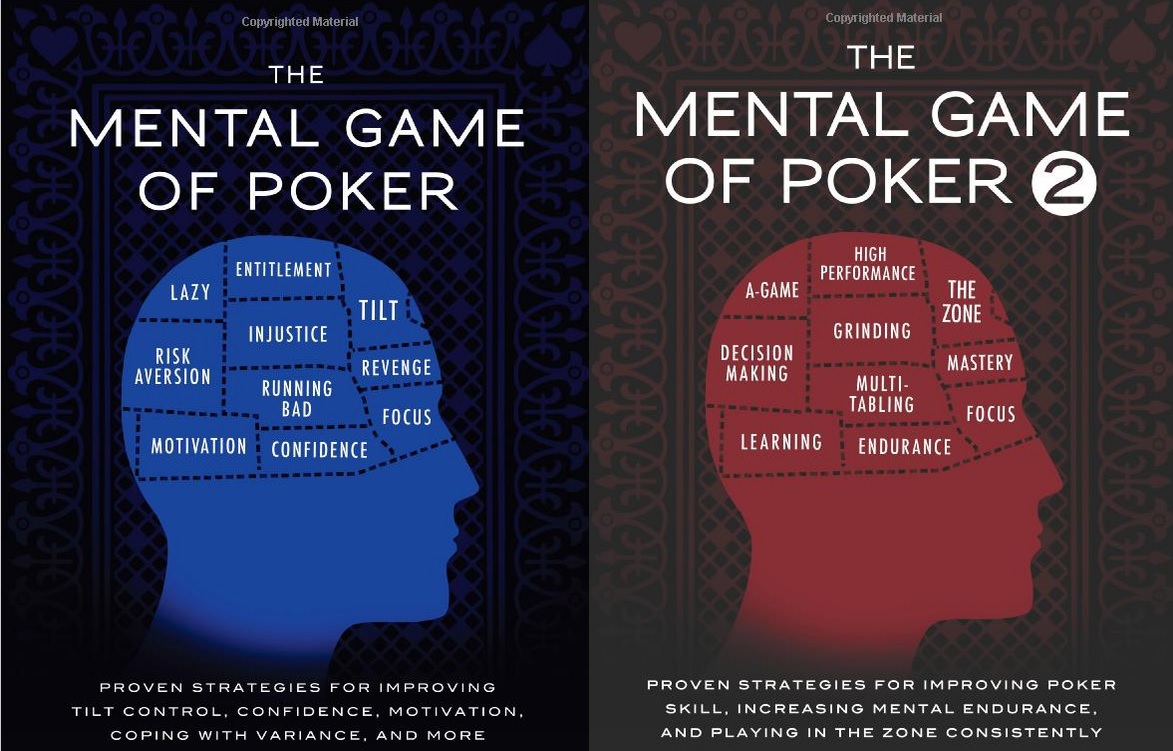
I probably shouldn't call it the Bible of mental game, but it's definitely one of the most insightful reading materials on controlling tilt and emotions in poker. An absolute must read. In order to control something, you should know and understand it.
Change your thinking and attitude
Trigger event -> What I think (how we interpret this event) -> What I feel (our emotions)
The fact is that our emotions don't depend on events that happen. They depend on how we CHOOSE to interpret these events.
"If you can't change it, change your attitude". For example, we can't change that our opponent sucked out on us. But instead of tilting and moaning about our black streak we can choose to think about a white streak, an upswing that must be coming soon. Just like before tomorrow's final exam alarmists panic and good poker players think: "After tomorrow I'll be FREE!"