


Column: How should pros conduct themselves around recreational players?
Barry Carter joins the debate on whether professional players have a duty to be more accommodating and friendly with recreational players.
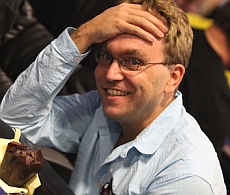 |
| Neil Channing is calling for a change |
One really prevalent debate that has emerged this year from the WSOP is the subject of how rude some professional players can be to recreational players.
In some instances it was a case of simply being unsociable at the tables - not joining in discussions, not talking to anyone but other pros, using too much 'poker speak', and generally spending more time listening to music and staring at their phones than interacting with the other players.
In other more extreme cases pro players would actually be speaking ill of the players to their friends while the amateurs in question were still at the tables and generally being very rude.
This summer there have been some excellent blogs and videos from voices like Brad Willis, Neil Channing, and more recently Daniel Negreanu, all of whom have spoken out against this trend.
I don't think for one moment that poker players have all of a sudden become ruder, far from it. I feel the reason that this debate is a hot topic now is because poker players are increasingly more aware that protecting the poker ecology is of vital importance, and that means making sure recreational players enjoy the game.
It is not just an online issue
 |
| Poker is not warfare |
So what can I add to the discussion? Well first and foremost I wanted to address the inference that this is an issue with young and/or online players only. Although nobody I cited says it directly, there is a strong implication with the language used that the rudeness is coming mainly from young online players.
It is easy to assume that this is an online player problem. Most players are online players these days and online pros have the biggest voice in the game. The online game has taken the standard of poker further in the past 10 years than all the other years of poker combined, so this would explain a sense of snobbishness.
Then of course there are many online pros for whom poker is the only thing they know. Previously a poker professional would have had some sort of 'real life' experience prior to the game, but many of today's generation will have gone straight from school to poker. This would adequately explain why some pros would be viewed as being limited in their social skills.
However this is not an online problem; this is an elitism and entitlement problem. Online players suffered the same sort of snobbishness from live players when the online game first exploded. I remember being made to feel very unwelcome by seasoned live players when I first started playing live, and the same thing still happens every day in card rooms across the planet.
Rudeness at the table may be caused by a lack of social skills and understanding of the importance of recreational players. At its core it is caused by people thinking they are in some way better than the people they share a table with.
With that said, I still completely agree with the sentiment in the pieces I have cited.
Treat your poker like a business
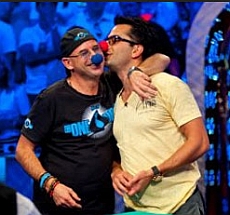 |
| Show the recreational players a good time |
Being restrained enough not to call a weaker player a fish is one thing, but not making poker an engaging and enjoyable environment is becoming a hidden killer of the game. I think it is high time all serious poker players started taking poker less seriously and making an effort to make it more enjoyable for all.
All you need to do to see how you should behave is watch a few episodes of High Stakes Poker and see how the pros treat players like Guy Laliberte. Do they ignore him or call him names behind his back? No. They treat him like a VIP, crack jokes with him, complement his play and tell him he was unlucky when he loses.
If they treated Guy any other way, he wouldn't play, which would be devastating for the high stakes community.
I think this issue (and others) would potentially resolve itself if poker players started to, to quote my friend Dusty Schmidt, "treat poker like a business". Whether you like it or not, a professional poker player really is a small business owner, responsible for their own hours, training, accounting, and in this instance marketing.
McDonalds don't welcome their customers with a sign saying 'hello fatties'; every successful business on the planet tries to treat their customers like royalty. As a small business owner, the recreational player is the customer of a poker pro. It sounds quite mercenary to frame it in these terms but it illustrates the point.
If you viewed recreational players as valued customers, you would never insult them. You would (and should) do everything possible to keep them at the tables, and that means making the game fun and actually talking to them.
Remember it's a game
 |
| Is it time to ditch the headphones? |
I know it can be hard at times, because it does involve going through the motions and having some of the same conversations time and time again. I myself do grow tired of certain elements of poker banter (my least favourite being when someone tells the guy who has just returned from the toilet that he 'just missed out on having aces') but a lot of human interaction is ceremonious and predictable, and it is still very important to take part.
Perhaps most importantly, you might actually enjoy poker more. I used to take poker very seriously but I am purely a recreational player these days. Although I don't play that often, when I do play I enjoy it so much more because my only motivation is to have a laugh at the table.
You meet some of the most interesting people you are ever likely to meet at the poker table. I have met people from walks of life I would never have had an opportunity to meet were it not for this game.
It is not warfare, it is a game. If you are lucky enough to have a job that allows you to have fun and meet new people, take some time to look up from your iPhone and make the most of it.
By Barry Carter
Read more columns by Barry Carter l Follow Barry Carter on Twitter
