


Money lessons for poker players - Compound Interest
Why is Warren Buffet rich, why is debt so hard to get out of, and why does rake have such an impact on your winnings? It's all because of compound interest.
Poker is a game played with money, but how well do poker players understand money itself? I have found that the answer to that question tends to be at the extremes, poker players tend to understand money incredibly well (hence they often branch out into things like investing, trading, crypto) or indeed they are terrible with money which is why a lot of otherwise talented players end up going broke.
With that in mind I wanted to start a series that briefly touched on money concepts that I think poker players need to understand and should do further research on.
This week we are looking at a concept which Albert Einstein is rumoured to have called the most powerful force in the world – compound interest. Compound interest is the interest you get on interest itself, which has the power to grow exponentially given enough time. It is the reason why people with money are able to accrue more money and people in debt tend to stay there.
If you deposited $100 in a bank with an interest rate of 3% (good luck finding one like that right now) after a year you would have $103. If the interest you received the following year was just on your initial principle investment, the following year you would have $106. After 35 years you would have $215. If, however, you received interest on the total balance every year, after one year you would have $103, but after two you would have $106.18. Not much extra, but after 35 years that balance would be $285.39.
That’s a really simple example, when you start factoring regular payments and riskier investments that pay more than 3%, the numbers get huge. A $100 monthly investment into a fund returning 7%, for example, would get you $182,306 after 35 years for $42,000 in payments. It works the same way, negatively, with debt. If you took a loan for $1,000 with a 7% APR and paid the minimum of $20 off a month, it would take you just under five years to get out of debt and you would pay $179 of interest.
You probably already have a decent understanding of this anyway, so how does it specifically impact poker?
More rake is not better
First and foremost, it is a good universal lesson in how small margins have leverage over a lot of iterations. If you bet $25 on the river for value in a pot when your opponent would have called $27, that doesn’t seem very consequential, but when you factor it in over a million hands in your poker career it can really add up. If you are losing money defending suited connectors in the Big Blind it might not seem a big deal in-game, but when you look at Hold’em Manager after a year it might have cost you 10% of your annual profits.
The biggest single example of something that doesn’t seem important at the time but is massive compounded is rake. If you run good and win a tournament, or indeed if you are on a downswing, the rake does not seem important. However, if your ROI in MTTs is 20% but you have on average paid 15% rake per MTT, you need to get a lot better and/or find lower raked games.
The more obvious and perhaps biggest way compound interest affects poker is moving up in stakes. If you play $200NL and win 4 BB/100 then once you have built your bankroll big enough the same winrate at $400NL would have a dramatic impact on your winnings. It is obviously not that simple to take a $200NL winrate to $400NL but the lesson remains that moving up stakes profitably shows the power of compound interest.
Again, the same applies if you are losing money. If you can no longer cut it at $400NL then all the mistakes you make are magnified compared to $200NL. It is the poker equivalent of being in debt and it is time to move down in stakes.
Time + compound interest
The final lesson of compound interest is that you see the greatest returns at the end. In that 7% interest example paying $100 a month, the difference between year one and year two is not much (you get $53.72 interest in year one, $144.35 in year two). By year 35 the fund is earning you $12,525 in interest, ten times more than you are depositing in a year.
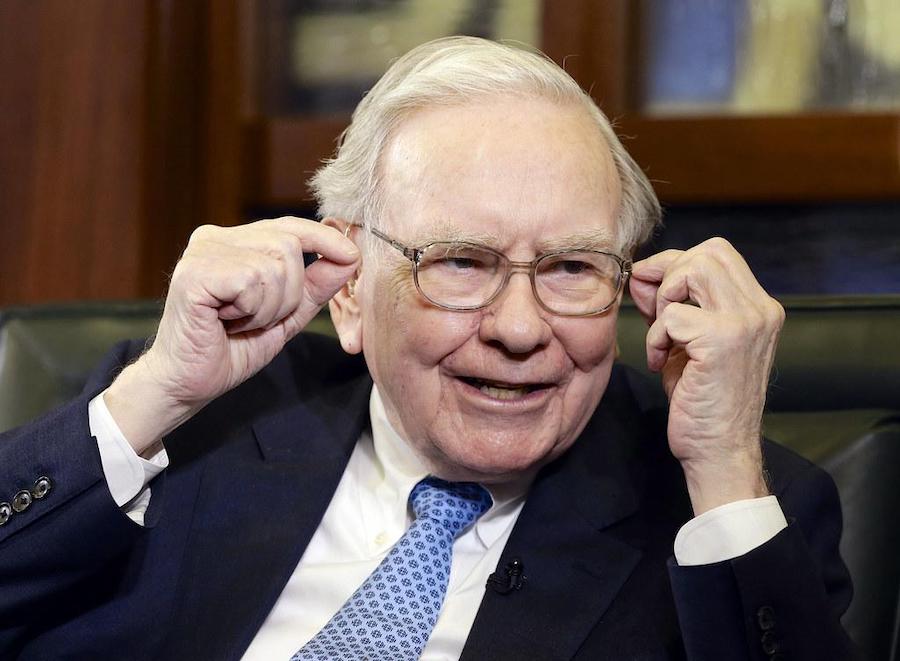
A lot of people think Warren Buffet is a genius investor, which he clearly is, but one of the reasons he is so rich is because he has invested for so long. He started investing when he was 10 and he wasn’t a billionaire until he was 50. Now at 90 his net worth is almost $90 billion. He is a success because he knows what he is doing but perhaps most of all because he understands compound interest.
The poker lesson there, naturally, is to be very patient. The rewards might not come right away but if you can survive the game, invest in yourself and avoiding playing in bad games outside of your bankroll, you will see the benefits eventually.
What other financial concepts do you think poker players need to understand? Let us know in the comments.
