


5 tips for handling aces on horrible flops
Know when to push and when to fold!
Share this with your friends
1) If the pot is big, money always goes in
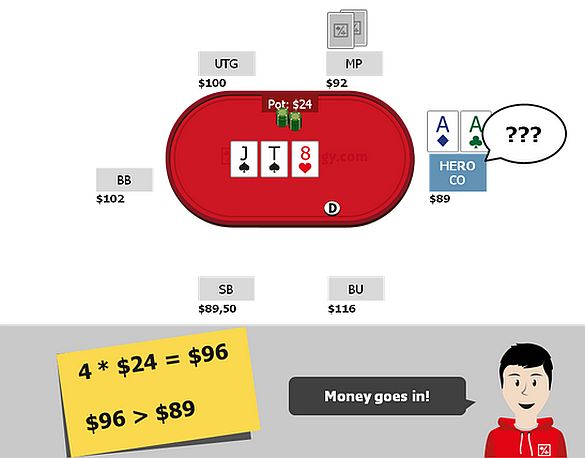
If you've made the pot quite big by a 3-bet or even a 4-bet pre-flop, post-flop you are obligated to invest the rest of your stack. The rule of thumb: if on the flop you have less that 4x the pot left in your stack - the money goes in!
2) High cards on the board? Bet/fold is your friend!
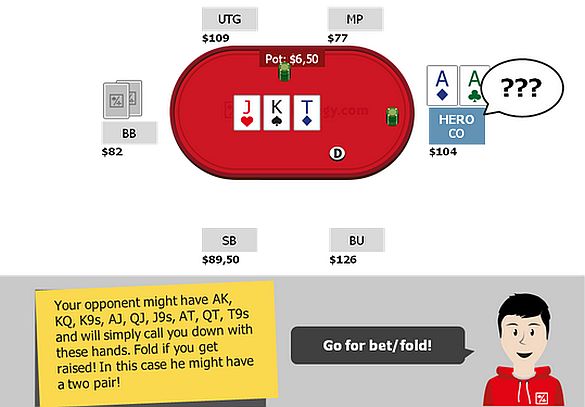
On such board structures your opponents will often have pair + draw type hands and will just call your bets. Imagine, for example, that your opponent has KJ on a QJT flop. He most likely thinks he is sometimes ahead with his pair of jacks and even if he is behind, he can outdraw you. There is no reason to raise, so he will just call. It means that you can pretty safely place good value bets here!
3) If raised, avoid passive call downs
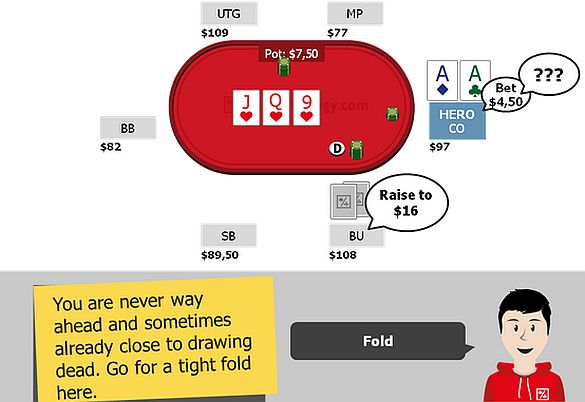
If you haven't managed to build a big pot pre-flop and get raised on an ugly flop, then follow this rule: It's better to fold now than on later streets. It all boils down to so called reverse implied odds. You don't know exactly how much money your opponent is willing to invest in his bluff, but you will for sure pay his strong hands off. Remember, it's a long way from flop to river. It's time for a tight fold.
4) Induce bluffs on monotone boards with low cards
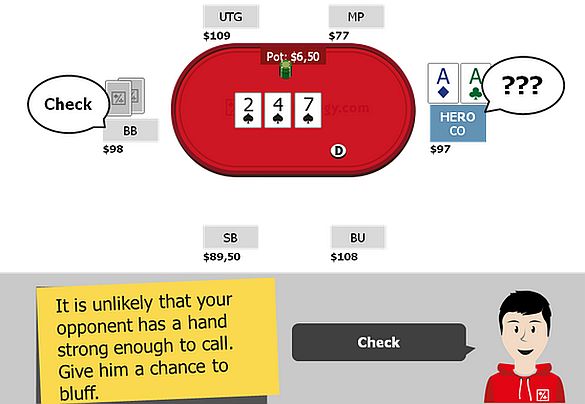
A board like 3h6h7h doesn't connect with many strong hands in villain's range. Your bet will drive out most weak hands that could potentially bluff later. Especially if you have an ace of the corresponding suit, try checking - potentially you can make more money with it.
5) Only commit on drawy boards when a safe turn card comes
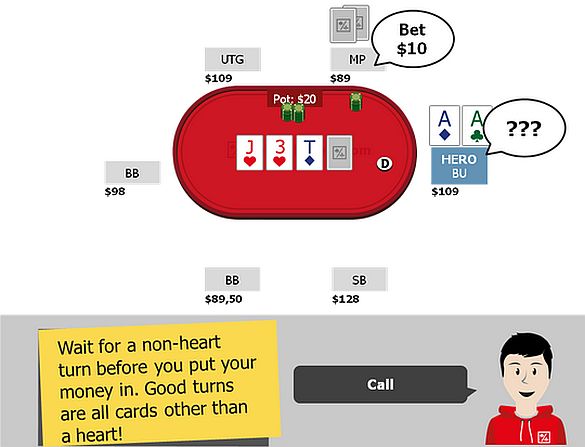
Strong and monster combo draws have a very good percentage to win a pot against your over pair on the flop. However, on a blank turn card their chances are cut in half! Take advantage! Put your money in when you are sure to be a big favourite.

