


How low and high stakes differ - by Chris Moneymaker
We have an exclusive excerpt of a new book written by Jonathan Little, Phil Hellmuth, Liv Boeree, Chris Moneymaker and more.
The following hands illustrate the differences between low and high buy-in tournaments. There will be two hands presented with the same cards and stack sizes with both hands being played out in a low buy-in event then a high buy-in event. They present a fair depiction of how the game is played differently at each level.
Hand 1, low buy-in
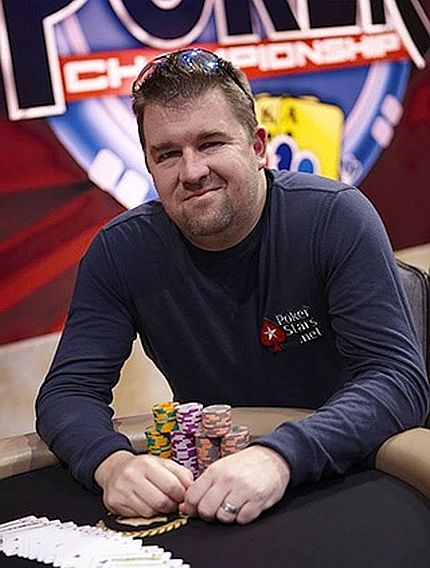
This is the first hand of a low buy-in event. This is not a re-entry event. Everyone has a 15,000 stack. The blinds are 25/50.
The player in first position calls 50 with A♣-7♥. Second position calls with K♦-5♦. Third position calls with Q♥-6♥. Fourth position decides to show some discipline and folds 8♥-2♦. The lojack calls with 5♦-3♦. The hijack raises to 400 with 10♣-10♦. The cutoff calls with 10♠-9♠. The button calls with J♦-8♦. The small blind folds 9♥-4♦. The big blind calls 350 more with 7♥-6♦. All of the limpers call 350 more, making the pot 3,200.
In lower buy-in events, you will find that players are prone to entering the pot with numerous hands that they think have potential. Most players enter the pot by calling rather than raising and when facing a preflop raise, they will call, citing their “pot odds.”
It is worth noting that the hijack’s raise to 400 is quite large, but in small buy-in events where your opponents will call any raise that is not huge, raising fairly large is a reasonable play because it will extract additional value.
The flop comes Q♦-8♠-3♥. The pot is 3,200.
Everyone checks to third position, who bets 700 with his Q♥-6♥. The lojack calls with his 5♦-3♦. The hijack makes a good fold with his 10♣-10♦. The cutoff folds his gutshot. The button calls with his J♦-8♦. Everyone else folds. The pot is now 5,300.
Many times in the small buy-ins, players will bet into the preflop raiser like third position did with weak to medium-strength holdings. You will find that these leads are usually a marginal made hand, such as top pair with a bad kicker or middle pair with a good kicker.
Most players are playing fit or fold and will simply give up whenever they miss on the flop. It is important to realize that the fit or fold strategy is often correct at these levels because so many players see a flop. When many players see a flop, someone is likely to flop a reasonably strong hand. Bluffing is not a good idea during the early levels in these tournaments because players are more likely to call down with marginal made hands. You will also find that if someone has a very strong hand, such as two pair or better, they are likely to try for a check-raise.
Many times the bet size is very indicative of the bettor’s hand strength. For example this 700 bet is usually indicative of a weak top pair type hand whereas a hand like A-Q may bet closer to 1,500 or half the pot.
Many players at this level have a hard time folding pairs, especially pocket pairs. As long as the bet sizes stay within reason, they will usually find a call. Facing a bet and a call on the flop, it is probably smart to fold hands such as pocket pairs, as the lojack did with 10-10, and even marginal made hands, such as J♦-8♦. Notice that the button often has some reverse implied odds because if he improves to two pair or trips, he may not get paid off and he could easily be dominated, resulting in him losing a large pot.
The turn is the (Q♦-8♠-3♥)-7♠. The pot is 5,300.
Third position again bets 700. Both the lojack and the button call. The pot is now 7,400.
The player who bet out on the flop will often lead again on the turn when a safe card comes and will check when a scare card, such as an A or K, comes. For some reason, many recreational players will bet the same amount on the turn as they did on the flop. This is usually an obvious giveaway that they are concerned that their hand could be beat. However, this does not mean they will fold to aggression. It is worth noting that very few recreational players will check-raise in this spot as a bluff.
A 700 bet on the turn is very small compared to the 5,300 pot. When facing such a tiny bet, it is usually okay to continue calling when you think you have some outs. Even though the lojack and button probably assume they are behind at the moment, they should call at this point due to their big pot odds. If they had reason to believe that third position would fold to a raise, raising becomes a strong play. As stated earlier though, it is tough to make weak opponents fold when they have a hand they think is decent, making raising quite speculative.
The river is the (Q♦-8♠-3♥-7♠)-A♦. The pot is 7,400.
Everyone checks, giving third position the 7,400 pot.
The ace is an interesting river card, not because it connects with any of the players’ hands, but because of the fact that all recreational players are “aware” of that card. While none of the players should have an ace too often, most players will fold to any reasonable amount of aggression when the card they perceive to be the scariest falls on the river. That being said, you will find that if someone happens to have a marginal A, such as A♠-10♠ that somehow floated the flop, they would likely not value bet on the river. You will find that most small buy-in players are afraid to bet with non-nut hands for value on the river, especially in multiway pots. While it is difficult to say if third position would fold when facing a river bet, do not be shocked if he makes a hero call simply because he thinks he has a good hand. Always pay attention to the way your opponents’ play before deciding to attempt a risky bluff.
Hand 1, high buy-in

The player in first position folds with A♣-7♥. Second position also folds K♦-5♦. Third position folds his Q♥-6♥. Fourth position folds 8♥‑2♦. The lojack raises to 125 with 5♦-3♦. The hijack calls with 10♣-10♦. The cutoff calls with 10♠-9♠. The button calls with J♦-8♦. The small blind folds 9♥-4♦ and the big blind folds 7♥-6♦. The pot is 625.
In high stakes tournaments, most players are positionally aware, meaning they know to fold most of their marginal holdings from early position because it is too likely that someone yet to act has a strong hand. Compared to the small stakes example, this results in the initial preflop raise size being much smaller, 125 compared to 400. Once there is a small initial raise, when stacks are deep you should expect most players to call with any sort of hand that has reasonable postflop potential.
The flop comes Q♦-8♠-3♥. The pot is 650.
Everyone checks to the button who bets 350 with his middle pair. Only the hijack and cutoff call. The pot is 1,675.
With four players seeing the flop, the initial raiser is correct to check bottom pair because it is simply too likely that someone yet to act has a better pair. Some players would bet with 10-10; others would pot control by checking and calling. The button made an excellent bet both for value and to protect his hand from various overcards, such as K-10, that have decent equity versus his middle pair.
In general, when you see flop action like this, a strong play is to check-raise the last position bettor with a wide range because most players in last position will at least consider taking a stab at the flop with a wide range because everyone else showed weakness. If you pick your spots well, you will be able to steal this pot a huge percentage of the time.
Getting excellent pot odds plus implied odds, the cutoff called in hopes of getting lucky and hitting his gutshot straight draw or turning more outs.
The turn is the (Q♦-8♠-3♥)-7♠. The pot is 1,675.
Lojack and hijack check. The cutoff bets 1,100. Everyone folds, giving the cutoff the pot.
The turn card doesn’t change much for anyone besides the cutoff, who drastically improved his draw. He decided to bet, which may or may not be a good play, depending on what he thinks about the button’s flop betting range. If he expects the button to bet the flop with a wide range, leading on the turn will often force him to fold unless he has top pair or better. Since the hijack didn’t show much interest on the flop, he probably also has a marginal hand. By betting into his opponents, he gives himself a chance to steal the pot on the turn and also builds a pot that he may be able to win on the river by either improving or bluffing.
When the cutoff leads on the turn, skilled players will assume that the leader improved either to a premium made hand or a premium draw. Either way, both the button’s middle pair and the hijack’s 10-10 are in marginal shape. Both players made good folds, even though they folded the best hand this time.
This was an excerpt from Excelling at No Limit Hold'em by Jonathan Little. The book features chapters by big names such as Phil Hellmuth, Liv Boeree, Jared Tendler, Mike Sexton, Will Tipton and more.
