


How much should we worry about RTAs?
We chat to Poker Scientist creator Samy89 about what the general public get wrong about GTO solvers and the dangers of RTAs.

In your view, do solvers hurt or help the poker world?
Samy89: I see them as a part of the progress of technology. It depends on us how we use it to define their helpfulness. So far, I think we have used them in a good way to better understand poker's principles. They have created millions of hours of content, and personally nothing has helped me to improve my own game better than a solver.
But of course, this door-opener also includes the risk of using it for illegal activities. This disadvantage becomes more significant when the access to high-quality GTO solutions becomes so cheap that it is profitable to use it for typical limits and include adaptions against pool tendencies like "too low bluff frequencies on the river. "
What are your views on the current RTA scandal taking place?
Samy89: It's good that the case with Fedor Kruse gets attention because it creates the potential to decrease the number of RTA-Users in the future. What I am afraid of is when poker sites use it as a marketing tool. When a site bans a player because of the usage of an RTA, they should be very sure that this is correct. Very sure here means for me more than 99% accurateness, but I am fine with less than 100% because it is nearly impossible to reach that state.
Where we do draw the line between a solver being OK to use and when it becomes cheating?
Samy89: Any software used in real-time and increases the win rate without using the player's knowledge or understanding is cheating (in my world). This includes, for example, some preflop ranges on paper and excludes a static HUD.
Poker Scientist is a database of presolved hands, how does it differ from the 'dream machine' that Fedor Kruse is accused of using?
Samy89: A dream machine contains mainly two things: A database with GTO solutions and an application that automatically transfers the information from the real table (which positions the players are, pot size, etc.).
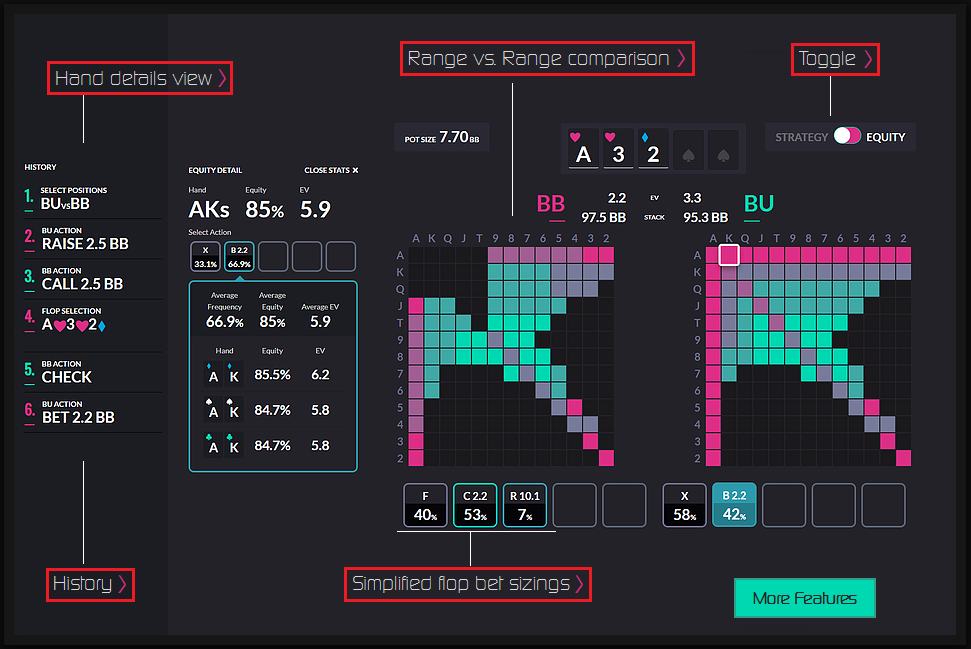
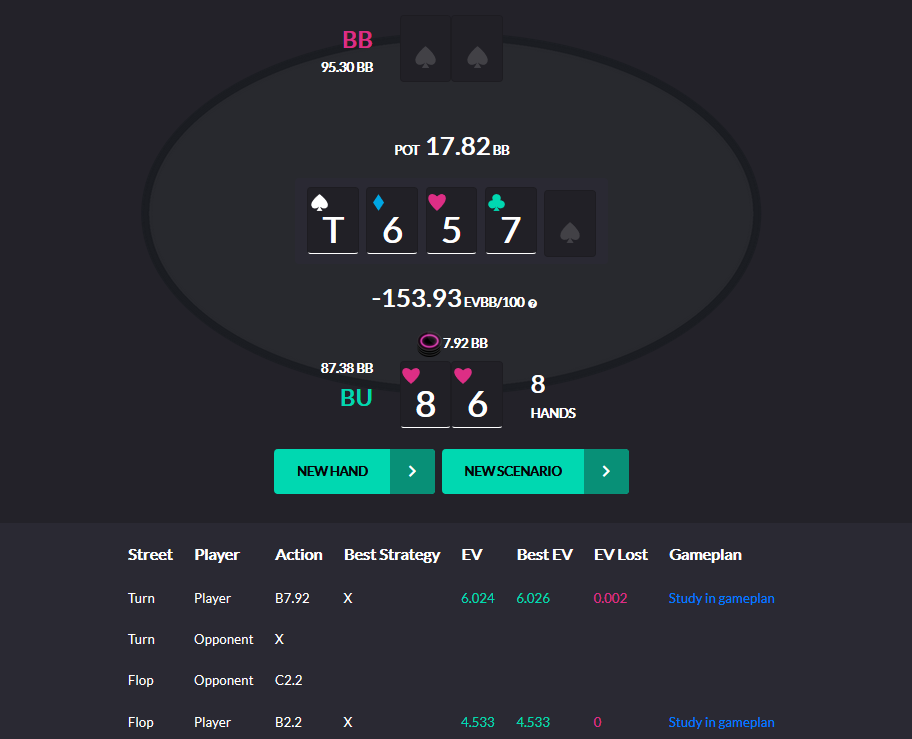
Poker Scientist has its own database where the user has access to a learning-environment. It contains access to the database with implemented features, playing vs the GTO Bot, etc. but no application helps the user use the solutions in real-time.
How common do you think these dream machines are?
Samy89: I think that they are common at limits where it has relevant value to do it. Currently, I expect that it is relatively common at the high stakes.
"It would take a Quantum Computer to solve perfectly in real time"

How far away do you think we are from there being a solver that can solve in real time?
Samy89: Theoretically, it's already possible with a quantum computer. Practically, it is hard to get access to it and costs about infinity.
In general, it highly depends on the quality of the GTO solutions you want to have. Public solvers are, in general, only calculating flop + turn and the river afterward. Parameters like the number of sizings, which sizings, how many raises are allowed per street etc are also decreasing the quality of public "GTO" solution.
For GTO solutions that have a relevant benefit for a player to use it on a table, we are still many years away. For example, as we calculated our Gameplan at Poker Scientist, it needed a 16000000MB memory size machine to even start it and over one month of calculation time. That it can be solved in real-time, you need a machine with a massive amount of CPU cores, which is not possible for anyone without access to a quantum computer.
In your view, how close can a human play to GTO? What can poker sites do to stop RTAs being used?
Samy89: I think there exists a natural limit of how humans are implementing the GTO solutions in their game. The more complex a situation gets, the higher the probability that a human tends to make a mistake. This gap can be measured, and it's tough to adapt it from RTA users.
The poker site needs full access to a high-quality GTO gameplan to develop this algorithm, which we would give when a poker site asks us.
What does the general poker public who do not use solvers get wrong about solvers?
Samy89: Poker is complex enough. Public solvers have the problem of making them available for most home PCs. This leads to the problem that the customer has to configure all the settings by himself. Optimal auto-configuration for any spot makes the calculation more complex, which was the main reason why we needed so much memory size for our Gameplan. This leads to my opinion that using a public solver efficiently is just too complicated for a lot of guys. It was one of the main problems I had with solvers, which motivated me to found Poker Scientist.
Stay tuned to PokerStrategy.com later this week when we will be learning more about solvers with Samy89.
What is Poker Scientist?

Poker Scientist helps you understand the principles of poker as efficiently as possible.
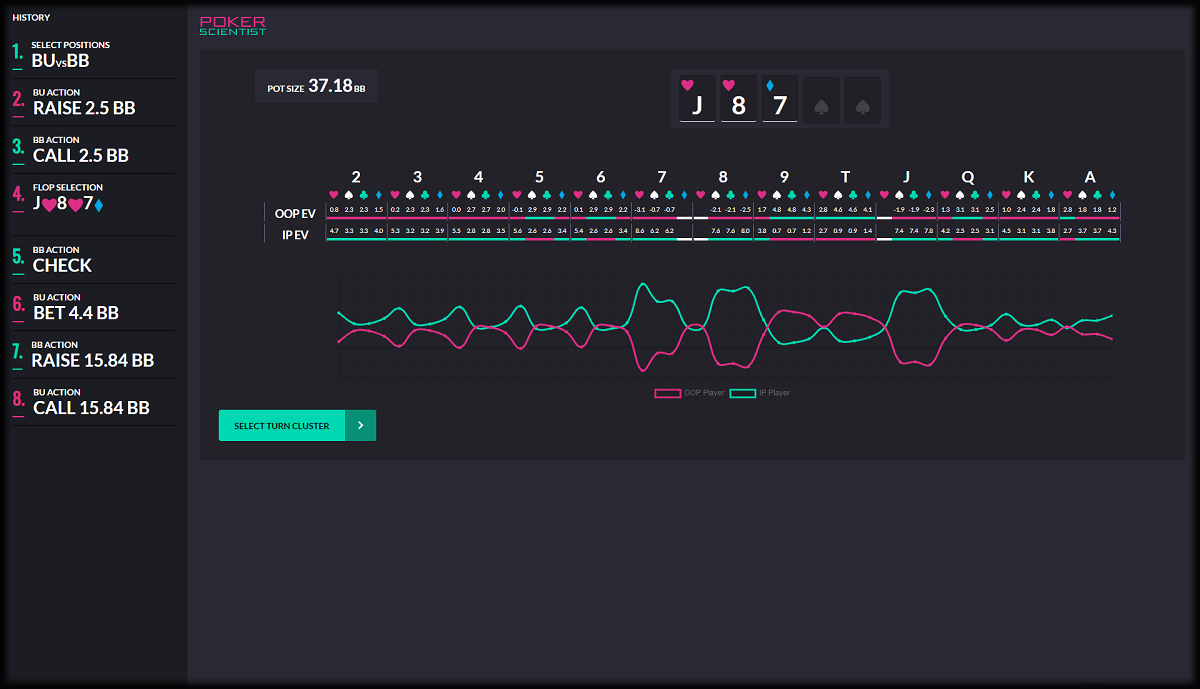
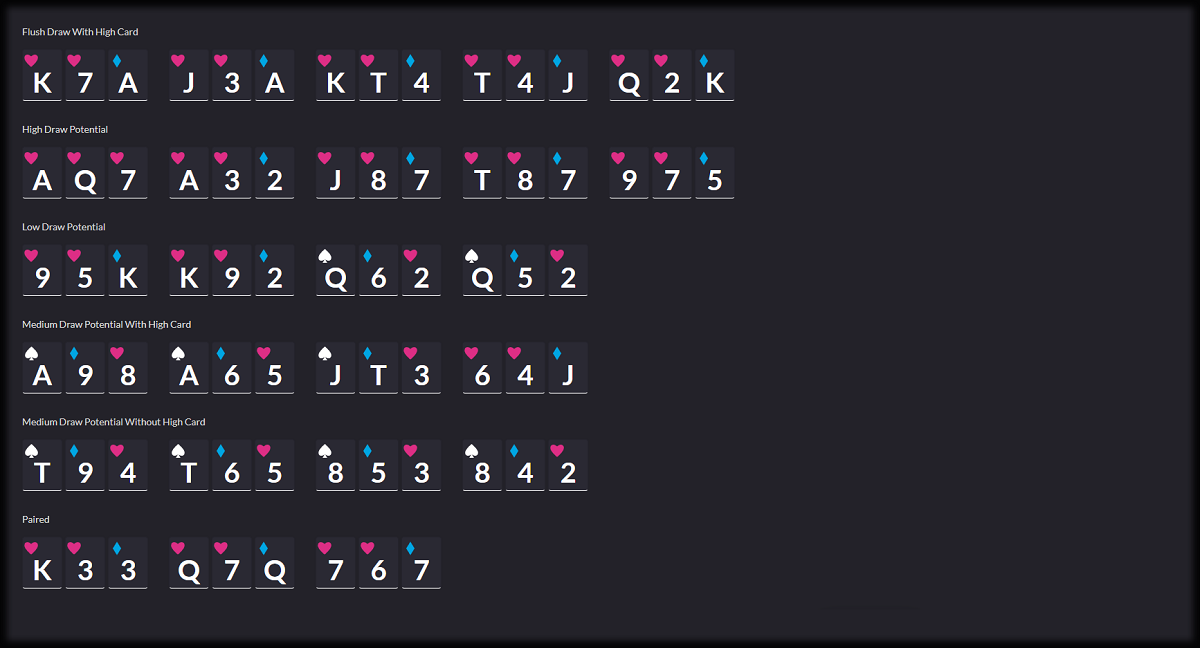
The browser-based software gives you instant access to a GTO gameplan, containing billions of strategies for every relevant heads-up scenario. The gameplan was developed with simplification in mind, with Clustering offering a whole new way of understanding and internalising new strategies.
Poker Scientist's gameplan is calculated using computers that are several orders of magnitude more powerful than any desktop PC. The highly accurate solutions use the optimal number of bet and raise sizings. Solutions with this accuracy are not achievable for the average solver user on their home PCs.
Through two simplifications in the form of Line Elimination and Runout Clustering, Poker Scientist managed to overcome one of the major problems other solver tools have when it comes to learning and developing your own game efficiently.
Altogether, Poker Scientist offers you a GTO game plan with an innovative approach that's going take your poker game to a whole new level.
Check out all Poker Scientist features on our dedicated software page

Get 10% off Poker Scientist with the discount code "PokerStrategy"
