


How solvers help you think analytically
In our final chat with 2cardconfidence we discuss hard work, GTO at small stakes, and pre solver crusher OtB_RedBaron.
Once again we welcome 2cardconfidence to the PokerStrategy.com family. We have another great chat about solvers with him (below) which is a continuation of our first talk and second talk with him.
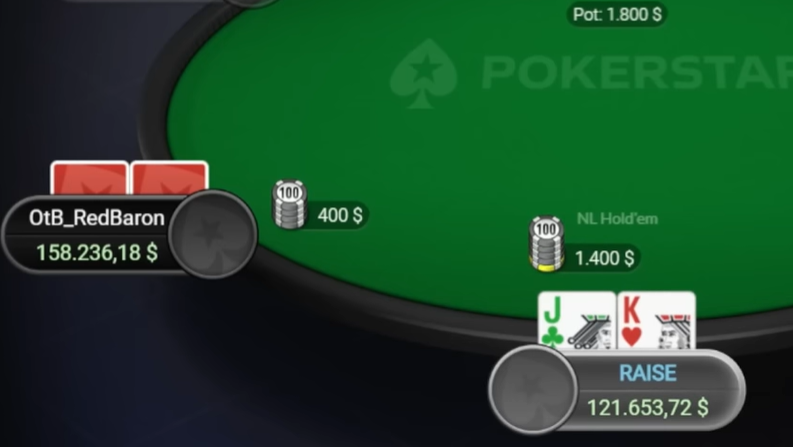
We also invite you to check out this great video from him about one of the biggest winners of the 2010s - cash game legend OtBRedBaron.
This video explains how he managed to crush the game way before the solvers were readily available and beat some of the best players in the game including Phil Ivey.
As you can imagine, the answer is a lot of hard work. This video should inspire you to go the extra mile and put the hours in the solver era of poker.
If you like this video, be sure to check out the 2cardconfidence YouTube channel.

"Solvers help me with analytical thinking"
I think one of the interesting and confusing things about solvers is understanding why they choose certain bet sizes, what is your framework for understanding what bet sizes to pick in GTO?
2cardconfidence: Yeah, that can be a difficult one. I think it's just putting in study volume. When you grind through a lot of sims, you eventually find patterns.
You always want to look at the ranges in play and cluster the different parts in them. Some of the factors that almost always play a role are the nut part of each player's range and the autofolds. An easy example: If your opponent's range contains a lot of autofolds, betting small is almost always at least a part of the betting strategy. To see those relationships quickly, the equity distribution graph is often a great tool to look at.
Solvers often split a lot of actions. Many hands do a similar mix of the same action - how can people identify when it’s practical to split bet sizes and what broader lessons can we take from mixing actions?
2cardconfidence: What mixing hands tells us is that EVs between different actions are close. So, the solver uses various actions in order to have the appropriate hand included in both ranges. And what mixing hands does is make sure each line is balanced and includes different kinds of hands.
So, from a practical point of view, what you want to ask yourself is: Is my opponent actually capable of exploiting the imbalance that's caused by me not mixing hands in this spot? And if they are, then what other way is there to not be unbalanced even if we don't perfectly mix 200 combos in our range? Often times, going for a different strategy that is still balanced in itself is not even of much lower EV than the mixing strategy. So going back to the example before of always betting backdoor flush combos, then you also want to make sure to have combos included that don't make a flush on that runout, but can still bluff.
For me, what solvers helped me with the most was just analytical thinking. Instead of making generalizations like thinking, "fish never fold" or "this guy always knows what I have", you get used to thinking in ranges and how they are built. And some parts of ranges would fold on this board, some would call and some would raise. And what differs is the constellation of the parts. But the general principle is the same at every stake.
"Small stakes is not small stakes, it's starting out"
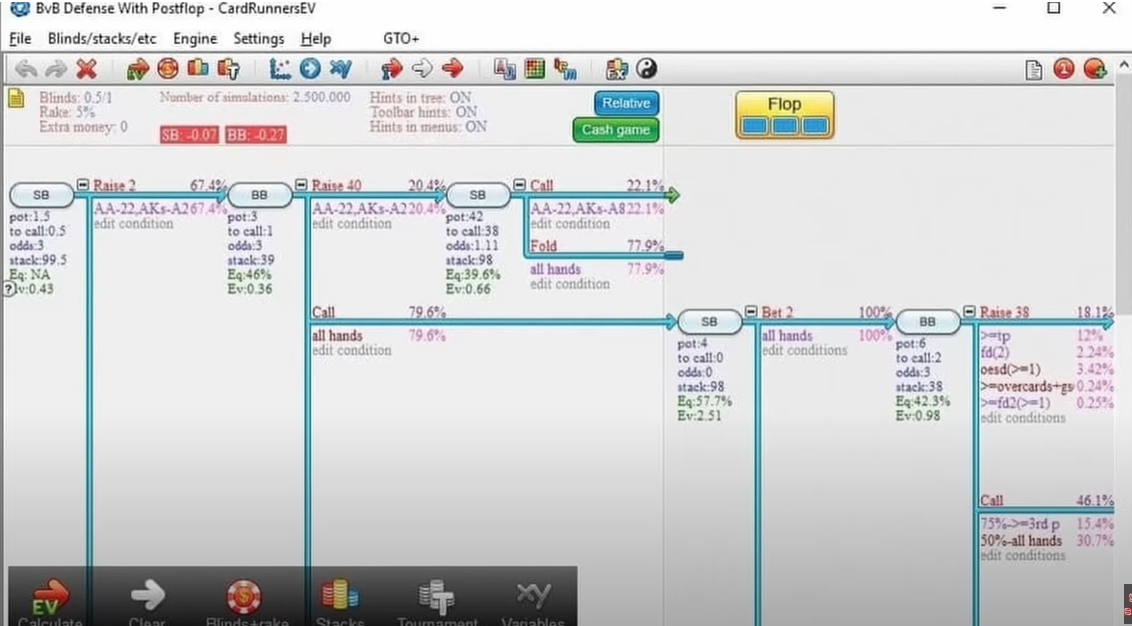
I don't know about you but the more I learn about GTO and thinking of my own range, I actually think of my opponent's range less. My own range is defined in part against my opponent's range anyway. This has made poker easier for me, have you had a similar experience?
2cardconfidence: That's definitely an effect that GTO solutions have and I've had the same experience. It's a rather defensive strategy and focuses on minimizing mistakes. However, what I've come to appreciate more is doing the exact opposite and focusing on my opponent's range. What should they be doing according to theory, but are (likely) not and can therefore be exploited?
I believe that approach has a higher potential for profitability and is also more fun. Of course, against good players, who are doing that exact same thing, you need to think about your own range really well and make sure you are in fact defending your ranges properly.
Should a small stakes player use solvers and play GTO, or should they wait till a certain stake and play exploitative before then?
2cardconfidence: I would make a distinction here because small stakes aren't small stakes. If you're really just starting out, I don't think you should get a solver and get too theoretical right from the start. Just get going, grind out some hands, gather experience and see what other people are doing.
When you've played a few ten thousand hands and have some basic understanding of dynamics and what other players are doing, I think it makes sense to add some theoretical background to your game. Not to aim for playing like a solver. But even in order to play exploitatively, the best way to achieve that is by knowing what would be an exploit in the first place. For that, you need to know what's GTO.
You have no excuse not to put in the hours these days thanks to our partner GTO Wizard - get 10% off now!
