


Barry Carter: A Debate Poker Didn't Need
Poker journalist and author Barry Carter officially joins PokerStrategy.com with a brand new column. This week he discusses the latest controversy surrounding the Epic Poker League.
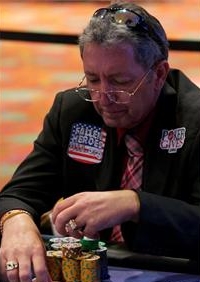 |
| Michael DiVita Photo source: Epic Poker League |
The word "scandal" is becoming synonymous with poker more and more every day. Next week the real drama potentially begins with the rescheduled Full Tilt Poker hearing in London, but until then, poker drama fans have been getting their teeth into the story of convicted sex offender Michael DiVita being withdrawn from the Epic Poker League Main Event.
DiVita won his $20,000 seat to the Main Event in the Pro/Am event the day before. Between then and the start of the Main Event, a complaint was registered by another player who discovered that he had served time for sexually assaulting a minor. He withdrew from the Main Event, and his $20k seat was awarded to the player who finished below him, and he was refunded just his original $1500 buy-in.
The league themselves claim, in a carefully worded interview with Ethics chairman Stephen Martin, that he withdrew voluntarily, although DiVita has spoken out and claimed that he was told by the league that if he didn't withdraw from the event, he would get nothing back, not even his original buy-in.
Child abuse is probably the most despised offense someone can commit in almost every society, but rather surprisingly large sections of the poker community have spoken out in defence of DiVita, or at least in opposition to the league's decision.
Although nobody could ever defend his previous actions, the seemingly universal argument against his exclusion was that if he was allowed to enter, he should not then have a prize he won fairly withdrawn because of a crime he has already served his time for.
It is popular to be critical of the Epic Poker League right now after the two PR nightmares that were Events #1 and #2. I must admit, I have been particularly critical of the league too, and saw this as an opportunity to take a few swipes myself. However, since initially reading the story, I must admit I sympathise with them a little... but still think they got it dead wrong.
Where To Draw The Line?
 One of the biggest arguments against the league's decision is around the tricky subject of where to draw the line? If all players were expelled events because they have previously broken the law, then card rooms would be a significantly emptier place.
I took one scan of the list of eligible players in the Epic League and noticed a convicted burglar, a convicted drug dealer, and a repeat drunk driver - that was from a 30 second scan of the player roster and I am sure half an hour with Google and I could have a much bigger list.
Obviously child abuse is universally agreed upon as one of the worst crimes imaginable, but beyond, that it becomes a matter of perception. I really don't want to get into a debate about what crimes are worse than others, but drug related crimes are a good example of this ambiguity between different sections of society - in some countries, possession of drugs will earn you a slap on the wrists, in others it will get you killed.
Also on the player list I saw at least four players who have been embroiled in poker cheating scandals, other players with bad debt to other players, and several owners of poker sites who are currently frozen and unable to pay back the hard earned bankrolls of players.
I would never say these offenses are even close to a crime like child abuse, but these are transgressions that have a direct impact on the game of poker. Surely if the Epic League is going to take the moral high ground on certain sections of the poker community, they should first focus on those people who have brought the game into disrepute by breaking the rules and stealing player funds?
DiVita won his seat into the Main Event via a Pro/Am event, which as the name suggests is the only way a non-Epic League card carrying member can play. The league is elitist by nature, that is of course its unique selling point, but here it really does seem that there is one rule for the 'Pros' with criminal pasts, and another rule for anyone else who has a criminal record who isn't a well-known 'TV Pro'.
Bad Publicity
 |
| David "Chino" Rheem Photo source: Epic Poker League |
I do completely understand why the league felt desperate to make some sort of decision like this. After the horror show that was Chino Rheem's bad debt being exposed, only for him to win their debutant event, the last thing they ever needed was a convicted paedophile taking down Event #2.
The problem was not so much that they wanted him out of the tournament, more that they decided to deprive him of the $20,000 he won fair and square. By doing that, they sent out a message that either they have decided to play judge and jury by further punishing for his past offenses, or that $20,000 mattered to them more than the bad PR that has hit the poker forums and media since.
Either eventuality looks very bad on a league that is already under a lot of scrutiny, and a simple $20,000 payoff would most likely, in hindsight, have been the best outcome for all involved.
Do we need an ethics board in poker? I'm not sure; I certainly believe poker needs to be regulated at a much higher level, but only to protect the players from crimes that have a direct impact on the game.
This is not a mainstream sport like football, children do not look up to poker players, as much as sponsored poker players may think they are, they are not role models. There is certainly no one correct answer here, but during a time when the game is under as much pressure as it is right now, this is a debate that poker really did not need.
by Barry Carter
