


Column: do we want anonymity in online poker?
Barry Carter questions whether a lack of anonymity in the modern online game is actually beneficial to the poker community?
 |
| Zuckerberg hacked |
Recently someone managed to hack perhaps the most high profile online account in the world - Mark Zuckerberg's Facebook page. After this, he told the tech icon "sorry for breaking your privacy".
It is amazing how quickly the world has changed in the last five to ten years. In that space of time, our own ideals and expectations around privacy have transformed beyond belief. Almost all of us share incredibly private details on social media, and in equal measure we all begrudgingly admit that we can't expect privacy online anymore.
The internet was once very much an anonymous world, but that is changing thanks to social media. My thoughts can't help but turn to online poker; can poker players enjoy anonymity, and is it a bad thing if we can't?
More than just screen names
 Online poker was once very much an anonymous playground. It differentiated itself from live poker in no small part due to the fact you could not see your opponent's face or know their name.
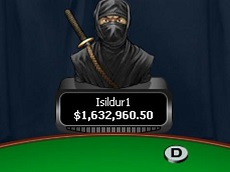
That has seemingly changed - in part, because most online poker sites do not allow screen name changes. In other instances, many players do not want to change their screen name - there are bragging rights to be had when your moniker is recognised as a winning player; just ask players like durrrrr, Isildur1 or Annette_15 - three players whose online names made them legends.
The aforementioned Isildur1 is a great example of how anonymity is rare today. For a while nobody knew he was Viktor Blom, and that anonymity alone made him headline news.
While it was once very easy to keep your success a secret (whether you wanted to lie about losses or hide big wins from the tax man), that is no longer the case. In fact, it is very difficult to lie about your poker abilities thanks to sites like the Hendon Mob and Sharkscope; it is very easy for a stranger to get a complete portfolio of your accomplishments.
Indeed it seems the only truly private form of poker these days is live cash games. I don't know about you, but it always makes me suspicious when people voluntarily tell me how much they win in live cash. I always assume they are lying because it is the only thing I wouldn't be able to disprove.
Attempts to regain anonymity
 One such solution to this privacy issue is the introduction of anonymous tables. The primary purpose of these is to protect recreational players from getting targeted and to stop pro players from 'bum hunting' and avoiding each other.
While this does in theory seem like a perfect solution to a lot of problems, the reality is that anonymous tables have not proved particularly popular. I think this is partly because people want to be seen as winners at the poker table, and anonymous tables take the bragging rights away.
I am not inherently against any of the forms of tracking I have mentioned above - all they are is a record of what happened at a poker table. A live poker tournament is no different to a sporting event in this regard: the result is going to get recorded somewhere, so I don't see why it should be any different online.
The only breach of privacy I take issue with in this regard is the selling of mined hands or other data mining services which provide information on the playing tendencies of other players. This crosses the line for me because not only does it give away unfair tactical information, it also gives information that the customer was never in a position to see in the first place.
Protecting the poker community
 |
| Less anonymity means less trolling in the chat box |
Although it is a horrible proposition to think that we cannot do anything without our every move being scrutinised by complete strangers, there is an upside to there being less anonymity in poker.
First of all, it makes trolling less likely. Chatbox and forum trolls thrive on anonymity as it allows them to say deeply offensive things they would never dare say in real life.
You may not think it is a big problem because you probably play lots of tables and have chat turned off, but trolling is a real issue for recreational players who simply want to play a social game of cards.
The other big benefit of there being less anonymity online is that it significantly reduces the opportunity to cheat. This is precisely why most poker rooms do not allow screen name changes and come down hard on people who multi-account or share accounts - they want all the players to be accountable, and to know who they are playing against.
This doesn't prevent it from happening of course - you only need to look at any active poker forum and there is usually some sort of cheating scandal being exposed. However, it would happen a lot more if these measures were not put in place.
How will Facebook Poker respond?
 Back to Mr Zuckerberg - all eyes will be on Facebook when it eventually launches a real money poker client, which is perceived by most to be a game-changer in the industry.
It will be fascinating to see if real money Facebook poker will be played with avatars and screen names, or your actual Facebook profile including your real name - if it is the latter I think we will see a very different online poker experience.
For the most part I think it would be both fun and positive for the game, for the reasons I have already stated. However I do have a (small) worry there will be some extreme cases of poker stalking - either in the form of someone wanting to extract revenge for a bad beat or on the flip side, friending bad players and following them to every table (both live and online) to clean them out.
Online poker really is just a reflection of the rest of the internet. Yes, we cannot do much at the tables without it being visible to everyone, but if it also means that online players act with a similar level of civility that they would in a land based casino, I think it is a fair trade off.
Do you wish online poker was more anonymous or would you prefer to know exactly who you were playing against? Let us know in the comments box.
