


Do bracelet bets improve performance?
Is the fact he stands to win an extra $2 million in side bets helping Jason Mercier or hindering him?
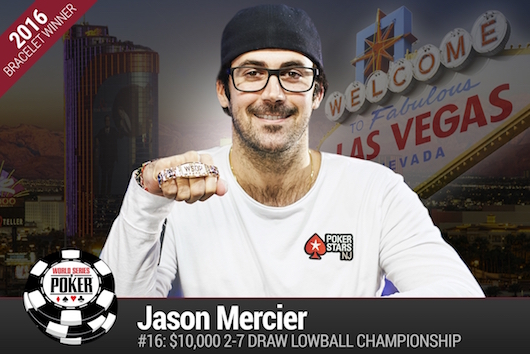
Jason Mercier has lit up the World Series of Poker and is on the cusp of something special, following a seven-figure prop bet that he can win three bracelets this year. At the time of writing he has won two and made three more final tables (I’m writing this on Thursday, no doubt he has improved on this since then).
We have seen impressive runs of form like this before, including a few instances of three bracelets won in a single series, but the added fact that he stands to win in excess of $2 million because he has bet that he can win three is what has made this story so compelling.
So the question is, is the bet making him play better?
Edge bets vs challenge

The short answer is probably not, and that it is a mixture of good variance and his clear talent that is driving these results. Nobody would argue right now that Dzmitry Urbanovich is less talented or driven than Mercier, yet despite making the same bet, he has only cashed once so far this series at the time of writing.
Poker is one of the few games where you can want it more than anyone, you can play better than everyone, and you can still lose for a long period of time. In fact, one can easily argue that pumping yourself up too much could lead to reckless decisions (what some refer to as ‘winner’s tilt’).
I coined two terms a few years ago that we have ‘motivational prop bets’, and ‘edge prop bets’. There was a time when a poker player would gamble because they knew they had an edge (think of the many stories of Amarillo Slim pulling the wool over a sucker’s eyes), but in recent poker history, prop bets have been made to force a player to do something they would otherwise not be motivated to do (think of how jacked Olivier Busquet got for his recent MMA prop bet).
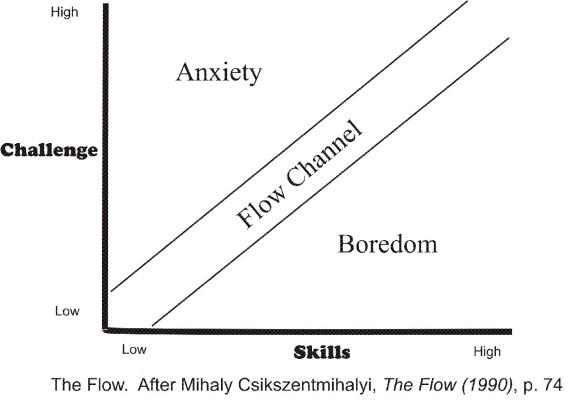
In the case of Mercier, I would wager that it is a combination of both things with these bets. His track record is proof he can win these events so why not try and make more money when he does? However, the bet is perhaps what brings his A-game. Some people simply perform better when the pressure is on, and others when they are relaxed, as psychologist Mihaly Csikszentmihalyi demonstrated in his groundbreaking book Flow, we need to find a sweet spot between boring and exciting, and easy and challenging:
Forced motivation
This could also be what my friend, mental game coach Jared Tendler refers to as ‘waiting for a crisis’, which he often sees in poker players who struggle with motivation issues. They will often wait for things to get desperate, or artificially create a struggle (like this bet) to snap them out of a funk and get them focussing more.
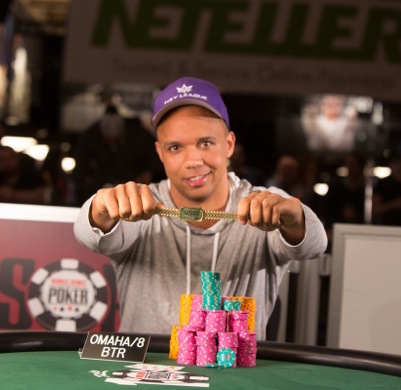
There are some cases in poker where a bracelet bet is literally what is needed to get a player at the tables. Take Phil Ivey, for example, who played almost every event when he had a prop bet riding on it (all of which were worth more than the first prize of the events themselves), but now only plays One Drop, the Players Championship and the Main Event, as the bets have dried up.
In the case of Mercier, he is so prolific that he would have likely played all these events anyway, but perhaps that greater sense of jeopardy or glory is the thing that will make him think twice during a marginal decision, or take a $1,000 event more seriously when he might otherwise have been dicking around on his smartphone.
My instinct is that the runs of form following bracelet bets are mostly just variance, but maybe they lead to a handful of decisions over the course of a series that make them worth the extra burden they provide.
Do you think a bracelet bet makes the participants play better? Would it help your game? Let us know in the comments.
