


Secrets of Libratus’ success revealed
The mechanics behind the AI bot that beat a team of poker pros almost a year ago have been revealed in a recently released scientific paper.

Almost a year after their famous win, the programming team behind the artificial intelligence bot that won more than $1.7 million in a Hold’em game against a team of pros, have explained the computer science behind their victory.
Professor Tuomas Sandholm and Ph.D. student Noam Brown of Carnegie Mellon University in Pittsburgh, Pennsylvania, this week released a scientific paper entitled, “Superhuman AI for heads-up no-limit poker: Libratus beats top professionals” to explain how their bot, dubbed Libratus, was able to overcome the challenge laid on by a top team of selected pros.
The team of four professionals was made up from Jason Les, Dong Kim, Daniel McAulay and Jimmy Chou but this elite squad was unable to trump the machine, even after 120,000 hands.
Three-part attack strategy
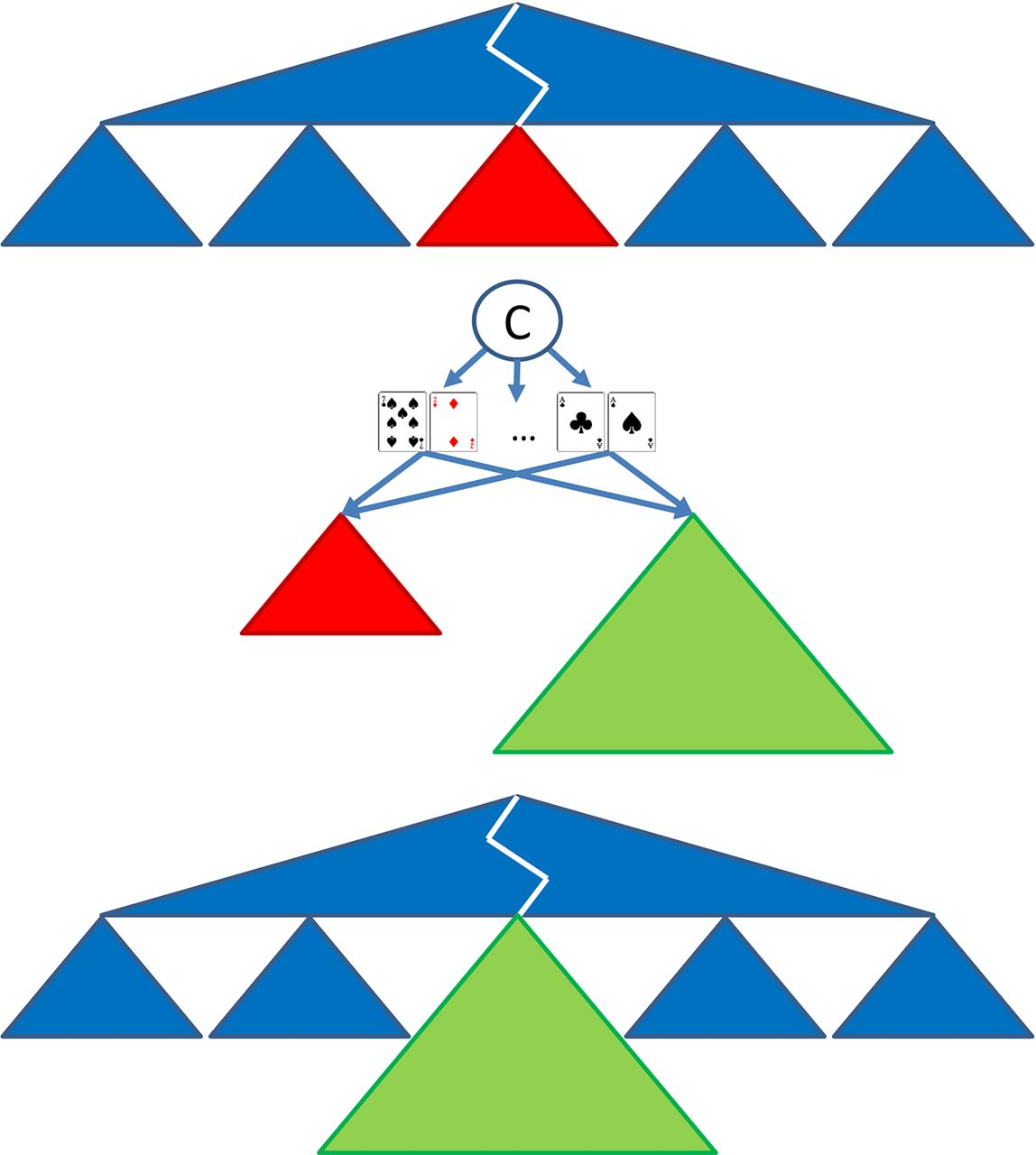
Libratus, they claim, was able to see off all comers by using the concept of “Subgame solving”, pictured right, which it used to work around a game of imperfect information such as Hold’em.
Essentially this means that the team, who this week also conducted a Reddit AMA, formulated and designed a three-point strategical approach to work around the lack of actual, certain information. They achieved this by boiling the game down into bitesize chunks according to the appropriate stage in the game.
Essentially the first of the three-part strategy is based on the early rounds of a game and referred to as “blueprint strategy”. Part two comes into play in the final rounds when player stacks have been built or decimated, while the third part improves upon the blueprint strategy as competition proceeds and the computer has sussed out its opponent and refines its game plan accordingly.
Will artificial intelligence impact the game in a positive way? Let us know in the comments:
