


Learning how to learn poker with Gareth James
We chat to the poker coach, author and podcast host about how to be better at studying as well as learning to enjoy it.
A common complaint I hear from poker players is they don’t always know what to learn at different points in their careers. Is that the essential goal of your book, Purposeful Practice For Poker, to give a ‘roadmap’ to learning?
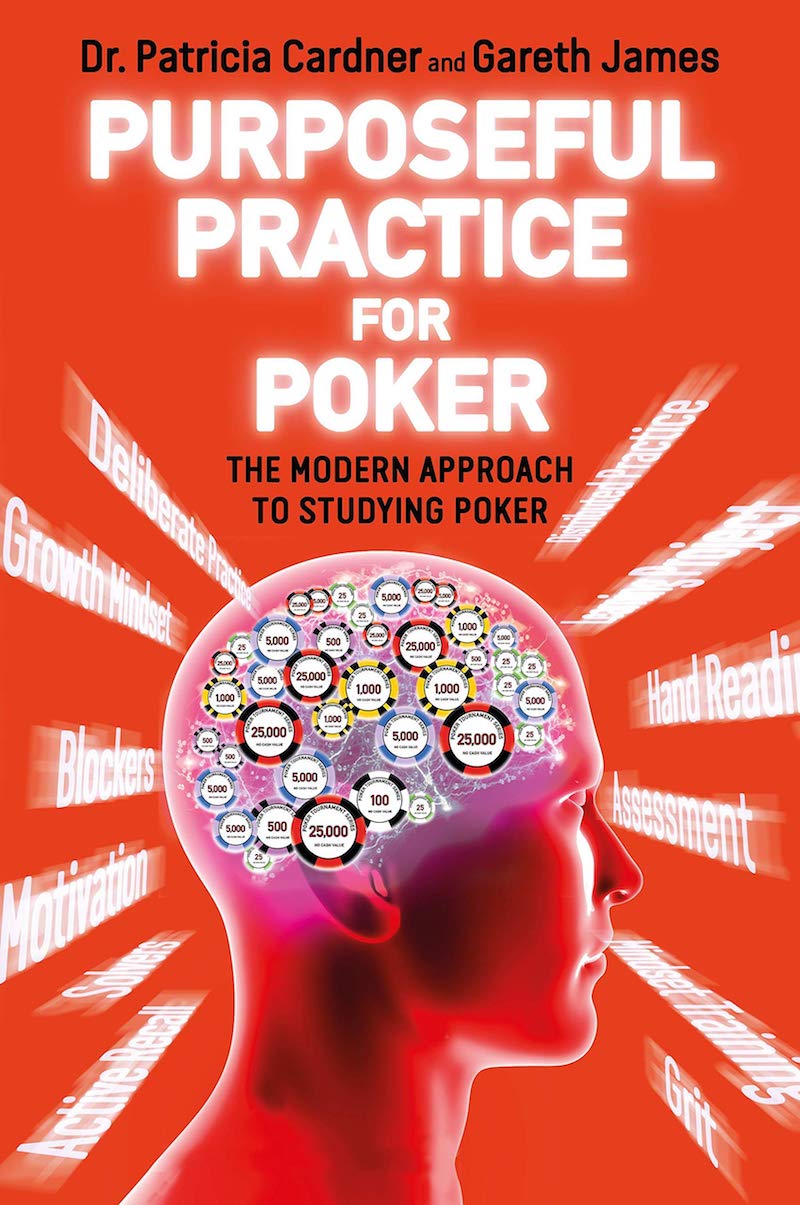
Gareth James: What I hear a lot from students and people in the game is they want to make improvements but they don’t really know where to start. The problem is that most players don’t know what the science recommends, so they use learning and practising strategies that are inefficient at best and ineffective at worst. We wrote Purposeful Practice for Poker to help players design an effective roadmap for learning poker that takes into account best learning practices and modifies them specifically for poker.
My Mental Game of Poker co-author Jared Tendler has always suggested that “if you don’t know what to work on, work on your biggest leaks” – do you think that is a good way to tackle poker education too?
Gareth James: In terms of biggest leaks we are looking at places where you might get the most bang for your buck. Focusing on addressing your biggest leaks will always give the biggest payoff in the shortest amount of time and we designed the exercises and activities in the book with that in mind.
Our book includes self-assessments for each of the example learning projects that gives the reader an objective mechanism for determining how confident they feel in that area. You might watch a training video on Big Blind defence for example and realise you don’t know much about it, so we include questions like: how confident are you about how your Big Blind defence ranges might change at the final table compared to the early stages of a tournament? Or how should your ranges change depending on different stack sizes? Then you grade yourself out of 10 for each question and the areas with the lowest scores determine the areas you need the most work on.
It’s interesting because that method requires self-diagnosis of your biggest leaks, however in poker the Dunning-Kruger Effect is very strong and some people are overconfident about their ability in these areas. Does getting feedback from a coach on your biggest leaks factor into your method?
Gareth James: Yes that is part of all of the poker learning projects in the book. Speaking to peers, posting hands in forums and speaking to a coach are all part of the process of spotting leaks. We talk about not conning yourself about your level of ability, as well as not conning yourself into thinking you are studying while you are just watching a Twitch stream or engaging in other passive activities that don’t really improve your game.
How should somebody watch a poker video or Twitch stream, because it is one of the more passive ways to learn?
Gareth James: I’m glad you used the word passive there because we talk about the difference between passive and active learning. Reading a book is not always the best way to learn, which is ironic because we wrote a book to say that. When you watch a video you should take a more active role in it like taking notes or pausing the video to reflect on its concepts. You can also talk with friends about what you're learning or even filter your database to study similar spots.
Watching training videos can be entertaining and fun, but sometimes I watch a 45 minute video and I'm not even sure what I got out of it when it ends! Unless you are making notes or getting feedback and getting purposeful practice out of it, the information might not stick.
"Baby steps is the way to go"
What exactly is ‘purposeful practice’ in the poker context?
Gareth James: The four elements are having specific goals, being really focussed during study, getting feedback and then pushing yourself beyond your current capacity. That feedback element is really important, if you don’t have a coach it can be difficult to get proper feedback and poker players have a tendency to be results orientated instead of growth orientated.
It’s interesting you frame all this around ‘practice’ rather than ‘study’ because practice has always been hard to do in poker however in more recent years the advent of solvers has changed that.
Gareth James: We now have software that allows you to drill the same situation again and again, like facing a check raise or facing a c-bet, where you can practise a hundred hands in half an hour and get feedback on how many BB/100 in EV you are losing in that situation. You are actually playing the game but not for money, so you can get the practice in with software without it being a high-pressure situation. If you already know what to do in these situations automatically you can use your energy for more difficult decisions.
Is enjoying study one of the master traits in poker? Is it essential to being a professional?
Gareth James: Yeah. It’s interesting, a lot of the students I work with don’t study as much as I’d like them to. It comes down to them enjoying playing more that enjoying studying. To be a professional, you have to push yourself to do things you don't want to do and if you want to improve, you have to put in the hours away from the table. The challenge we have is people want to get better but want to be spoon-fed the information.
People come to poker because they don’t want to structure of a 9-5 job but I’ve often noticed that many players crave the structure and certainty that came with one. Taking care of your own education is almost an entrepreneurial requirement of being a serious player.
Gareth James: When you make a jump from amateur to semi-pro, or semi-pro to professional, there are lots of things you are in charge of; being a poker player is like running a small business. Money management, self-development, exercise and sleep. All the things that if you were an entrepreneur you would be looking to maximise to increase your efficiency.
Another thing is that adults learn differently from children. As children we are taught to pass tests, but as adults we learn because we are interested in and passionate about something. We rarely learn as adults to pass a test. Within poker it’s all about learning how to think, which is something we really should be teaching at schools.
How can we get people who don’t enjoy study to start enjoying it?
Gareth James: Baby steps is probably the way to go. In the same way that somebody who is a little overweight would not be able to run a marathon, telling somebody who can barely stand 10 minutes of study to start studying four hours a week won’t work. Instead, if you can get them to do 10 minutes a day, that consistency over time will get them into that professional mindset. Once people get into a routine and buy into that process it becomes easier, but it is a struggle to buy into that process, especially in tournament poker where you might not see results right away.
You can learn more about Gareth James including his book, his podcast and his coaching services by following him on Twitter.
