The ethics of outing poker scammers
Barry Carter writes about navigating the tricky waters of outing poker scammers who likely have a gambling addiction.
William Kassouf is in the news again and not for his speech play. Multiple players have alleged that he grabbed chips that he lost in a PLO cash game and ran out of the cardroom, at the Irish Open.
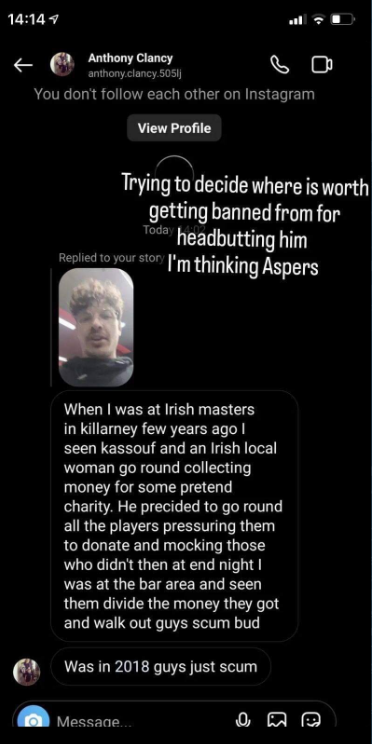
Kassouf has previous form for this kind of thing. In 2018 his sponsor Grosvenor Poker let him go after it was discovered that he was palming his friend's $100 chips in a roulette game. This week another accusation did the rounds, suggesting he had collected charity donations and then kept the money at the Irish Masters.
Naturally, a pile-on commenced online at his expense, with people mocking him and sharing similar stories. Amongst all that was this tweet from Max Silver, which highlighted something I think of a lot:
Usually not one to pass up the chance to slag off Kassouf but to have taken his actions is clearly someone in the height of gambling addiction, hope his friends and/or loved ones can check in on him and help him get the help he needs
— Max Silver (@max_silver) April 11, 2023
Max is a very intelligent and thoughtful player who has been around the game for a long time. I happen to think he is correct too, in that as reprehensible as Kassouf's alleged actions have been, they also clearly signal somebody who has a serious gambling addiction.
Protect the victims first and foremost

All of Kassouf's alleged actions have been as petty as they are deplorable. We see Kassouf playing high-stakes tournaments like the EPT all the time, yet his alleged scams are often small stakes.
Palming $100 chips or running off with €300 he lost are as desperate as they are nefarious. The €300 he is said to have run off with might have been his only way to get home.
So where does one draw the line between outing a scammer and being sensitive towards a gambling issue? I'm not sure of the answer to that, but I do believe the priority should always be on protecting the victims of the scams first. As a poker community, we should be sharing these stories not covering them up, to arm future potential victims with the knowledge they need to avoid being scammed.
Not mutually exclusive incentives

I also don't think protecting the victims of the scams and being sensitive to somebody with a gambling addiction are mutually exclusive. I'd actually argue that if Kassouf needs help, one of the best things that could happen to him would be if he were banned from poker tournaments across the globe.
There are countless stories in poker of scammers who got away with their crimes for a very long time because the victims, holding onto the hopes of being repaid, kept quiet. More people got scammed and the scammers themselves dug themselves into much larger holes, precisely because the community kept quiet.
As horrible as it is that there is likely a gambling addiction component to stories like this, making an example of scammers should be our priority and is probably in their best interests too.
Should William Kassouf be banned from all poker venues? Let us know in the comments: