


How will the 7-2 game (and Nik Airball) change online poker?
With the introduction of new side games at CoinPoker and a Hustler regular who plays them all the time, how does that change online cash strategy?
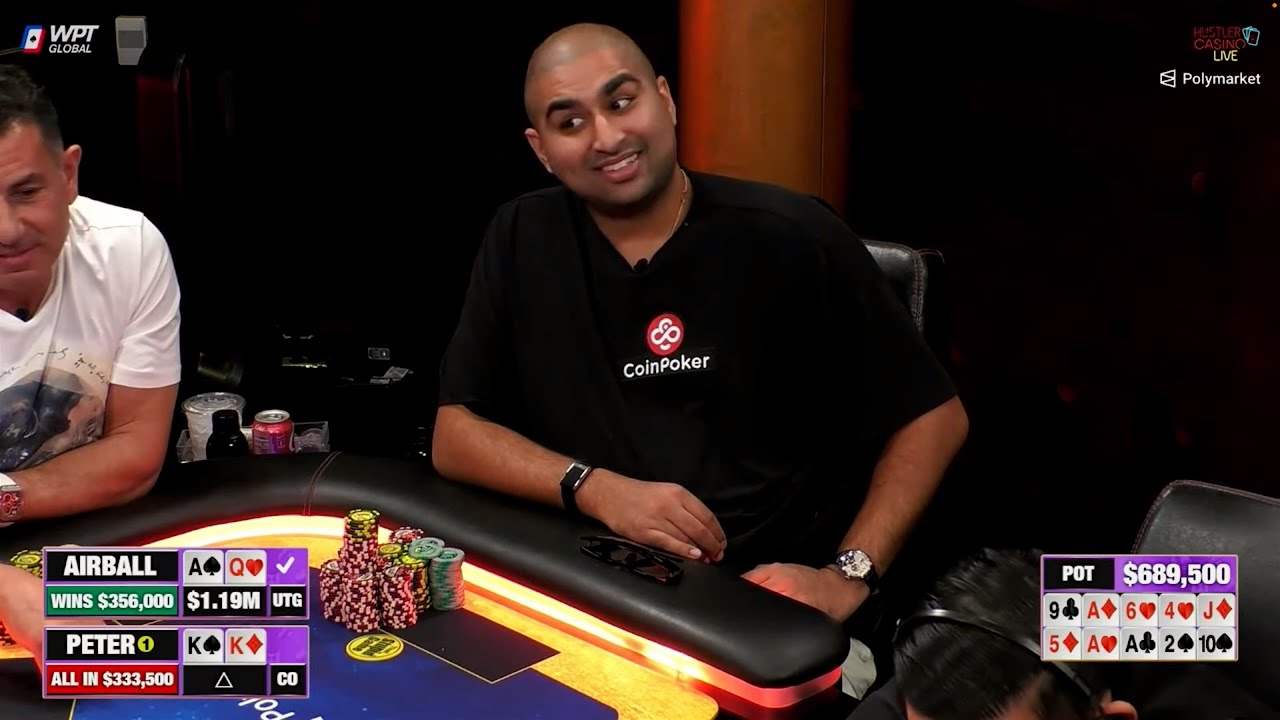
Last week CoinPoker launched 7-2 side games as one of its many new cash game features.
It is one of the more fun aspects of live poker cash games, which has until now not been replicated online. You win a bounty every time you show a bluff with 7-2.
The purpose of the side game is to loosen up the table and stop everyone playing "optimal" strategies. The timing of CoinPoker's sponsorship of Nik Airball, therefore, does not look like a coincidence. He is by no means a GTO player, he is a very high VPIPing gambler, which is why he has always been a top attraction on the Hustler stream.
I'm back playing at @HCLPokerShow after booking a nice 1.35m win earlier this week. As a reminder I'm GIVING AWAY 1% of that to people who use Code AIRBALL on CoinPoker.
I'll also be playing with people under my code this Sunday, so signup and let's meet at the tables! pic.twitter.com/Ueu9rHIDcC
— Nik Airball (Code AIRBALL) (@nikairball) December 5, 2025
Last week, both Nik Airball and Daniel "Jungleman" Cates both sat down with some of the grinders from the recent High Stakes Cash Game World Championships at the 7-2 tables to give a glimpse of what to expect:
How to play the 7-2 game
I am not a cash game expert, but I played around this week in GTO Wizard to see what the impact of the 7-2 game might be. I wasn't able to replicate the bounty value, but what I did do was node lock the preflop aggressor so that they barrelled all three streets with 7-2 offsuit. I used GTO Wizard's multiple dynamic bet sizing feature to see if the aggressor changed their bet sizing, but most of all I was interested in the response to the aggressor.
My broad findings were that:
- The solver opted for a bigger bet sizing
- The defending player checked more often
- The solver called 100% of their bluff catchers on the river
It's a small sample to take everything I say with a pinch of salt, but it makes perfect sense to me. Well-constructed ranges lean towards natural bluffs, i.e., bluffs with a draw or a blocker, but when you make an audacious bluff with complete air, you want to go more polar. Therefore you use a bigger size.
When our opponent is over bluffing, we want to let them, so we check more to induce a bluff. Then we call anything that beats a bluff.
No big deal just the biggest cash game session I’ve ever played ever pic.twitter.com/p9BnjCC1mb
— Ryan Depaulo (@depaulo_ryan) November 17, 2025
Never fold a bluff catcher
For example, below is the BB defending range on the river of a 100bb cash game pot. UTG has opened, the BB calls, the flop is AQ3 rainbow, it goes check-bet-call, the turn is a 6, it goes check-bet-call, and finally the river is a T, no flushes possible. In GTO world the BB leads river some of the time, but in the 7-2 game in never does.
The top range is the GTO calling range when UTG shoves, the bottom range is for the 7-2 game:
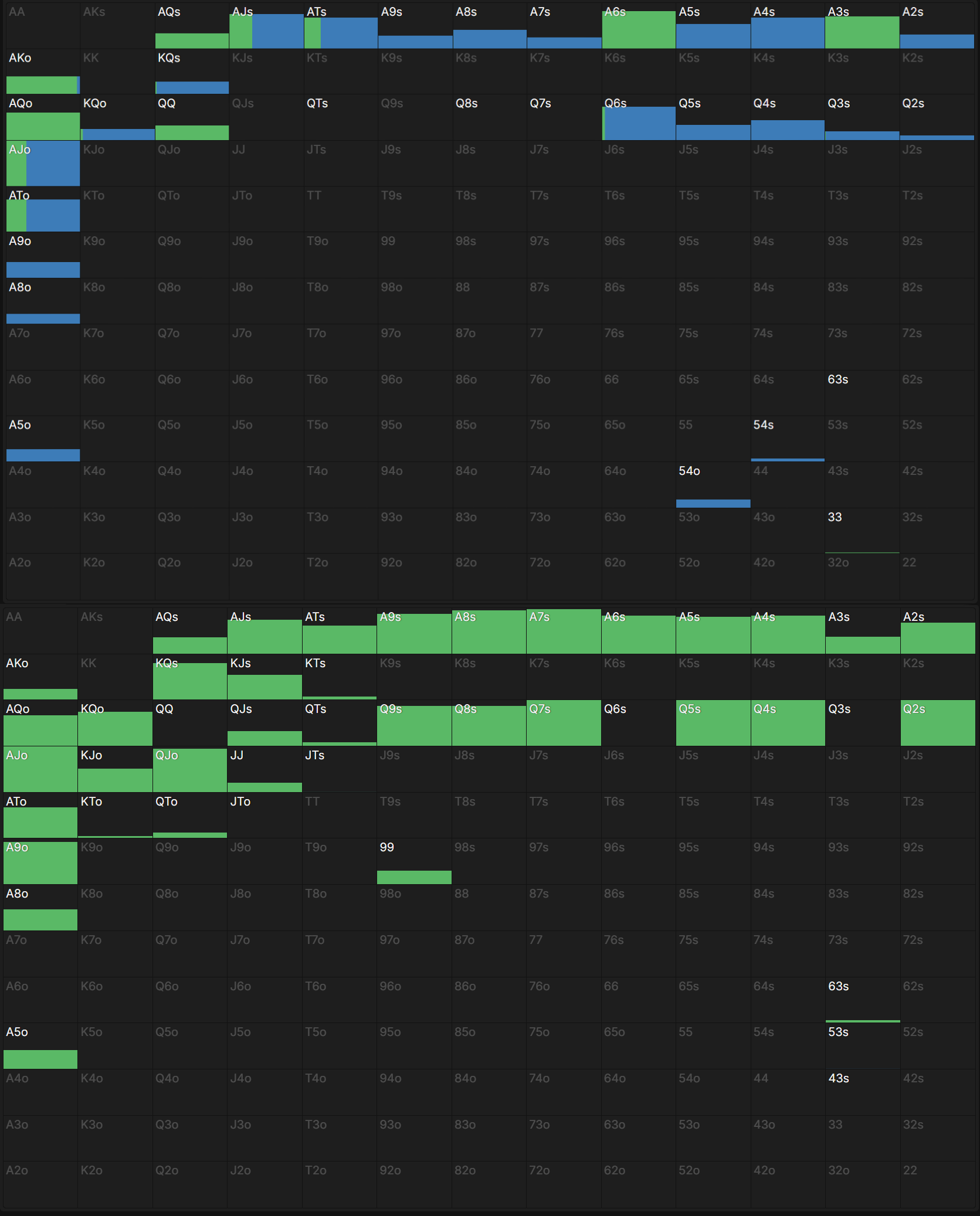
The ranges are different because the whole hand plays differently, but we never fold the river as we have constructed our range to beat all the bluffs, and we can guarantee at least one unmade hand barrels all three streets.
This is why LLinusLLove was, perhaps, able to make that incredible 8-high call against Ryan DePaulo. A hand many in the high-stakes community thought was surprisingly standard.
The introduction of the 7-2 game and perhaps the introduction of Nik Airball to the online felt means that we are likely to see a lot more of those crazy 8-high calls going forward.
