Poker Hands Ranking Charts: Evaluate Poker Hand Strength
Quick facts by PokerStrategy
- Poker hand rankings determine which poker hand wins at showdown.
- The hierarchy runs from the unbeatable royal flush down to a simple high card.
- The same poker hands and rankings apply in Texas Hold'em, Omaha, and Stud.
- Suits have no rank in poker; ties are broken by kickers, and identical hands split the pot.
Poker Hand Rankings Explained
Poker is a game of skill, luck, and strategy, but at the end of the day, the winner is determined by the strength of the hand. Every major variant – Texas Hold'em, Omaha, Seven Card Stud – uses the same basic system of hand rankings poker follows.
One exception is Short Deck Hold'em, which we explain later in this article.
Understanding poker hands and rankings gives players a clear sense of when they have the advantage and when they don't.
Poker Hand Rankings Chart from Best to Worst
All poker hands are ranked in order from strongest to weakest. The higher the rank of the combination, the less likely you are to see it in a game, which is why the payouts and excitement rise when rare hands appear.
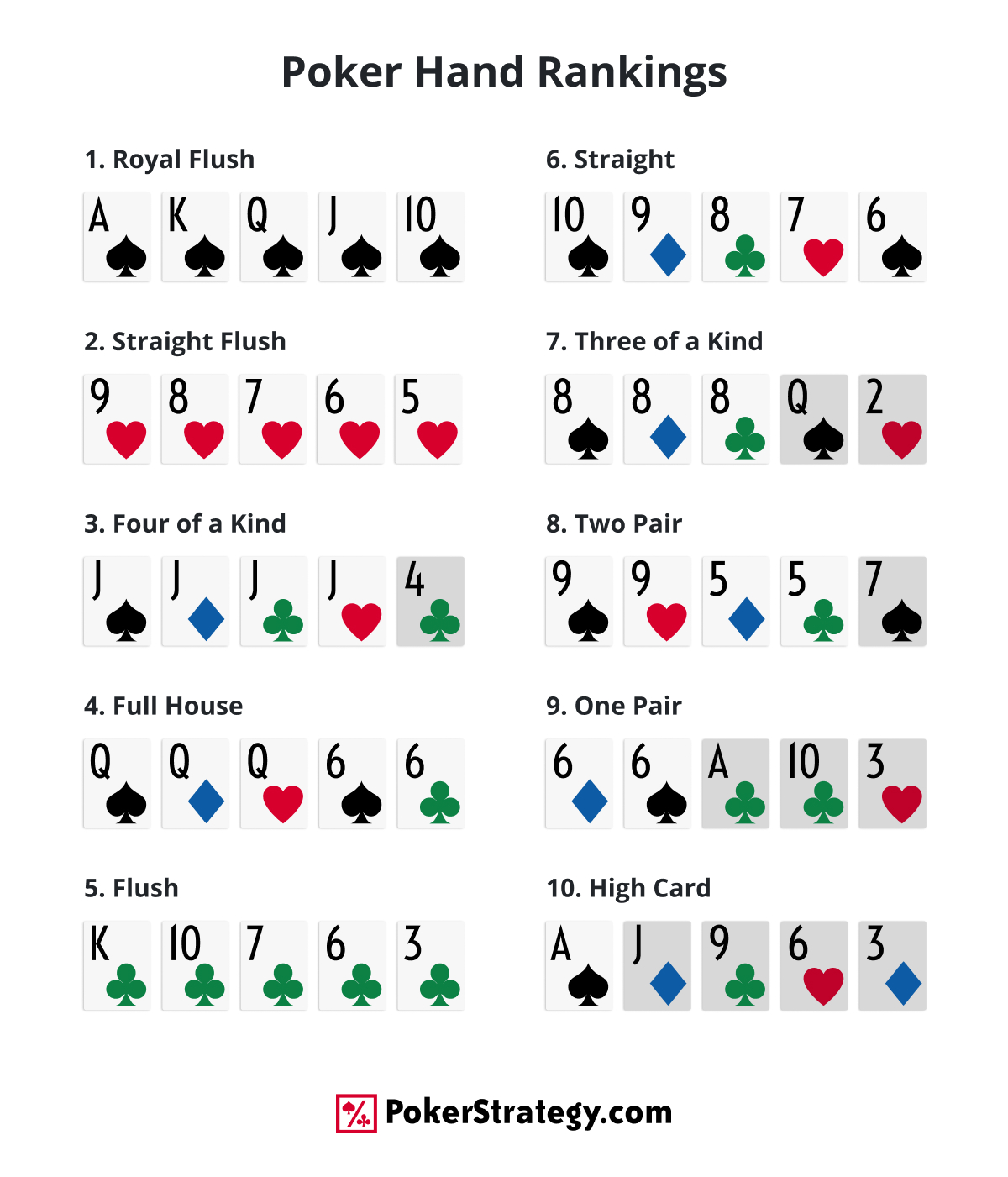
Every Poker Hand Explained
Poker hand rankings follow a strict order. With each step down the ladder, card combinations become more common and less powerful, which is why knowing exactly how one hand compares to another is so important. Let's go through them one by one.
Royal Flush
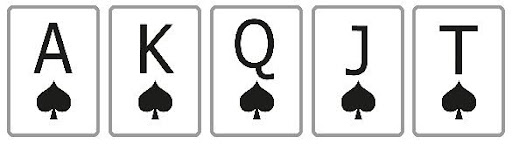
The royal flush is the absolute best hand in poker and is made of five cards in sequence from 10 to Ace, all in the same suit. An example would be A♠ K♠ Q♠ J♠ 10♠. Because this combination is the highest straight flush possible, it cannot be beaten by any other hand.
If you make a royal flush, you hold the nuts, and the only way the pot is not yours is if the hand is split across community cards that give it to everyone equally.
Straight Flush
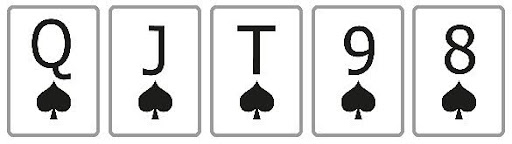
Just below that comes the straight flush, which is any five consecutive cards of the same suit that are not specifically the 10-to-Ace sequence. An example would be 9♦ 8♦ 7♦ 6♦ 5♦.
The straight flush beats four of a kind because it combines both a straight and a flush, making it more difficult to achieve. If two players each have a straight flush, the hand with the higher top card wins—for instance, a 9-high straight flush beats a 7-high straight flush.
Four of a Kind
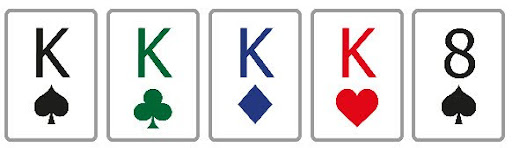
The next hand in the order is four of a kind, which means holding all four cards of one rank, along with any fifth card, called the kicker.
For example, J♥ J♦ J♣ J♠ 7♣ would be four of a kind, Jacks.
Four of a kind loses only to a straight flush or royal flush because, while having four of the same card is extremely rare, it still does not outrank a perfectly sequenced flush. When two players have quads, the higher set wins—for example, four Kings beats four Jacks. If the same quads are on the board, then the kicker decides.
Full House
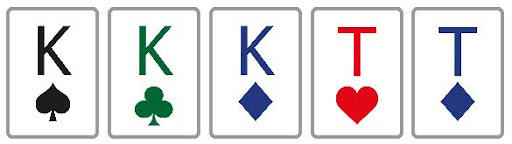
Following four of a kind is the full house, a hand that combines three cards of one rank with two cards of another. For example, Q♠ Q♥ Q♦ 9♣ 9♥ is a full house, Queens full of Nines. A full house beats a flush because three of a kind plus a pair is harder to make than five cards of the same suit.
When two players both have a Full House, the three-of-a-kind part (the set) decides the winner—three Queens full of Nines outrank three Jacks full of Kings, even though the pair in the second hand is higher.
Flush
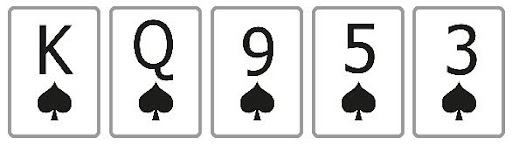
A flush is made up of five cards of the same suit, but not in sequence. An example would be A♣ J♣ 8♣ 4♣ 2♣. A flush beats a straight because it is more difficult to assemble five suited cards than five sequential cards of mixed suits.
When two players both hold flushes, the hand is compared by the highest card. For example, an Ace-high flush beats a King-high flush, and if the highest cards are the same, the next highest is compared until a winner is found.
Straight
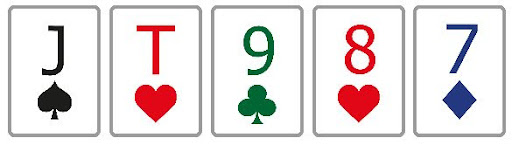
Below the flush is the straight, which is five cards in sequence but not all of the same suit. For example, 10♣ 9♦ 8♠ 7♥ 6♣ is a straight, Ten-high. Straights beat three of a kind because lining up five cards in sequence is less common than being dealt three of the same rank.
The Ace can play either high (A-K-Q-J-10) or low (A-2-3-4-5), which is often called the "wheel." It cannot wrap around in both directions—you cannot play Q-K-A-2-3 as a straight.
Three of a Kind
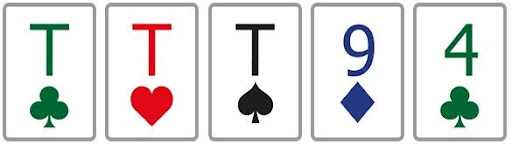
The next step down is three of a kind, also called trips or a set. This hand consists of three cards of the same rank and two other unrelated cards. For instance, 7♦ 7♠ 7♣ K♦ 3♥ is three of a kind, Sevens.
Three of a kind beats two pair because it is more difficult to hold three cards of the same rank than just two different pairs. If two players both hold trips, the higher-ranked three of a kind wins. When the trips are the same, kickers are compared.
Two Pair
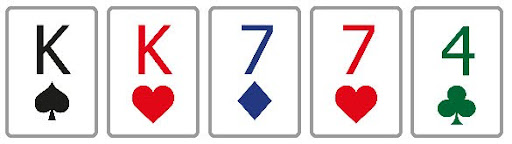
Below that is two pair, which means having two cards of one rank, two cards of another rank, and one unrelated card. An example is 10♠ 10♥ 6♦ 6♣ 2♠, known as Tens and Sixes with a deuce kicker.
Two pair beats one pair because holding two distinct pairs requires a stronger set of hole cards or favorable board runouts. When two players hold two pair, the higher pair is compared first, then the lower pair, and finally the kicker if needed.
One Pair
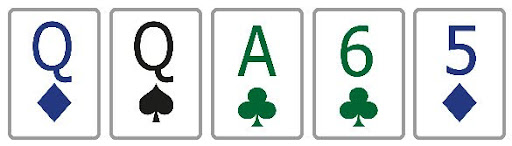
Next is one pair, which is exactly what it sounds like: two cards of the same rank plus three unrelated cards. For example, 5♠ 5♦ Q♣ 9♥ 3♦ is one pair, Fives. One pair beats high card because pairing two cards is more difficult than having no matching ranks at all.
If both players have the same pair, the winner is determined by comparing kickers—the highest side card not part of the pair.
High Card
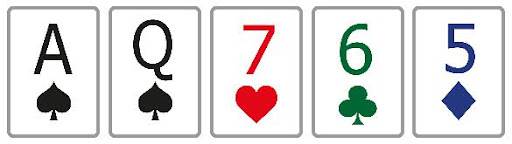
At the bottom of the rankings is high card. This is when no other combination is made, and the hand is judged purely by the highest single card. For example, A♠ 10♦ 8♣ 5♥ 2♠ is called "Ace-high."
A high card hand loses to every other type of hand, but among two high card hands, the one with the higher top card wins. If both share the same top card, the comparison moves to the next-highest card until a difference is found.
Understanding Poker Card Strength
While poker card hand rankings give an absolute order, real strength depends on context and the types of hands that appear after the cards are dealt. A pair of Aces may look powerful, but on a board showing 10♠ J♠ Q♠ K♠, it's weak unless you are holding the A♠.
- Absolute strength: Where a hand sits in the official ranking (e.g., flush beats straight).
- Relative strength: How a hand plays against opponents' ranges on a given board.
Kickers also matter. A pair of Kings with an Ace kicker will beat the same pair with a Queen kicker. Position at the table also influences strength, since acting last gives you more information before making decisions.
What Is the Best Hand in Poker?
The royal flush is the best hand in poker. It's unbeatable and incredibly rare. Odds of hitting it are about 1 in 650,000 when dealt five cards.
In practice, you will see much more common winning hands like straights, flushes, or full houses. Players should not wait for a royal flush; instead, focus on playing solid hands that often win pots.
What Is the Best Starting Hand in Poker?
In Texas Hold'em, the best starting hand is pocket Aces (AA). It's the strongest pair pre-flop and has the highest equity against any other starting hand.
Other premium starting hands include:
- Pocket Kings (KK): Only dominated by Aces.
- Pocket Queens (QQ): Strong, but can be vulnerable to overcards.
- Ace-King suited (AKs): Draws to the nut flush and top straight.
Here's a quick poker hand rankings chart for the Texas Hold'em pre-flop winning odds, assuming heads-up (1 opponent) against a completely random hand and no dead cards:
| Hand | Win % vs 1 random hand (pre-flop) |
|---|---|
| A-A | 85.2% |
| K-K | 82.4% |
| Q-Q | 79.9% |
| A-K offsuit (AKo) | 65.3% |
| J-10 suited (JTs) | 50.5% |
| 3-2 suited (32s) | 37.0% |
| Any two suited cards | 6.5% to hit the flush by the river |
Keep in mind the following:
- These are heads-up baseline equities. As the number of opponents increases, all single hands' win percentages drop (premium pairs decline less than drawing hands).
- Real outcomes vary with opponent ranges. For example, AKo fares better against a wide calling range than against a tight 3-bet range.
- It's important to note that the best starting hand is not the same as the best hand overall. Pocket Aces can still lose to straights, flushes, or even smaller pairs if the board runs out badly.
Starting Hands Chart: Which Hands Should You Play?
Starting hands charts show which hands to play from different positions at the poker table. The fundamental principle: the later your position, the wider your range of playable hands. Acting last gives you more information before making a decision:
- Early position (UTG, UTG +1): Play only premium hands since you’ll act first on later streets. This includes hands like AA-JJ, AK, and AQ suited – top 10-12% starting hands.
- Middle position (MP, Lojack): Add more hands as you move closer to the button. Include pairs down to 88, Broadway combinations like KQ and AJ, and suited connectors like JTs – expanding to about 15-18% of hands.
- Late position (Cutoff, Button): Your range opens significantly. Play suited aces (A5s-A2s), small pairs (77-22), suited connectors (98s-54s), and many broadway combinations – up to 25-30% of hands from the button.
Here you will find an example of our starting poker hand charts for No Limit Texas Hold'em. If you prefer other game types, check out our beginner strategies and starting hands charts for other game types:
- Sit & Go beginners strategy and starting hands charts
- Fixed Limit Texas Hold'em charts
- Multi Table Tournament strategy
- Pot Limit Omaha strategy
What Is the Worst Hand in Poker?
One of the weakest starting hands in Texas Hold'em is 7-2 offsuit. It is low, unconnected, and unsuited, which gives it poor chances of improvement. Even if it pairs, it often loses to higher pairs.
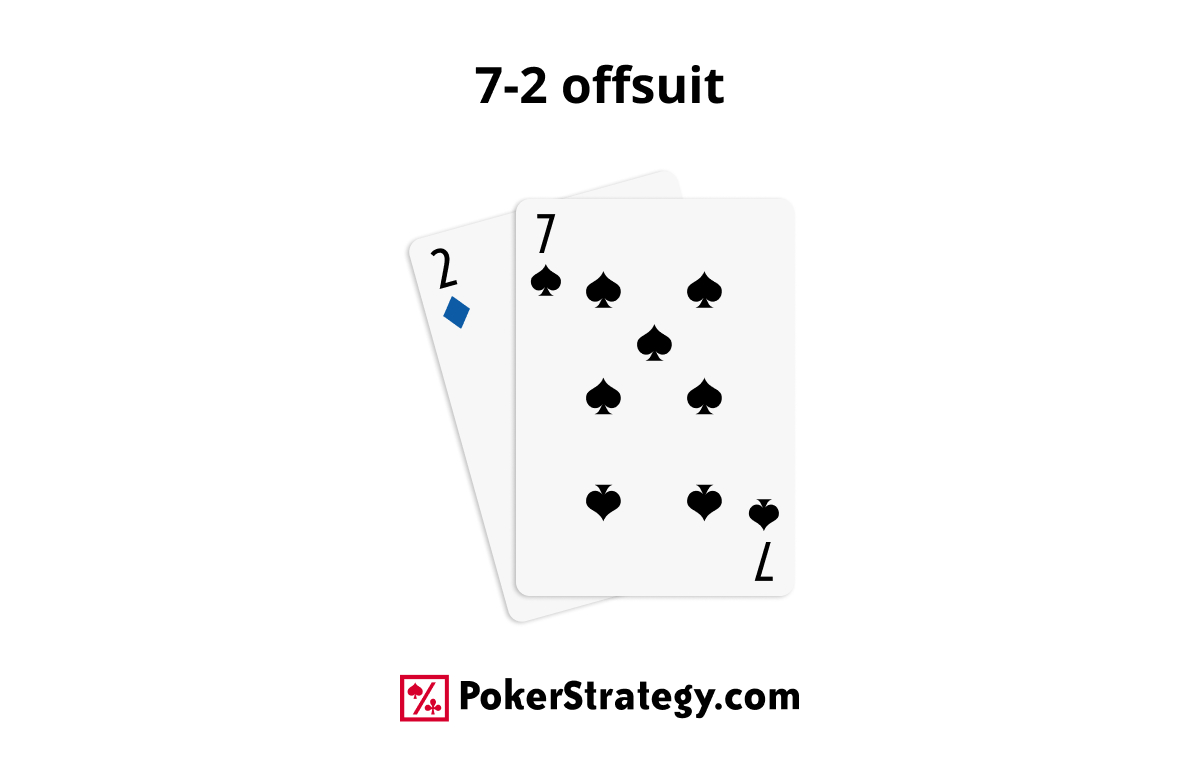
Context always matters, even with a weak hand. While 7-2 offsuit is almost never worth playing, in some games players will raise with it for fun or as a bluff, especially in casual "7-2 bounty" home games. Additionally, in position with no pre-flop raise at the table, it could be worth letting it ride to see what the flop brings.
Why Poker Hand Rankings Matter
Poker hands and rank are not trivia, but are crucial to playing well.
Beginners make incorrect estimates of their hand's value by thinking a flush is better than a full house, or by overestimating two pair when straights and flushes are likely.
Memorizing poker hands eliminates second-guessing and mistakes during games.
Whether you're playing at an online poker site or live at the casino, instant recognition of hand strength allows you to focus on strategy, betting patterns, and table image rather than second-guessing yourself.
Poker Hand Rankings in Different Variants
The order of hand rankings in poker is generally universal, but how they are applied can vary depending on the game format. Every variant still recognizes the royal flush as the best possible hand and high card as the weakest, but the path to making those hands and the frequency with which they appear can change dramatically.
Understanding these differences is important so you know not only what wins but also how often you might expect certain hands to appear.
Texas Hold'em
In Texas Hold'em, the most popular version of poker, the rankings apply in their simplest and most direct form. Each player receives two private hole cards and combines them with the five community cards on the table to make the best five-card hand.
Because everyone has access to the same board, ties and split pots are common, especially when the community cards form strong combinations like straights or flushes. Despite the shared cards, the standard ranking order – royal flush down to high card – remains unchanged.
Omaha
Omaha poker hand rankings are exactly the same as in Texas Hold'em, but the rules for using your cards make the game play differently. Each player receives four hole cards instead of two, but you must always use exactly two of your hole cards and three community cards to form a hand.
This rule changes the texture of the game because players start with more possible combinations, which means strong hands appear more often.
For example, a flush or full house is much more common in Omaha than in Hold'em, which in turn makes medium-strength hands like one pair or two pair much weaker in relative value.
Seven Card Stud
Seven Card Stud predates Hold'em as the classic poker variant.
In Stud, players do not share community cards; instead, each player is dealt seven cards – some face up, and some face down – and the best five-card combination determines the winner.
The ranking of hands remains the same, but the way they are built differs.
Because players see part of their opponents' hands face up, there is more information available, which can influence decisions about whether a flush or straight draw is likely to succeed. Even though the ranking order is unchanged, the strategy shifts due to the visibility of certain cards.
Short Deck Hold'em
The greatest deviation comes in Short Deck Hold'em, also referred to as 6+ Hold'em.
This variation omits all cards ranked 2 through 5, leaving only a 36-card deck. The same general rankings exist with some exceptions, but with fewer cards overall, probabilities are altered significantly. Straights are much easier to achieve with fewer cards out there, yet flushes are less likely simply because there are fewer suited cards to go around.
For this reason, many Short Deck games change the standard ranking order by placing a flush above a full house. Some rule sets also treat the Ace as being able to connect to both the top and bottom of straights, meaning A-6-7-8-9 is a valid straight, where the Ace becomes the lowest ranking card of the group. These changes highlight how hand rankings are sometimes adjusted to align with the deck's altered mathematics.
Across all these variants, the standard poker hand rankings serve as the foundation. What differs is how the cards are dealt, how many are available to use, and how often strong hands appear.
A beginner moving between formats should always check whether any small adjustments apply, especially in games like Short Deck, where the ranking of flushes and full houses may be reversed.
Common Mistakes Players Make with Poker Hand Rankings
Even experienced players occasionally slip up when ranking hands of poker. Common errors include:
- Misreading straights, especially the "wheel" (A-2-3-4-5).
- Believing a flush beats a full house (except for Short Deck Hold'em, it doesn't).
- Overvaluing small pairs when board texture favors bigger hands.
- Forgetting that kickers can decide tied hands.
Understanding poker hand rankings explained in practice avoids costly mistakes.
Conclusion
Poker hand rankings are the backbone of the game.
Whether you're playing Texas Hold'em, Omaha, or Seven Card Stud, understanding which hands beat which is essential for making smart decisions at every stage of play. From the unbeatable royal flush down to a high card, each hand has its place in the hierarchy. But knowing the rankings is only the beginning.
Real success comes from understanding how hand strength changes with context—reading the board, considering your opponents' ranges, and adjusting your strategy accordingly.
Master the rankings, practice recognizing them quickly, and you'll be able to focus on what really matters: outplaying your opponents and winning more pots.
Frequently Asked Questions
Why is 7 and 2 the worst hand?
7 and 2 is the worst hand because it is unsuited, unconnected, and low. It rarely improves to straights or flushes and usually makes the lowest pair.
Does 5 of a kind beat a royal flush?
There is no 5 of a kind in poker unless wild cards are used. In standard poker without jokers, four of a kind is the maximum.
Do suits matter in poker hand rankings?
All suits are equal in poker. A♠ K♠ Q♠ J♠ 10♠ has the same rank as A♥ K♥ Q♥ J♥ 10♥.
What happens if two players have the same straight/flush?
The highest card in the sequence or flush determines the winner. If still tied, the pot is split.
How rare is a royal flush?
The odds are about 1 in 650,000 in five-card poker. In Texas Hold'em, the chance is even less frequent.
What is the best hand in poker?
The royal flush is the best hand, unbeatable in standard rankings.
What is the order of poker hands from best to worst?
The poker hand rankings start with royal flush as the highest, followed, in order, by straight flush, four of a kind, full house, flush, straight, three of a kind, two pair, one pair, and high card.
Do poker hand rankings change by game type?
For the most part, hand rankings are the same across the different poker variants. Texas Hold'em, Omaha, and Stud all use the same system, but Short Deck changes a few rankings.