


GTO Poker Theories: Bushnell's Law
Today we look at a theory of video game design that should point you towards the best tables in poker.
One of the real gifts poker has given me is that it has been a great jumping off point to learn things from other disciplines like economics, AI, psychology and Game Theory. So here is a series of articles where I bring some of the most interesting things I have learned from other subjects outside of poker which are applicable in this game we know and love.
This week I look at a principle from the world of video game design, which is an absolutely fascinating area of research which has important real world implications because it is used by the entire tech industry.
Bushnell's Law is an aphorism attributed to Atari founder Nolan Bushnell which has been used successfully as a principle of video game design ever since. It states:
All the best games are easy to learn and difficult to master. They should reward the first quarter and the hundredth.
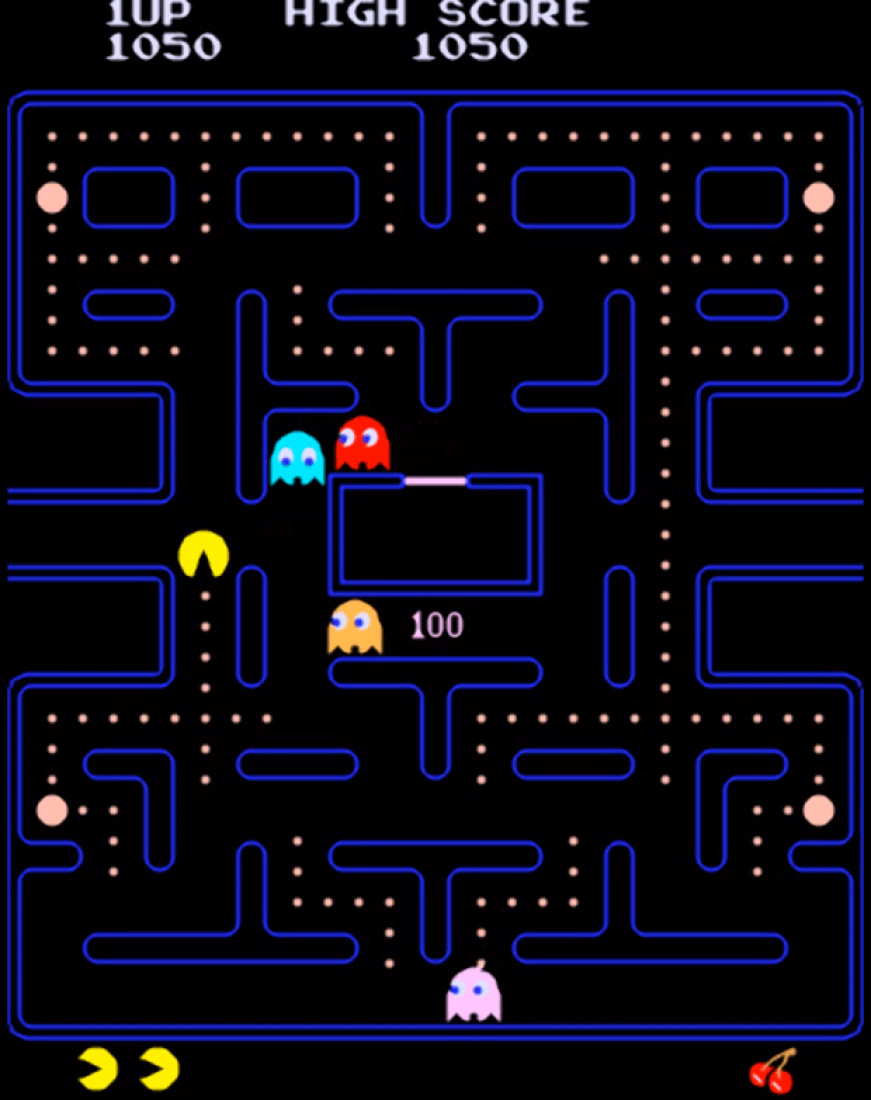
It was first coined at a time when all video games were relatively simple. However, games like Pac-Man and Space Invaders were considered incredibly addictive, so much so there was rumours of a national coin shortage in Japan (for you young people out there, you used to have to put coins in a machine to play video games).
The game also has to get harder to keep you challenged, otherwise you would just get bored. The best games always manage to get the right balance of challenge and progress, getting you into an enjoyable flow state.
If you think of all the games you love, chances are they were pretty easy to pick up, but progressively got harder. A game like Street Fighter, for example, is really easy to button mash your way to your first victory but gets harder and requires you to actually learn how to do the special moves.
A minute to learn, a lifetime to master

If Bushnell's Law sounds familiar, it is because poker has its own version where we say it "takes a minute to learn and a lifetime to master". Poker may in fact be the ultimate example of Bushnell's Law. It is easy to pick up (people understand money, they understand hand rankings and the betting rounds are simple) but it gets so complex we have Super High Rollers who literally spend 16 hours a day studying hands on PioSolver.
More significantly, perhaps the reason why poker in particular hijacks this law better than most is because of the variance factor. Not only can you pick up the game easily, you can beat superior players immediately in the short term. What better way to keep somebody motivated to play than to give them an early taste of glory?
Complexity is not King

It also explains why No Limit Hold'em will always be King in poker. It is so simple to a beginner and there really isn't a format that is easier to pick up. We often talk about if PLO will become the number one game in poker but it won't because comparatively it is very confusing, and people do not like being confused. This is also why No Limit translates so well to television and the other formats have not.
We are currently being flooded with a number of new poker formats and Bushnell's Law holds the key to which ones may be a success. Games like Split Hold'em, Power Up and Unfold will probably all remain novelty formats because they add complexity to the game. Spin & Go by comparison is a simpler form of poker and that explains its adoption and popularity by every operator. I suspect Short Deck Hold'em could become very popular this year precisely because it is (on the surface) a simpler version of an already simple game.
Bushnell's Law is an important concept to learn for game selection. Your ideal format to study is a game that is easy for a new player to start, and enjoy, right away but complex enough so that hard work can give you an edge. So as much as you enjoy it, 200 big blind Pot Limit Omaha Hi/Lo is probably not that game.
What theories from outside of poker have helped your game? Let us know in the comments.
Related articles
