


Does my hand benefit from folds?
Dara O'Kearney returns with another mantra he learned from extensive solver work on how to decide when to bet or check.
One of the early maxims we all learned in poker is that you have to know why you are betting. It states that you should bet if you think you can make a better hand fold or a worse hand call. A lot of people just bet as a default without thinking so this remains solid starting advice if you are ever checked to and wondering what to do.
To expand on this advice a little, a more useful way of thinking about when to bet is whether your hand benefits more from folds or by keeping other hands in the pot. This is something you really start to notice when you work with solvers. It’s not just about whether you have the best hand, it’s also about what the best outcome for it is likely to be.
It's less obvious, but it can be a good result to make a worse hand fold if that worse hand has a good chance of improving. It is also not ideal, but not terrible, when we make a better hand call (rather than raise us) if we have a hand that has a chance to improve and realise equity.
Equity denial
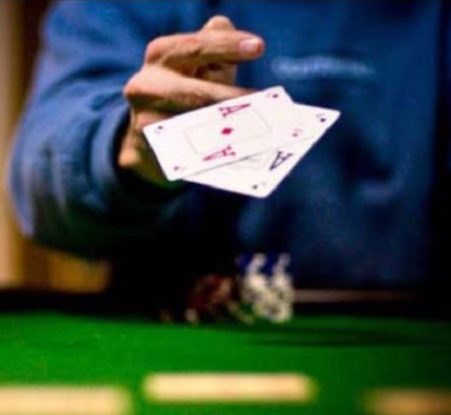
To show what I mean, let’s take a post flop spot where we have effective 30 Big Blinds, we have raised the button, the Small Blind has 3-bet, we call and the flop is 7-8-9 rainbow.
This is a very broad generalisation right now but a solver usually would suggest you raise with a hand like QQ, TT, 44 or 67s if the Small Blind bets, or you should bet if they check, but AA and KK are often calls/check backs. Why?
Starting with QQ, that figures to be the best hand right now but it also benefits greatly from equity denial. In other words, while very strong, it doesn’t really want to give Ax and Kx hands that are bluffing a chance to outdraw it on the turn. It’s usually a good result for QQ if an Ax hand gets out of the way.
AA and KK do not have to worry about this, in fact it is very much in their interest to keep Ax or Kx hands in. It’s not a good result for us if we fold out AQo when we have AA or KK. So it is much better to just call a bet/check back and to try and string the Villain along on the turn and river. With shallow stacks we are not really worried about our opponent making a monster and felting us for 100 bigs, we are looking to get our money in the middle, it’s just a question of how?
By the same token, while 44 is usually going to give up on most flops, it will sometimes bet for the same reason as QQ. It cannot really stand any heat and by betting we give random hands like JQo or A5o a chance to fold, rather than hit a weak pair on the turn or river, check it down and beat us.
67s and TT are the interesting cases because you could argue both have strong enough equity to play either way, but broadly speaking they both benefit from bets. We might bet and get a worse hand to call with the TT. We might bet and get a better hand to fold with the 67s. We might bet and hit a monster to win a big pot with either of them.
Is our hand ahead, but vulnerable?

As we discussed a few weeks ago, the modern way of thinking about a hand is not a binary value. Instead of thinking about making a better hand fold or a worse hand call, think of it as folding out Villain's equity or realising our own equity. Hands we might want to bet are our vulnerable hands where our opponent has a lot of hands with good equity against us. If we have a hand with 33% equity against their range a fold is a good result. When we have high equity we don't benefit from equity realisation or denial when we bet because there is little chance we get outdrawn and our opponent folds all their bad hands anyway.
Of course all of the above is a very simplified example and if we are constructing a range properly we have to think about a lot of other factors including balance, blockers and bet sizing. But as a general rule, when you find yourself in a close decision about whether to bet or not, think about whether your hand likes it if you get folds or whether it benefits more when your opponent stays in the pot.
You can get advice like this every month in Dara's free strategy newsletter (with a current focus on PKOs) which you can join right here.
