


Poker Basics - Polarised Ranges
How should you play when your opponent either has a monster or is bluffing? Learn the basics of polarised ranges.
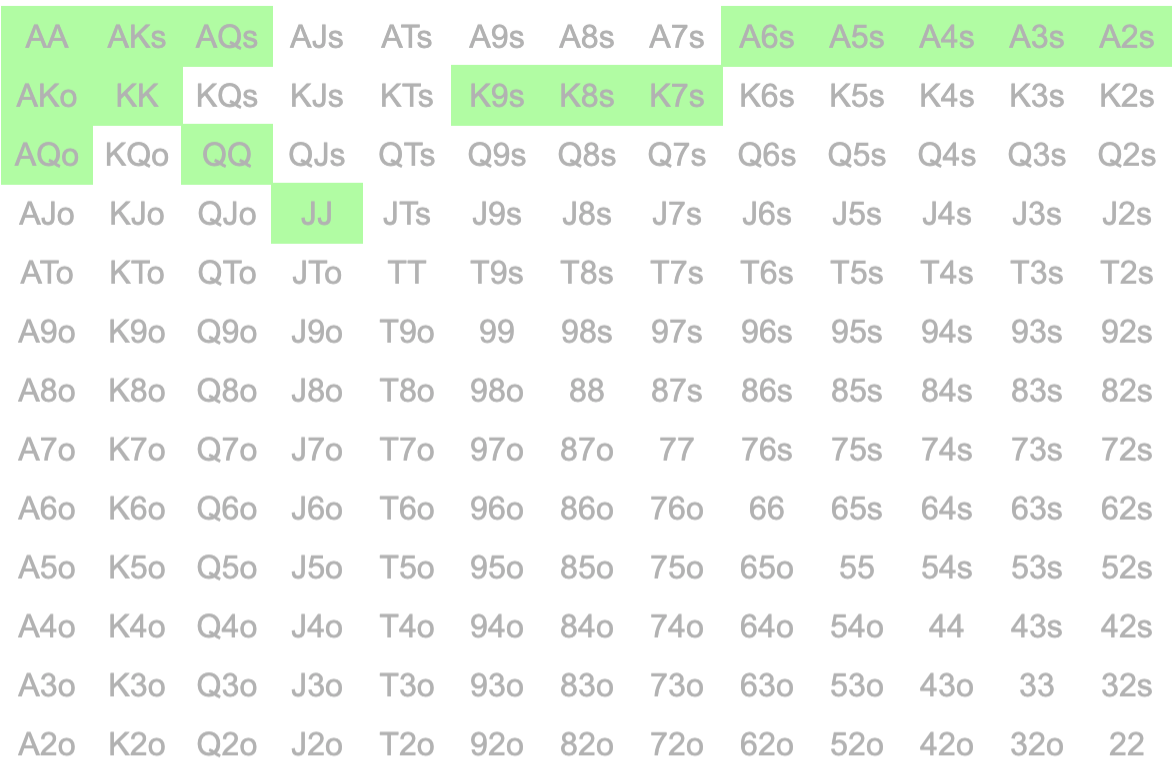
A polarised range is when the hands in it are weighted towards very strong or bluffs. You either have it or you don't.
For example if the flop is J A 2 and your opponent bets. If you have them on a polarised betting strategy you would expect them to have hands like AA, AK, AQ, AJ, JJ, 22 or hands like KQ, KT, QT, Q9 etc.
Unlike a linear range, a polar range does not have any middle strength hands. Ranges tend to get more polarised on later streets because the bet sizings get bigger and as such most middle strength hands should fold.
No middle strength hands

Polarised ranges are common when the player is 3-betting preflop or reraising post flop. The absence of middle strength hands, which would prefer to pot control, weights a range towards bluffs and value bets.
If you are up against a polarised range then you don't want to do much reraising. This will allow your opponent to fold their bluffs and continue with their big hands. Bluffcatching is the way to go most of the time.
The key to playing a polarised range is to get the right balance of bluffs and value hands, based on your bet sizing. If you have too many bluffs you end up value owning yourself, if you don't have enough you'll never extract enough value from your opponents.
Related Resources
Range analysis
Collin Moshman talks about poker ranges and much more in low stakes nine-man SNGs
_227efd42.jpg)
Get our free software
Our Equilab tool will teach you everything you need to know about ranges and equity in poker
