


GTO Poker Theories - The Ellsberg Paradox
People prefer known risks over uncertain risks, even when it is against their best interests. True in life and certainly true in poker.

One of the real gifts poker has given me is that it has been a great jumping off point to learn things from other disciplines like economics, AI, psychology and Game Theory. So here is a series of articles where I bring some of the most interesting things I have learned from other subjects outside of poker which are applicable in this game we know and love.
The Ellsberg Paradox is a concept in decision theory and behavioural economics. It is based on a thought experiment developed by economist Daniel Ellsberg in the 1950s. It demonstrates that people often have difficulty making decisions when faced with uncertainty. It shows that people tend to prefer known risks over unknown risks, even when the unknown risks are equally likely. This can lead to suboptimal decision-making and can have serious consequences in real-world situations.
Here is an example of the Ellsberg Paradox: imagine that you are presented with two envelopes, one labelled "red" and the other labelled "blue." You are told that the red envelope contains 100 pennies and that the blue envelope contains either 0 or 200 pennies. You are asked to choose one of the envelopes at random and then to guess the number of pennies inside.
Most people in this situation would choose the red envelope, reasoning that it is a safer bet since it contains a known quantity of pennies. However, this choice violates the axiom of rationality, which states that all options should be considered equally likely. In this case, the person should be indifferent between choosing the red envelope or the blue envelope, since there is no information to indicate that one envelope is more likely to contain a higher number of pennies.
A common real life example of this paradox is the popularity of fixed rate mortgage deals over variable deals that track the interest rate of a country. A fixed rate deal pays off if mortgage rates skyrocket, but over time has not always been the better deal. It would appear that the biggest appeal of a fixed rate deal is certainty, even if you could be better off without one.
Deal or no deal?
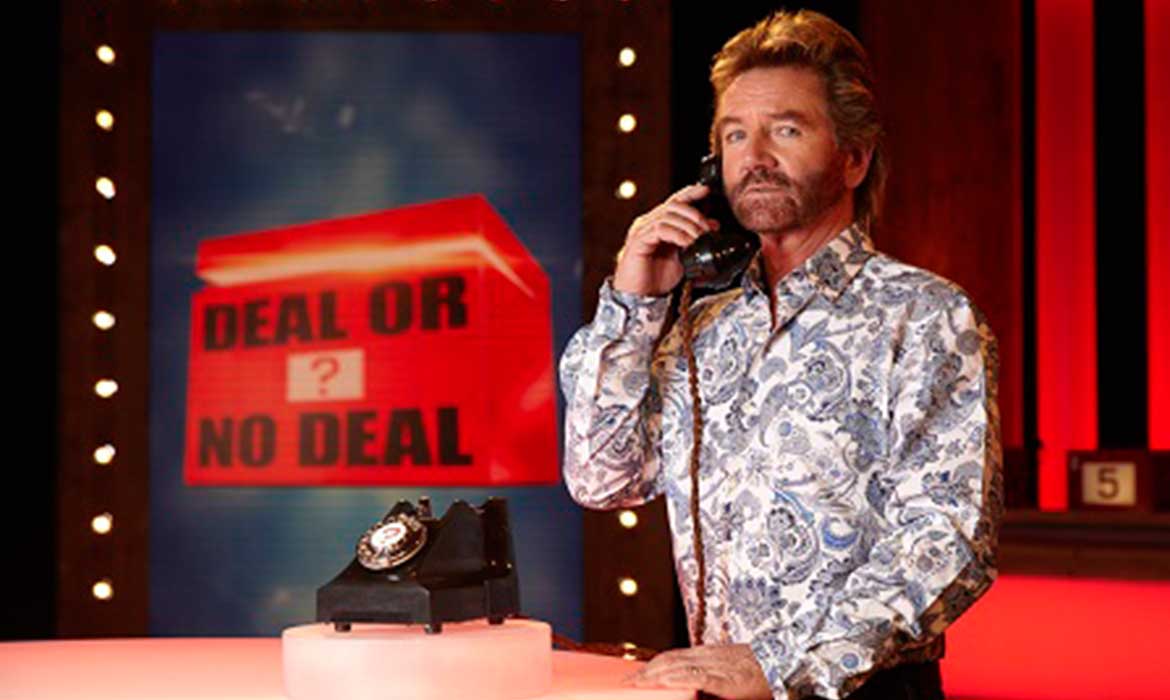
The Ellsberg Paradox can be found in lots of places where poker is concerned, most notably final table deals. Most poker tournaments end in deals using the ICM model, which assumes that all the players are of equal skill. When the deal is struck, your stack is worth an expected value of equity which is not as much as the top prizes. Assuming the players are equally skilled, if you played the same final table thousands of times, in theory you would be no better off dealing or not dealing.
There are lots of good reasons to deal, most notably the utility of the money on offer. The bankroll boost a guaranteed fixed amount gives you might be worth more to you than trying to capture the biggest advertised prize. But it is also clearly the Ellsberg Paradox in play too, turning down a guaranteed amount is hard, in no small part because you have no idea if you’d win or bust next if you played on.
I think you also see this in play in poker mental game leaks. When I first worked with mental game coach Jared Tendler I was risk averse and folded too much. I didn’t play my hands aggressively enough, which I felt was the ‘low risk’ approach. Tendler said something that always stuck with me, which is that I “wasn’t calculating the risk of doing nothing”.
The risk of playing it safe
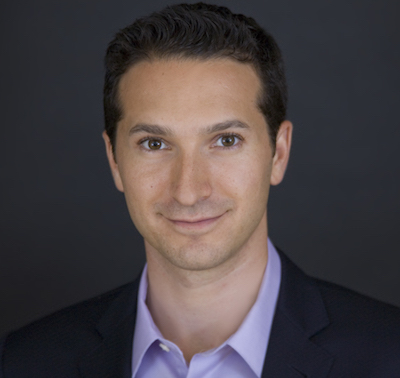
He was dead right. By not playing my hands aggressively, there was a massive opportunity cost. I was losing money by virtue of the pots I wasn’t winning. My risk aversion was clearly an example of the Ellsberg Paradox. I’d rather take the known risk of folding too much than the unknown risk of getting my money in the middle of the table.
You also see this paradox in play when people call bets they know are likely not bluffs purely out of curiosity. Some people are not comfortable sitting with the uncertainty over whether they folded the winner and would rather lose more to know what their opponent had.
Poker is a game of incomplete information and the Ellsberg Paradox is an important reminder that sometimes we have to be prepared to take risks where the outcome is unknown.
What theories from outside of poker have helped your game? Let us know in the comments.
Related articles
