


GTO Poker Theories - The Majority Illusion
We mistake the most vocal and well connected as being representative of the majority, in life and poker.

One of the real gifts poker has given me is that it has been a great jumping-off point to learn things from other disciplines like economics, AI, psychology, and Game Theory. So here is a series of articles where I bring some of the most interesting things I have learned from other subjects outside of poker which are applicable to this game we know and love.
In our interconnected society, perceptions can often be distorted by a fascinating yet somewhat deceptive social phenomenon, commonly known as the "Majority Illusion". This illusion is a bias in network perception that can make a behaviour or attribute seem more prevalent in the network than it truly is because those who display the behaviour are more connected than the majority who do not.
Social media has brought the majority illusion into the mainstream. The one moment that really sticks out for me personally was the 2015 UK election, which was one of the first elections since Twitter came into popularity. As an avid Twitter user, it looked like the UK Labour Party was going to win by a landslide, but they actually were comfortably beaten by the Conservatives.
It was only in retrospect that we all realised that it was just a case of the most vocal and social media savvy users voting Labour, but they didn't represent the views of the majority. Soon after I think Brexit and Trump winning the 2016 election introduced the majority illusion to a lot of people.
The silent majority
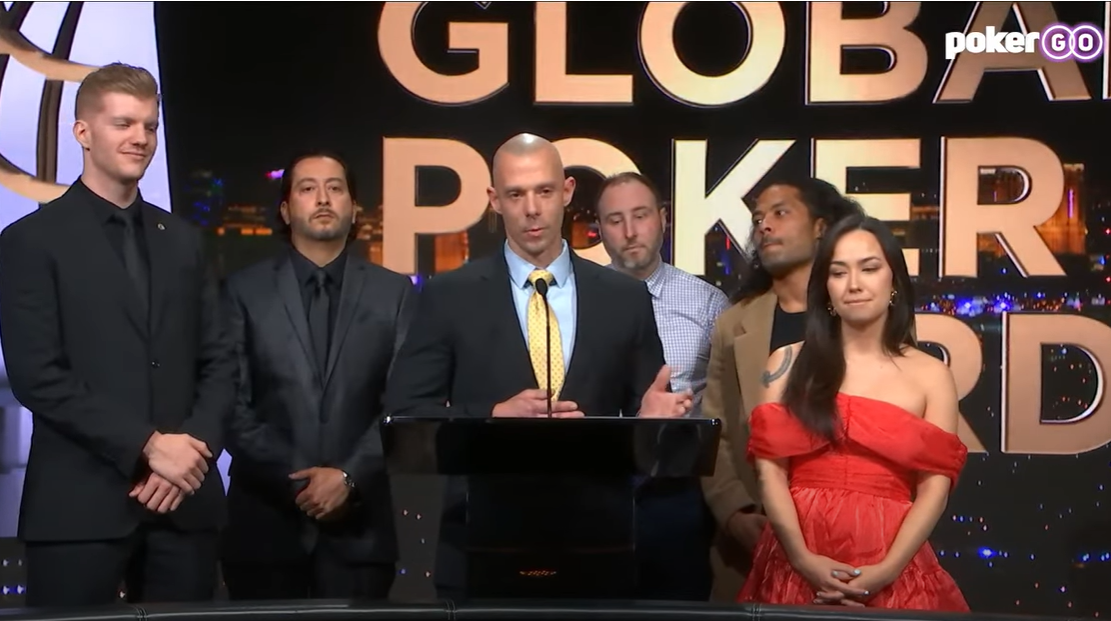
The majority illusion is prevalent in poker in a number of ways. A classic example is the Global Poker Awards, an event that appears to represent the whole of the poker world. Those who get nominated, or feel they should, take it very seriously. But most years you struggle to find any winner from outside of North America, and lots of cohorts of players (most notably strategy content creators and online players) get left out completely.
Another example of the majority illusion in poker is the current trend of Twitter Spaces. Because a handful of Vegas-based players never stop talking about Twitter Spaces, there is an assumption that this is the new great form of poker media. The reality is they rarely get more than a few hundred listeners at a time. Twitter Spaces get thrashed in terms of the number of users by YouTube, podcasts, Twitch, Facebook, forums, Discord, and pretty much everything else. But because the people who like Twitter Spaces
The biggest example of the majority illusion, however, is the way in which professional players influence the game. Professional poker players make up a very small percentage of the people who play poker, but because they have the loudest voices and generate the most rake, they have a much bigger voice than the majority of people who bring in the all-important deposits that are the lifeblood of poker.
In a world increasingly shaped by algorithms and echo chambers, the majority illusion serves as a sobering reminder of the deceptive power of collective perception.
What theories from outside of poker have helped your game? Let us know in the comments.
Related articles
