


What my final table crash courses look like
Dara O'Kearney explains what he does with students when they hire him ahead of big final tables.

One of the most common things I coach high-profile players on is what I would call a crash course in final table ICM.
And by crash course, I really do mean last minute.
What tends to happen is a poker player gets to a major final table like a WSOP, WPT or WCOOP event, and then they realise they are unprepared for the ICM aspect of the final table. So in the 12 hours between making the final table and it starting, I get drafted in to try and teach them the most important lessons in an hour.
Most players who do this already have a baseline understanding of ICM (they are unlikely to get as far as a WSOP or WCOOP final table without one), it’s the specifics of their situation they are not sure about.
They might have a huge stack and not know how far to push it. They might have a small stack and not know how to chip up.
Usually, though, it’s a medium stack, unsure how to weigh the competing incentives of laddering and playing for the win.
What they are really asking me for, however, is for me to assess their Risk Premium.
Risk Premium
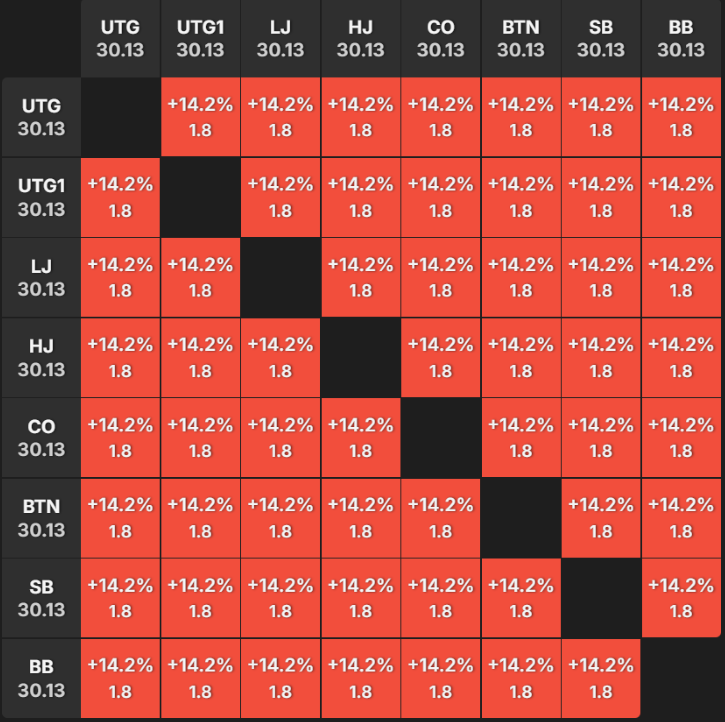
Risk Premium is a measure of ICM pressure, and it’s a metric which is available in all the major solvers that are on the market.
It is basically just the extra equity you need to call an all-in. If you need 50% equity in a ChipEV spot, but your Risk premium is 7%, you need 57% equity in an ICM spot.
After studying ICM for my entire career, Risk Premium is everything. You might think the chip stacks, the payout structure or the tournament stage are what is driving your action, but if you understand the Risk Premium, you know how to play.
Post-flop ICM is so much easier to master when you understand the way Risk Premium influences strategy.
- If both players have high Risk Premium, the play is typically cagey.
- If both players have low Risk Premium, the strategy is close to Chip EV.
- If one player has high Risk Premium and the other has low Risk Premium, the low Risk Premium guy can be very aggressive and the high Risk Premium guy has to play cautiously.
If you are going to study ICM, start looking at Risk Premium in more depth to familiarise yourself with the concept. Even better, play around with the factors which influence Risk Premium (Stack sizes and payout structure) and start trying to guesstimate what the Risk Premiums will be in different spots.
If more players understood Risk Premium, I wouldn’t have to do so many 3 AM ICM crash courses with new students.
You can get Dara's free book on effective poker study by joining his mailing list.
