


A simple method for picking your bluffs
Dara O'Kearney shares a simple heuristic for deciding what hands to bluff with based on the strength of your value.
A lot of players struggle to know what hands to bluff with, they often get it backwards.
When you have a very strong range, you should have few bluffs and you should bet small. Your bluffs, however, should have lots of equity, so a strong draw like an open-ender.
When your whole range is not that strong, but you have hands that want to bet, you should bet big with your value and you should have lots of bluffs. The bluffs, however, should be weaker; they should have some equity still, but not much, so something like a gutshot or a backdoor draw.
The gap between bluff and value

There are lots of reasons for this, but practically speaking, when we bet small we won't get many folds, so our bluff needs to be able to improve. We will also get reraised a lot, so we want a hand that can call a reraise, like an open-ender or a flush draw.
When we bet big, we will get more folds, which is a great result for a weak hand like a gutshot. If we get reraised, we have a very easy fold.
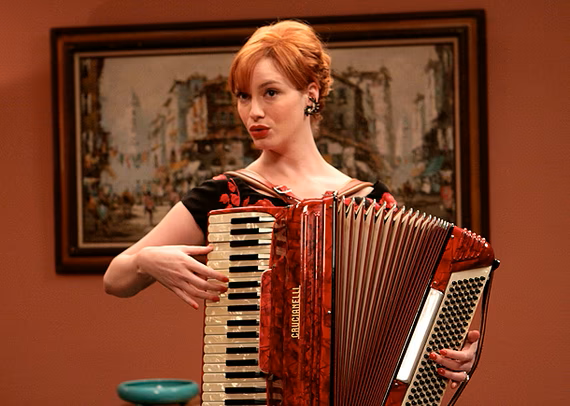
The analogy I like to give is to think of bluffs and value like an accordion. On one side there are your bluffs, the other your value.
When you have a strong range, it's like when the accordion is closed. Your bluffs and value should be close together in equity. A flush draw or up and down straight draw will be close, in equity terms, to your weakest value hands.
When you have a weaker, more polarised, range, it's like when the accordion is open. There is a big gap between the equity of your strongest value hands and your bluffs.
It's a nice visual reminder about the difference between range bets and polarised bets.
You can get Dara's free book on effective poker study by joining his mailing list.
