


Build your strategy around your value bets
Your bet sizing and overall strategy should be built around what your biggest hands want to do in a given spot. Barry Carter shares a GTO lesson he has learned.
I'm working on a book on GTO with Dara O'Kearney at the moment and the single most important lesson I have drawn from it is this simple sentance - your value bets drive your action.
What Dara meant by this as he drilled it into my thick skull 57 times before I understood it was that you want to build the strategy you have with your whole range around how to get the maximum value for your biggest hands. This is also when we discussed why bluffing is overrated.
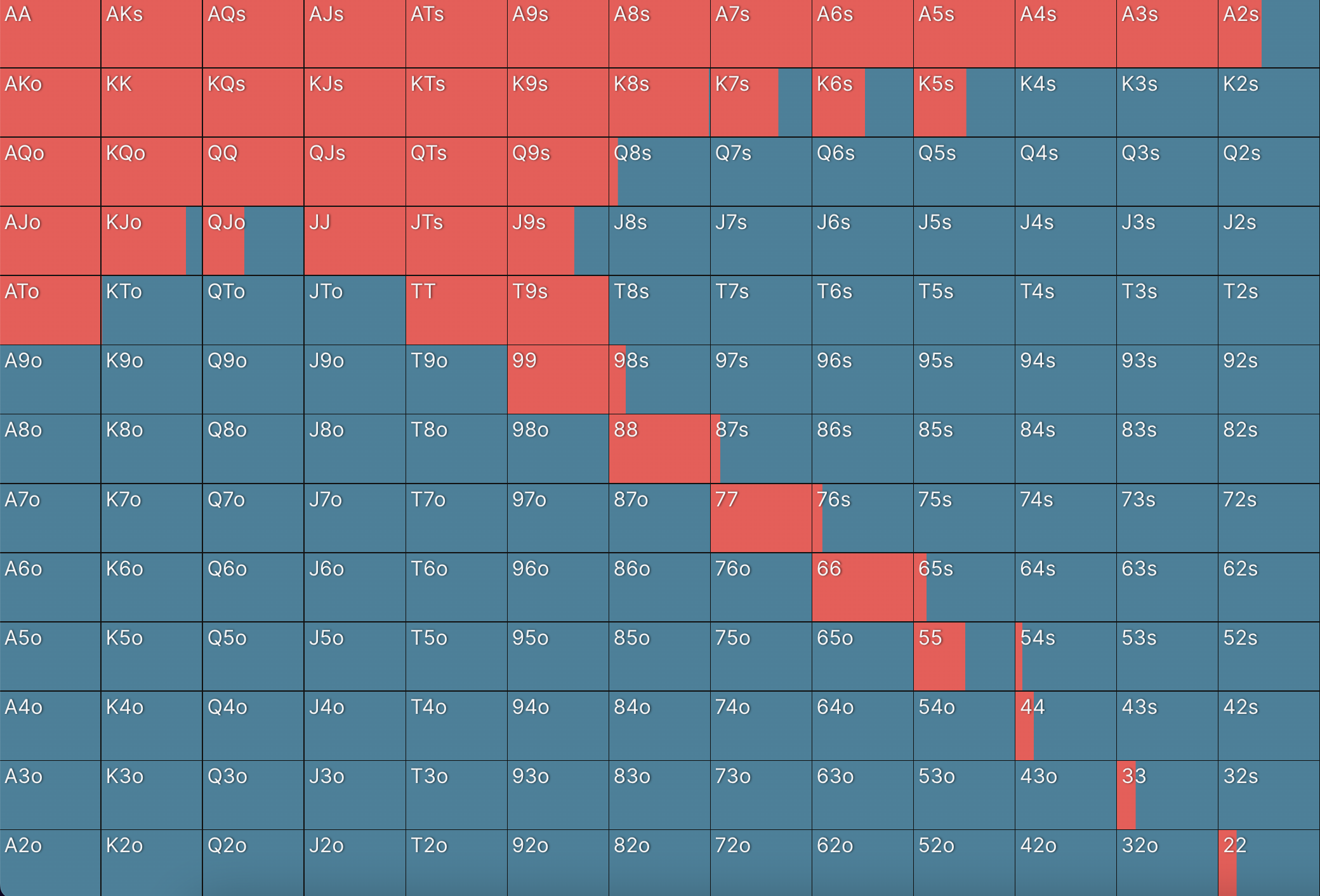
Here is a simple example of what I mean, this is a GTO 100 big blind UTG opening range for a six max cash game:
And this is the Big Blind's defending range:
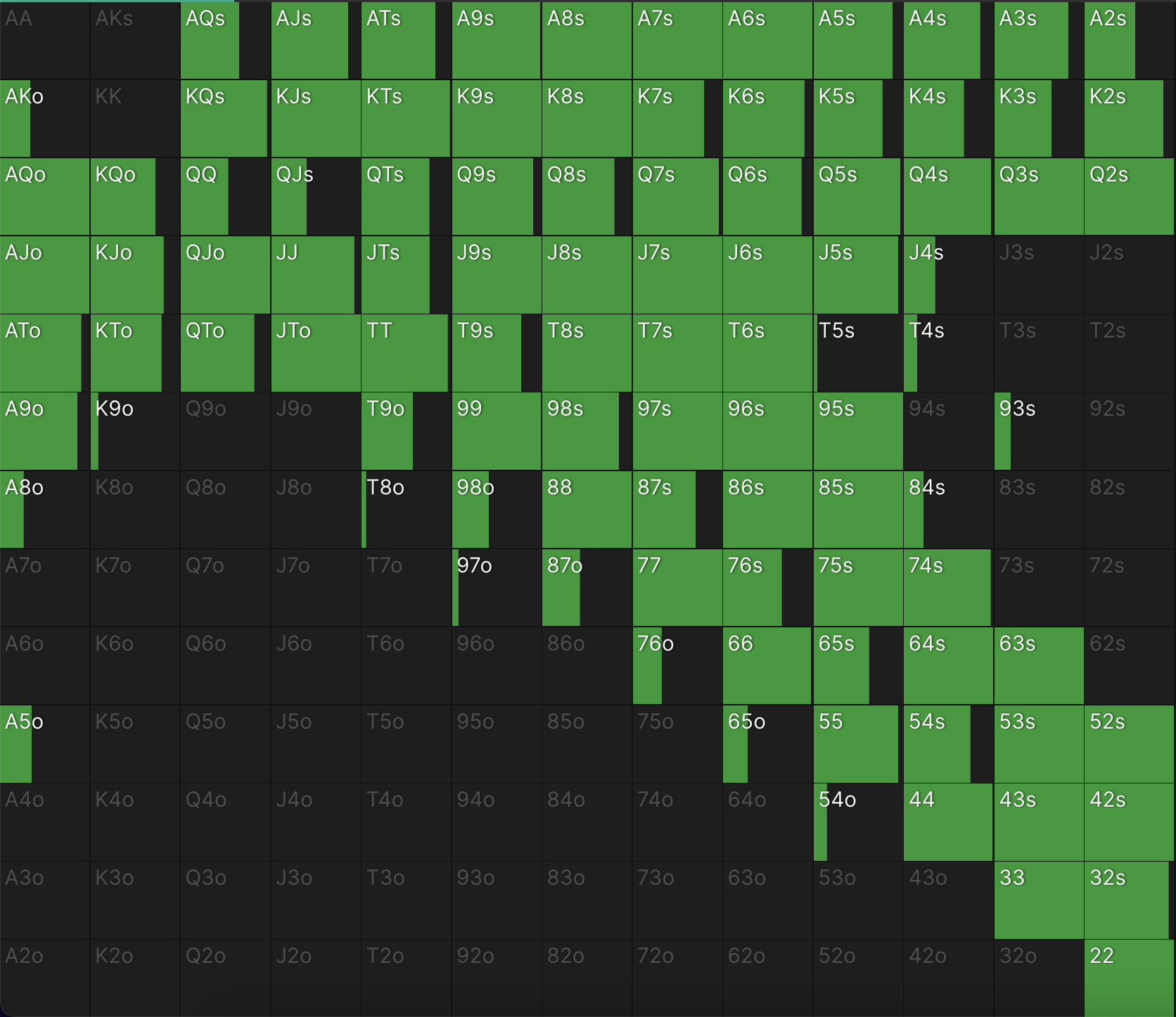
UTG has a much stronger, tighter, range and the Big Blind has a lot of middling to weak hands, so we will expect UTG to be betting more in this situation on the flop. We won’t delve into the whole game tree, but the betting differs greatly depending on the flop.
The range bet
For example on a K♣J♦T♣ flop, the Big Blind checks 100% of the time and UTG bets 100% of the time, mostly with a small 33% pot sized bet. This is what most players would call an ‘action flop’ and in real life games you would see big bet sizes here, but in this spot solvers bet small because UTG has so much value and the Big Blind not much at all.
UTG has both straights, all three sets, every combo of two pair, an overpair, the stronger one pair hands and the strongest combo draw hands like A♣J♣ and A♦K♦. The Big Blind doesn’t have Aces, has less sets, less combinations of straights and weaker top pair type hands. More importantly, the Big Blind misses this flop most of the time with hands like 87o and 52s, whereas UTG hits this flop with most of their range.
So while you will see UTG bet big in a live poker room in this spot, that bet will fold out most of the Big Blind’s range. The value bets in this scenario want to bet small because that is the best way for the Big Blind to continue with worse.
Polarised betting
What about if we make the flop T♦8♠4♠, all other details the same? The Big Blind still checks 100% of the time, but this time UTG will check back 43% of the time and the rest of the time will bet large, 76% of pot. Why is this?
UTG still has the stronger range overall, but the Big Blind is in a much better position. UTG has all the overpairs, but the Big Blind hits this board strongly much more than in the previous example. The Big Blind has more combinations of top pair, 2nd pair and two pair, and much more straight and flush draws. They both have the same amount of sets.
As such UTG can’t bet small into that range because there are too many hands that could check/raise them. Instead the broad strategy is to check back most of the medium strength hands like 66 or Q8, but bet with the really strong hands like sets, overpairs and strong combo draws like J♠9♠.
Because there are less hands in the in the value betting range and more bluffs, UTG gets to bet larger. This is what is called a polarised betting strategy, instead of having a wide range all of which hits the flop and a weak opponent’s range, here we have very strong hands and very weak hands, with an opponent who has enough strong hands to call a big bet. In this example our value bets want to bet big, the way that they are able to do this is by checking back all the medium strength hands but keeping in more bluffs to make it more likely our opponent will bluff catch with their own strong hands.
The bluff catcher
One last example, same spot but this time the flop is 6♠5♦4♣.
This time we do not see the Big Blind check, what actually happens is that they lead out for a small bet 81% of the time, which UTG always just calls against. In the rare instance the Big Blind checks, UTG checks back 60% of the time, even with very strong hands like overpairs. What is happening?
In this example the flop heavily favours the Big Blind. UTG never flops a straight or two pair here, but the Big Blind can. The Big Blind also flops a lot of high equity combo draw hands like 7♣5♣ which can hit a 3,5,7,8 to give it a very strong hand, or runner runner clubs to make a flush. UTG hardly has any of these hands and will often be in big trouble if they bet out.
As such the best way for them to get value with hands like AA or a set of sixes is to play passively. The Big Blind knows they should bet here and by playing a bluff catching style UTG extracts the most value from the bluffs without getting into trouble by raising.
Two identical ranges but three very different betting strategies based on the flop. In each case the primary strategy is built around how to get the maximum value for the strongest hands. When the entire range is strong the only way to get value is to bet small, otherwise you’ll get no action at all. When part of the range is strong but a middle part is not, the best strategy is to only bet the strongest portion of the range for a big bet size with enough bluffs to make bluff catching worth your opponent’s time. When your opponent has the stronger range, the best way to get value for your biggest hands is to let them take the betting lead and get value from more bluffs.
How do you get value for your biggest hands? Let us know in the comments:
