


Learning to Learn: Spaced Repetition
Cramming your poker study on single spots is not as effective as doing short bursts of study on lots of different areas.

In this series, I am looking at proven methods to improve learning and then applying them to poker. I have previously looked at Retrieval Practice (attempting to recall as a form of revision) and Chunking (breaking down complex information into smaller 'chunks').
Today I am looking at how the timing and frequency of your study has an impact on how much you retain.
Most people have a cramming mentality to study where they concentrate on one topic relentlessly for hours at a time. In working life, we champion 'grinding' ie. working very hard, so this mindset persists.
However, there is significant evidence that we should actually be spacing out our study and mixing it up.
The Spacing Effect
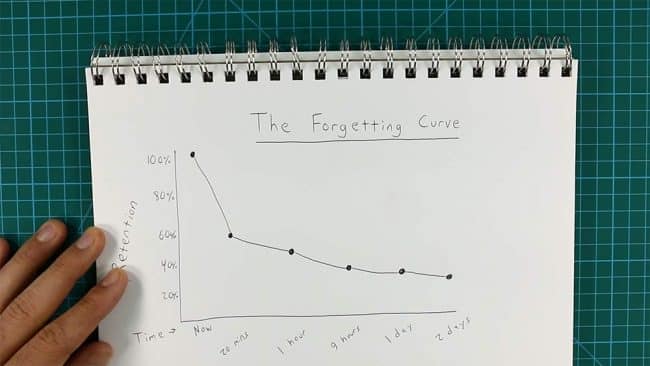
Spaced Repetition leverages a memory concept called the 'spacing effect'. Our brains learn more when we space out learning over time. This allows neural connections to solidify. Much like you have to wait for concrete to set when building a wall, you must allow new lessons time to embed themselves.
More importantly, spacing out study aids us in not forgetting what we have learnt. In theories, memories never quite disappear but our ability to retrieve them from memory does. By spacing out our study, we improve our ability to retrieve memories. Every time we retrieve a memory, we build the muscle of remembering.
This is one of the reasons why the flashcard system with tools like Anki (which I mentioned in my first article) works so well. We harness the power of Retrieval Practice and we can do so time and again. Regular quick bursts or regular recall practice is more powerful than cramming. Flashcard tools like Anki are also optimised to space out what they ask you for this reason.
Mix up your poker drills
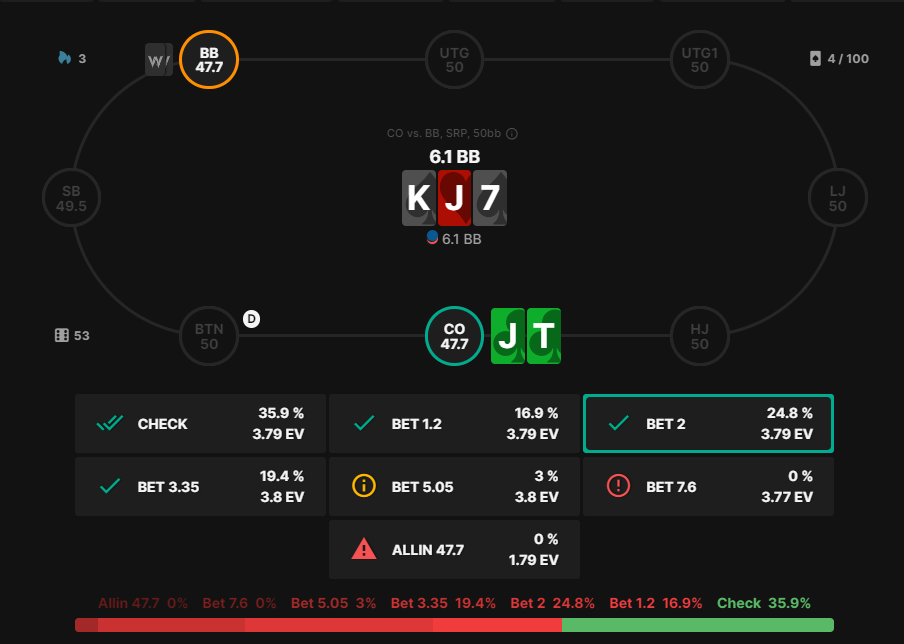
I can think of two ways in which Spaced Repetition can improve your poker study, both of which I have been doing so far in 2024.
First of all, it should stop you from cramming on single topics. My mindset before studying effective learning was that you should try and master one topic before moving on to the next. So study bet sizing relentlessly before you study defending ranges, etc. I think this may be why, despite the fact I have written eight poker books I have not improved more than I have. Each book is on a niche topic that I have essentially 'crammed' for when a better way to learn would be to tackle lots of topics in smaller bursts.
Secondly, you should mix up your study to include a lot of topics, in short intervals, every time. So, for example, I have GTO Wizard drills set up for multiple spots like Button vs Blind, Heads-Up, and also stuff like paired boards, monotone boards etc. Rather than practice one drill relentlessly, it is clearly much better to several all of them in shorter bursts. That way I get the benefit of retrieving what I had learned about those spots more often and sharpening my ability to access the memories.
It still has to be difficult with lots of time spent studying, don't get me wrong, but spacing lots of lessons out in shorter bursts is clearly more effective than hammering one spot relentlessly.
Do you use Spaced Reptition in your study? Let us know in the comments:
