


Mike Weeks answers your poker documentary questions
The creator of Drawing Dead answers your questions on documentaries, Dusty Schmidt's medical problems caused by playing online and poker as a career.
"Dusty is no longer having problems"
.JPG "Dusty") SniffvsSnaf: Hi Mike! I’m not sure if you are aware, off the recent hardships Dusty has gone and goes through. Apparently he claims and has some proof to it, that playing online poker in the amounts he did, is very unhealthy for the brain. Do you think that theme alone could be the basis for a Drawing Dead II... With Dusty’s story turning would you consider producing a sequel?
SniffvsSnaf: Hi Mike! I’m not sure if you are aware, off the recent hardships Dusty has gone and goes through. Apparently he claims and has some proof to it, that playing online poker in the amounts he did, is very unhealthy for the brain. Do you think that theme alone could be the basis for a Drawing Dead II... With Dusty’s story turning would you consider producing a sequel?
Mike Weeks: When I read Dusty's post, the first thing that struck me was that I could relate with what he was saying about his brain working differently, not just because of online poker, but because of the amount of digital stimuli I (we) expose myself (ourselves) to everyday.
When I was a kid the Internet was in it’s infancy, and most computers were used merely for word processing or playing Oregon Trail. We still collected baseball cards and built tree forts in the woods. In my adulthood, I'm in front of a computer screen for eight hours a day at work, afterwards at home I'm either working on my own computer or watching TV, and every moment in between I'm messing with my phone.
The generation before mine, generally rejects technology. Anyone who has ever attempted to teach his or her parents how to use an iPhone can relate. The generation after us however is being raised with technology. They had DVD players in their minivans and read Dr. Seuss on an iPad, they are training their brains to adapt to this sort of stimuli at the time in their lives when their brain is most malleable.
My generation was raised in the midst of the digital revolution. We were raised without it, but now as adults we've bombarded ourselves with it...and we haven't trained our brain to be able to tolerate that level of activity during our youth. Our brain’s evolution cannot keep up with the speed of technological innovation, so it seems reasonable to expect some kind of issue to arise. To top it off, online poker is at the extreme end of the spectrum of digital stimulation, specifically multi-tabling for long periods of time.
I did initially want to use Dusty's story to explore this observation after reading his post. However, that subject itself is another documentary, just like you said. It's much bigger than just "poker" and would take the focus off the direct risks of problem gambling.
Because of the fact that at the time of Dusty’s post my film was basically complete, and because Dusty was not fully comfortable exposing this new issue on film at that point, we decided to not include it in Drawing Dead. I am not ruling out the possibility of exploring this topic in a future project, but at this point no plans have been made to do so. The reality is creating a documentary could become a never-ending project if you let it. These are real stories about real people who are changing and growing everyday. At some point you just need to pick an ending. John Lasseter from Pixar said it best when he said, “Pixar films don’t get finished, they just get released”.
Since then Dusty has improved thanks to the help of the Amen Clinic, and provided this statement regarding his current state:
Dusty Schmidt: I am no longer experiencing any issues as a result of the extensive playing I did. As I pointed out in the blog post regarding my visit to the Amen clinic, it was a lack of ability to focus on simple tasks and anxiety that were the major problems. I no longer have any issues after doing the things the Amen Clinic told me I should do.
I am back playing again in amounts that don't harm my brain. Or at least minimal harm at most. I am also playing quite well and certainly consider myself anything but a "fallen hero." I'm definitely not a "hero" and I since I am playing a lot and doing well at it, I wouldn't say I'm "fallen" either.
"Poker teaches valuable life skills"
 ClerkenwellBoi: Every pleasurable activity has a potential downside to varying degrees - alcohol, drugs, sex, smoking, gym.... Some obviously more damaging than others!
So taking into account all the pluses and minuses that you have seen at close hand, do you believe that poker has - both on an individual and broader level - been a positive EV for society?
Mike Weeks: I don’t know to be honest. Like anything else, it has some good aspects, and some bad. I do think there are many valuable life skills one can learn from truly understanding the game of poker: calculating odds, understanding risk, reading non verbal cues & habits, socializing with similar interests… just to name a few. There are most definitely some self destructing behaviours closely associated with the game as well, but many things in life can be self destructive it you let it be.
Poker is only beneficial to society if poker players understand how to apply skills learned from the game to real life situations.
The most valuable lesson I learned from playing the game of poker is that sometimes you can do everything right, and still fall flat on your face.
There are two different kinds of people on this planet: those that adjust their future logic based on this unfavourable outcome, and those that understand the outcome is not as important as the logic.
I feel like being a poker player has helped me understand that I can only control so many things in this world, and failure is always a risk you must take in order to succeed. All I can do is use what I know to make the best decision possible, filter out cynicism, noise, and anomaly, then hope for the best.
"I don't think poker is a great long term career choice"
ahlinpoker: What does the title "Drawing Dead" symbolise?
Mike Weeks: It’s a complicated one to answer being that I am a poker player, and I personally have a lot of love for the game. That being said, in my opinion it’s a great game, not a long-term career choice. While I respect Dusty a great deal, and have gotten to know him better over the three years making this film, I came to one realisation sometime during the final edit. Dusty succeeded at poker for the same reason he succeeded at golf. He is one of the most focused guy’s I’ve ever met. He could probably take that focus into multiple fields and find success, he just happened to choose poker.
From what I’ve seen, the life of a professional online poker player is not one I’d want. I chose the name Drawing Dead to signify that for many people, specifically younger people who forgo learning marketable skills or developing a secure career to fall back on, in order to chase this dream of becoming a “professional poker player” marketed to them on TV, the odds are not in their favour. That’s one bet that definitely has low EV.
This film, and the title Drawing Dead, attempts to explain that. However Drawing Dead at the table means zero chance at success, which isn’t necessarily true. There is a chance you’ll hit the lottery and win a huge tournament that will finance your play for years, but after all of the years, the energy, the time you put into the game, what will you have to show for it? What contribution have you made to society? Could your time & energy been put to better use elsewhere? In most cases the answer is yes. Barry Carter from PokerStrategy actually posted something a few years back about this, entitled “The Poker Career Gap”. Every poker player should read this post.
"One click can change your life"
Fr0z3nByt3: After watching this, would a person who doesn't play poker be tempted to try it? And for the poker players watching this, would the story of Korpi make them more aware of the sick downswings that can happen or more motivated because of Dusty Schmidt's story?
Mike Weeks: Dusty’s story is and isn’t unique. It’s unique because it’s rare for someone to be so successful at the game, but its typical because that’s all anyone ever talks about in the poker community. People don’t talk about problem gambling as much. I think that’s what sets this film apart from the other “poker documentaries” out there.
In fact, it’s safe to assume most who watch this film already play poker, and if not, and it entices them to play, then great. At least they will go into the game with more knowledge of the risks than most, more knowledge than I did before I began playing online. Maybe that will help them maintain a responsible balance between playing a game and real life. Maybe it will help them control their Tilt. After all as addressed in the film, the words “Tilt” and “Compulsive Gambling” share the same DNA.
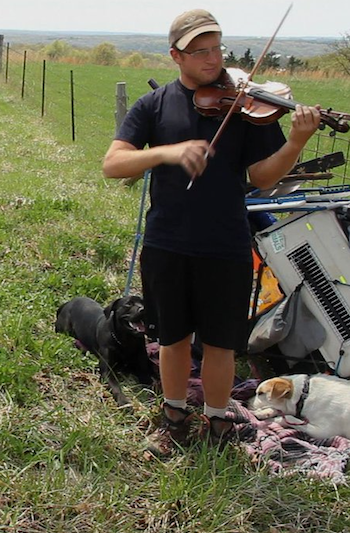
The reason I picked Michael to be in this film after meeting with various “problem gamblers” was because I felt I could relate to Michael in some way. I felt many poker players could.
It’s easy to just focus on the headline “kid steals credit card to gamble”, ignore the context, and distance yourself from Michael and his actions…but I know what it’s like to have bottomed out your poker account. I know what it’s like to reach for your credit card, and against your better judgment make another deposit, and another. I know what it’s like to overdraft your checking account, thinking I’ll just win to cover the $35 overdraft fee.
I think a lot more poker players can relate to Michael’s story than you think. Yes, there is a line that separates simple self destructive behaviour from criminal acts, but given Michael’s circumstances, that his friend gave him the credit card willingly at first and all it took was one click of a mouse to continue to play, I could see myself making the same mistake. One click. That’s it, and he’s in a documentary. Think about that. Think about how easy clicking a mouse is, and how compelling playing online poker is.
The only difference is that I would probably go to great lengths to make sure no one ever found out about it. I would be afraid of the judgment, afraid of the consequences. I would bottle it so deep down inside myself that my conscience would eat away at me for years, only to erupt at some point onto some underserving recipient.
Michael decided he wasn’t going to go out like that. Instead he decided to tackle his issues head on. He decided to use his story to help others by saying in so many words: by all means play, but understand the potential consequences. I admire him for that, and I wish more poker players would be honest about how play has affected their lives, instead of just bragging about some big win, or a one-outer they hit.
"Dusty is as responsible a player as any"
lui69: I was wondering about your motivation - What was your motivation to produce such a film and why did Dusty became your protagonist.
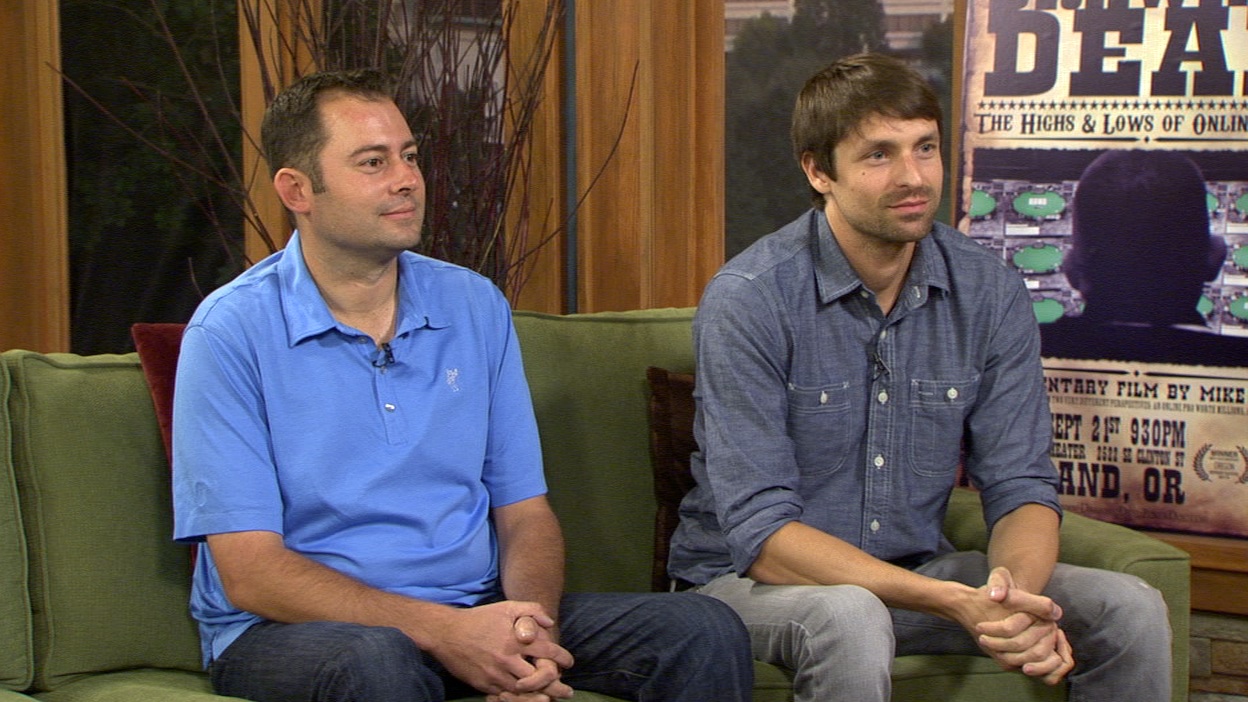
Mike Weeks: Dusty was an easy choice because he wasn’t a fuck up. He’s smart, calculated, and successful. He’s had his ups and downs like any player, but you never hear about Dusty partying it up with hookers in Vegas, or getting arrested with a kilo of cocaine. He’s as responsible a player as any, and he has the respect of the poker community. Plus we lived in the same city, and he agreed to do the film, so that was a plus!
The biggest motivation for me in making the film was seeing the marketing spectacle that poker became. For those of us who grew up with the game before Moneymaker, like myself, when it first broke through to the mainstream it was exciting. After a while though, it all seemed like such bullshit. I’m mostly referencing the over dramatizing of an already dramatic game with all these Cinderella stories, creating essentially a reality show to draw viewers in, then subtly selling them Jack’s Beef Jerky Links.
The thing is, if you take 100 poker players, One of them can succeed in the long term, 10 of them are succeeding in the short term convinced they will never lose, 85 of them are just playing for fun, and four of them are compulsive gamblers, and the game, or rather how they play the game, is destroying their lives. Watching TV I’ve heard plenty about the first guy, but nothing about the last four. Yet every poker player reading this now knows one of these four, these people who continue to play even though all logic should direct them to stop. Why are we so afraid to talk about problem gambling, when it’s such an inherent part of the game? It’s probably because it’s bad for business, or perhaps because we are afraid to find out what would happen when we do.
Let’s face it, playing a live game with buddies over a few beers, or a tourney at a casino is one thing, but having access to play multiple tables with real money at any time of the day all day, is another. Let’s be realistic with the risks and have a few hard conversations.
In a nutshell, my motivation for creating this film was to help start getting poker players to talk about problem gambling. I hope for a day where online poker is legal in the US, but you are unable to make 10 back-to-back deposits in one day using a credit card. That seems crazy to me.
Congratulations to our winners
 Thank you to everyone who participated and thanks to Mike and Dusty for answering our questions.
Everyone who has had a question answered here has won a copy of Drawing Dead.
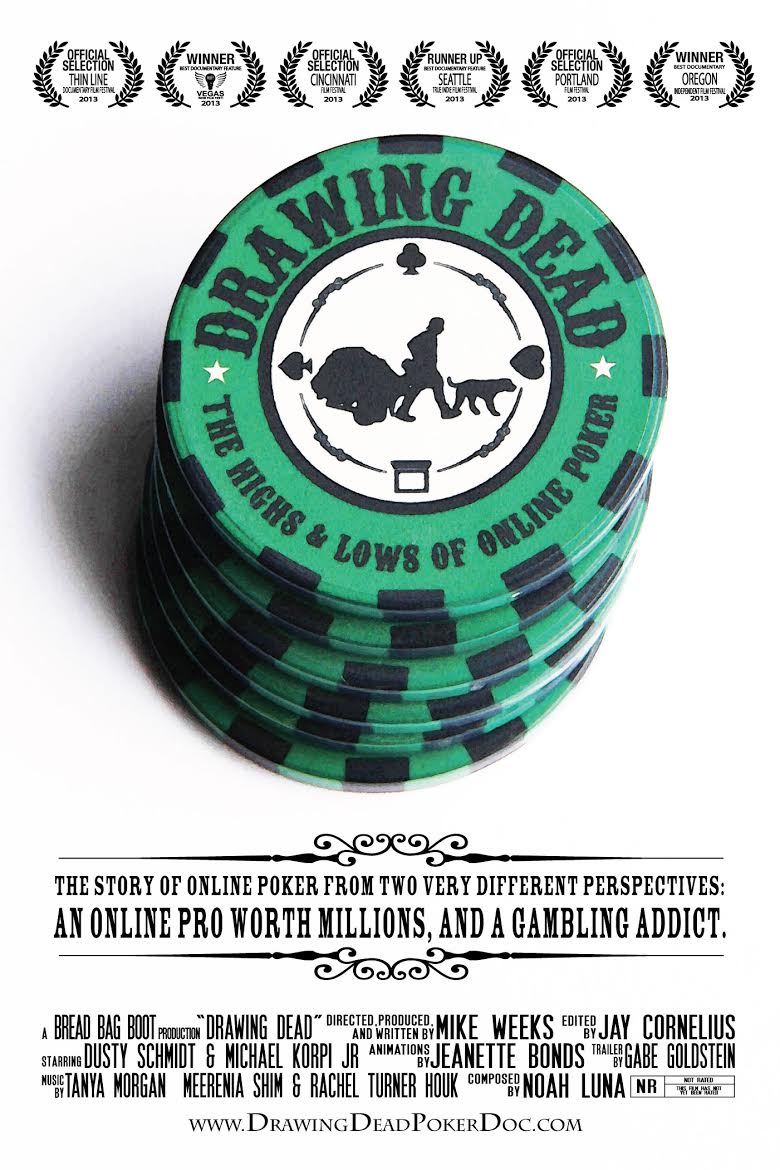
Drawing Dead, the poker documentary starring Dusty 'Leatherass9' Schmidt, is now available to buy in Europe. You can buy it on iTunes, as well as getting versions with French, Spanish, German, Italian, Japanese, and Portuguese subtitles direct from the Drawing Dead website.
