


Mystery Bounty strategy
How do you adjust in the new format at GGPoker where the bounty can be tiny or life changing, but you don't know what it is till after you win it?
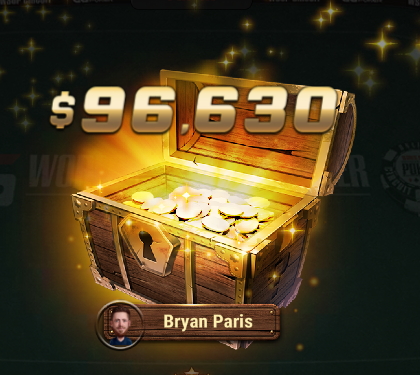
The Mystery Bounty format has already taken over live poker and now it looks poised to do the same online after it debuted on GGPoker last weekend.
So far in the format it takes place over more than one day or phase. The first Day plays like a regular freezeout, the second day sees the Mystery Bounties come into play. There are the same number of bounties as there are surviving Day 2 players and most of them will be for a small amount, but a few will be for a large amount and a handful will be for an amount bigger than the regular first prize.
For example a Mystery Bounty with 70 players on Day 2 might have 45 bounties worth $500, 15 bounties worth $1,000, five bounties worth $2,000, three bounties worth $5,000 and two bounties worth $20,000.
At no point does anyone know how much the bounty is on another player until they have been eliminated, where the bounty is awarded at random from the remaining bounty pool. In the case of live tournaments the players find out which bounty they have won after they themselves have been eliminated (they collect all their bounties when they exit the event).
The correct strategy in Mystery Bounty tournaments is to assign any given bounty with the average value of the remaining bounties. So in the example above, the average bounty is worth $1,464. As long as the biggest bounties have not been claimed, the average bounty size will be high.
The Chip Conversion method
I cowrote PKO Poker Strategy with Dara O”Kearney and we devised a formula for calculating the odds you need to call for a bounty, based on the value of the bounty and also the progressive nature of the format. We dismissed what is known as the ‘chip conversion’ method because it didn’t really take into account the progressive value of bounties. However, chip conversion is the better method to use in Mystery Bounties.
In the chip conversion method the value of the bounty is added to your hand analysis as if it were extra chips in the pot. If a starting bounty is worth 1/3 of your buy-in then it is worth an extra 1/3rd of your starting stack, which you treat like it is dead money in the pot.
So let’s say in our example above the buy-in is $3,000 and that gets you a 10,000 starting stack. The average bounty is currently $1,464 which is 48.8% of the buy-in, so a bounty is worth 4,880 chips. Just add 4,880 chips to the pot as dead money like antes or a bomb pot in a cash game, and adjust your strategy accordingly.
Now let's imagine the $20,000 bounty has been won and 69 players remain. That would bring the average bounty down to $1,195 or an extra 3,980 chips in the pot.
As you can imagine, the later you get in the tournament the less significant the bounties will become, both because those extra chips are much less of a percentage of the overall pot and also because you are nearing the payout stage.
Day 1 strategy

There are no bounties on Day or Phase 1, for good reason. To be able to boast generous random bounties you can't award them from the start or the smallest bounty prizes would be tiny and not worth winning. This format could probably be extended to one day tournaments by only having the bounties kick in after late registration.
With that in mind, does Day 1 play like a normal 'vanilla' MTT? Not exactly.
There is a real value to ending the day with an above average stack so that you cover a lot of players when the bounty stage comes in. As my co-author Dara told the PokerStars Blog:
This creates a satellite ICM effect near the end of Day 2 where risking giving up a big stack if it meant going below 30BBs was a big mistake. However, at the start of Day 1 play should be looser, because you are heavily incentivised to end the day with a big stack. Day 1 is essentially a phase satellite into a KO tournament on Day 2.
If you are a short stack on Day 1 it might be worth gambling at the end of the day.
Probably the biggest mistake a player could make in a Mystery Bounty is to overvalue bounties when a lot of players remain and the biggest bounties have not been claimed. That is probably where the value is too, as players gamble way too much on the off chance they win a life changing sum in the early stages.
Do you like the look of this format? Let us know in the comments:
