


Talking Anonymous Tables and Boot Camp with lnternet
PokerStrategy.com coach lnternet shares his thoughts on anonymous tables and next month's Boot Camp for Platinum players.

"Boot camp leads to a steeper learning curve"
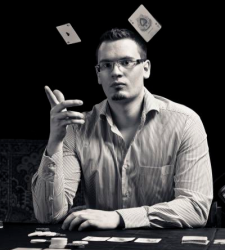
 PokerStrategy.com: You are about to teach at our Boot Camp, what do you think of this format?
 lnternet: In poker, learning is a solitary endeavor for most players. You read a book or watch a video by yourself. You read the forums and post by yourself. There may be a sense of community, but in the end, you report to nobody, no one grades your progress.
On a related idea, most learning is not guided. You absorb content fairly randomly on your own. A video here, an article there, a book someone recommended.
The opposite to both of these is learning in a team, adhering to a schedule. The team component allows for feedback and result checking. You move away from solitude and are part of a group. A schedule, worked out topics, ideas and concepts, helps to guide the learning process. You see the broader picture and how one idea relates to the next.
The Boot Camp and Poker School 2.0 project at PokerStrategy.com aim to build a team and schedule for improving poker. This will likely lead to a steeper learning curve than working in solitude.
PokerStrategy.com: You said learning in solitude is harder but what is the best way to learn alone?
lnternet: Reviewing past decisions is vital. You should think about the hand you just played, the session you just ended, the month you just saved a screen shot of the graph of. The reviewing process should be checked and updated by external sources periodically such as videos or coaches.
Hiring a coach is an investment which at worst loses a buy-in or two and at best elevates your decision and review process to a new level.
PokerStrategy.com: Can you think back to some of the most important lessons you learned as a player? The ones which changed your game dramatically?
lnternet: Unfortunately there is no quick get-rich tricks I can explain in two sentences. It takes a lot of time and effort to achieve success. The most recent aha-moment I had was during Philip Newall's latest book, where he eloquently explained the no loss-leader concept. This helped me bucket a cloud of reasoning in my own head into a concise little idea.
PokerStrategy.com: What do our Boot Camp players typically struggle with?
lnternet: Again, there is no quick get-rich answers. One thing which might help some players is to not focus on the big pots all the time. A lot of the money is made or lost in pre-flop spots and sizing in c-bet situations. Whether to 4bet-or-not QQ 200bb deep or to hero-call a river is not as significant for a long term winrate, yet most questions or threads are about the latter.
"Anonymous tables take you back to the basics"
| About Boot Camp |
 Our December Boot Camp starts on Sunday. Our December Boot Camp starts on Sunday.
Throughout the two weeks, we will be releasing a minimum of seven new videos for our Platinum+ members. The cornerstone of Boot Camp is a series of coaching sessions from our top coaches including Our Boot Camp sub-forum will be available to all Platinum members and higher. Members are encouraged to either continue their blogs from the last Boot Camp or start a new blog, though it isn't mandatory. Our coaching team will be active in the forums throughout the two weeks. |
PokerStrategy.com: You recently filmed a video at Anonymous tables - what do you think of the format?
lnternet: Anonymous is a useful format for my way of teaching poker. Using stats and reads gets in the way of playing solid fundamental poker. That is not to say that stats and reads are useless, quite the opposite, they are an integral part of poker.
But often these skills are projected as the primary source of decision making. For example, "I c-bet here because he folds to c-bets 50%", is not a fruitful reasoning. There are reasons for and against betting far more fundamental and important than the average fold frequency over all similar situations.
So in that sense I enjoy anonymous games, you have to rely on basics over reads; not to say you can't make a read in those ano-games.
PokerStrategy.com: Do you find more regs, or more recreational players, play in them?
lnternet: A fair amount of recreational player just want to play whatever game is up quickly and enjoy themselves. They do not care who they are playing against or what the format is, it just needs to be fun to play.
Then there are those playing more regularly which will develop some preferences. I don't think I'm qualified to judge what those preferences are.
In any case there are recreationals at ano-tables, just as there are on regular tables, and games tend to run in a similar 5:1 reg:rec ratio, although that ratio stabilizes a bit slower.
PokerStrategy.com: Do you find regs not giving action are hurting your non-anonymous games?
lnternet: I believe a lot of games would run if they didn't miss out on being started, unfortunately. Recreational players tend to join a running game much more readily than an empty or non-running game. For that reason I would say the general sit-out mentality does hurt the overall economy. But as a typical tragedy of the commons this is not fixable by the individuals, it's a system property that can only be fixed at system level..
PokerStrategy.com: Thanks lnternet, we look forward to seeing you at Boot Camp.
 See more of our recent interviews with the biggest names in poker
