


The difference between fractional/decimal/American odds
If you got confused by the way people were talking about the odds during the US election, here is a guide to the three betting formats.
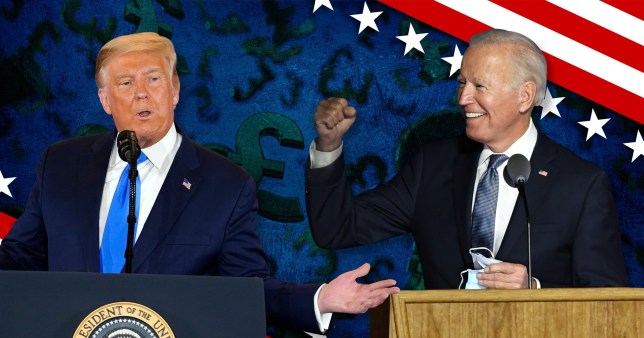
If you have been following the US election you may have noticed the odds being talked about in different ways. For example at one point Joe Biden was 1/2, 1.5, -200 or 66.7% all at the same time.
Whether you like to bet on markets or not it is a useful thing to be aware of as a poker player. What you are looking at there is the difference between fractional odds, decimal odds, American odds and implied probability.
Fractional Odds

The most commonly used odds format, especially in the UK and Ireland. They are displayed in the format of two numbers with a slash between them, ie. 2/1.
The first number is the amount you can win, the second number is the amount you have to stake. So if a bet is 2/1 you would have to bet $1 to win $2. The amount of money you would get back would be $3 (your $2 profit and $1 stake).
At the time of writing Joe Biden is 1/2 to win the election and Donald Trump is 13/8. If you bet $10 on Biden you would get $15 back ($10 stake + $5 profit), if you bet $10 on Trump you would get $26.25 ($10 stake + $16.25 profit). The lower return for Biden means that he is the favourite to win.
Notice that Trump is not automatically 2/1 to win even though Biden is 1/2, the small difference is essentially how the bookmakers make a profit regardless of the outcome, by charging a small premium on the odds.
Decimal Odds

Decimal odds are common in Europe and Australia, but have become more mainstream in recent years especially since Betfair was launched. They are arguably easier to understand than fractional odds.
A decimal odd shows you the amount you would win, including your stake, if you bet one unit ($1/€1/£1). They are always shown as a number above 1 with a decimal point, like 2.0.
In the same example as before, Joe Biden at 1/2 is 1.5 in decimal odds (A $10 bet would return $15 total) and Trump at 13/8 would be shown as 2.63 (a $10 bet would return $26.3 - note that it rounded up compared to the previous example, decimal odds are shown to two decimal points).
American Odds

This is where some may get confused, because we don't see Americans talking so much about sports betting odds so the way they show their working out can be confusing to some.
American odds, or 'Moneyline' odds are shown as a plus or a minus amount, ie. -200 or +200, The moneyline indicates the amount you would need to wager to win $100, then depending on whether your pick is the favourite shows a plus for the underdog or minus amount for the the favourite.
One more time, on the moneyline for the above example, Biden is -200 and Trump is +163. That means to win $100 profit on Biden, you would have to wager $200, but if you bet $100 on Trump you would make $163 profit.
Implied Probability
.jpeg)
You probably won't see people making wagers with percentages but they are useful to provide context for the other three types of betting format.
You can convert betting odds into an implied percentage chance of happening, which is very important for you to cross reference with your own assessment of the thing you are betting on.
The 1/2 odds for Biden implied he was 66.7% likely to win the election the 13/8 odds for Trump when we wrote this implied a probability of 38.1%. If you think Biden was 66.7% likely or better to win the election, then the 1/2 odds are a good bet. If you think Trump was only 20% to win the election, then the 13/8 odds are not worth it and you would want closer to 4/1.
We have compiled how to convert the different types of odds to the others and you can play around with all of them using the calculator below:
Have you bet on the election? Let us know in the comments:
