What crushers understand about medium pairs l Strategy with Barry
Barry has been watching more high-stakes final tables and has noted that elite poker players play medium pocket pairs differently to the rest of us.
As I mentioned in a previous article, I have been getting a lot out of watching online final table replays with elite players. One of the big differences between how nosebleed players act on their felt and the rest of us is how they play medium strength pocket pairs at final tables.
It has been very common to see one player raise from early position and a middle-position player insta-fold hands between 77-TT. Hands I think most players would feel obliged to at least see a flop with.
These are actually tricky hands to play when ICM pressure is significant, because you'll inevitably be over-calling or over-folding on the flop with them. The odds of making a set are 7 to 1, which means most of the time you have a tough spot with them. Even when you do make a set, it sometimes won't be good.
Likewise, especially at elite final tables, there will be a high proportion of squeezing, which makes flatting with medium pocket pairs even less attractive.
Understanding Risk Premium
Let's look at an example spot from a final table sim from GTO Wizard, this is the table setup:
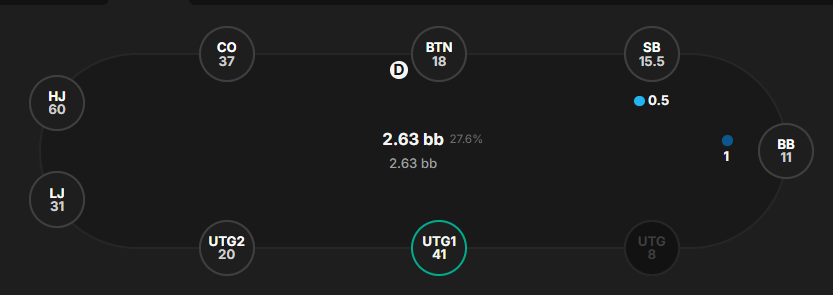
In this spot, UTG1 opens off of 41bbs, and this is the range of the LJ with 31 bbs.
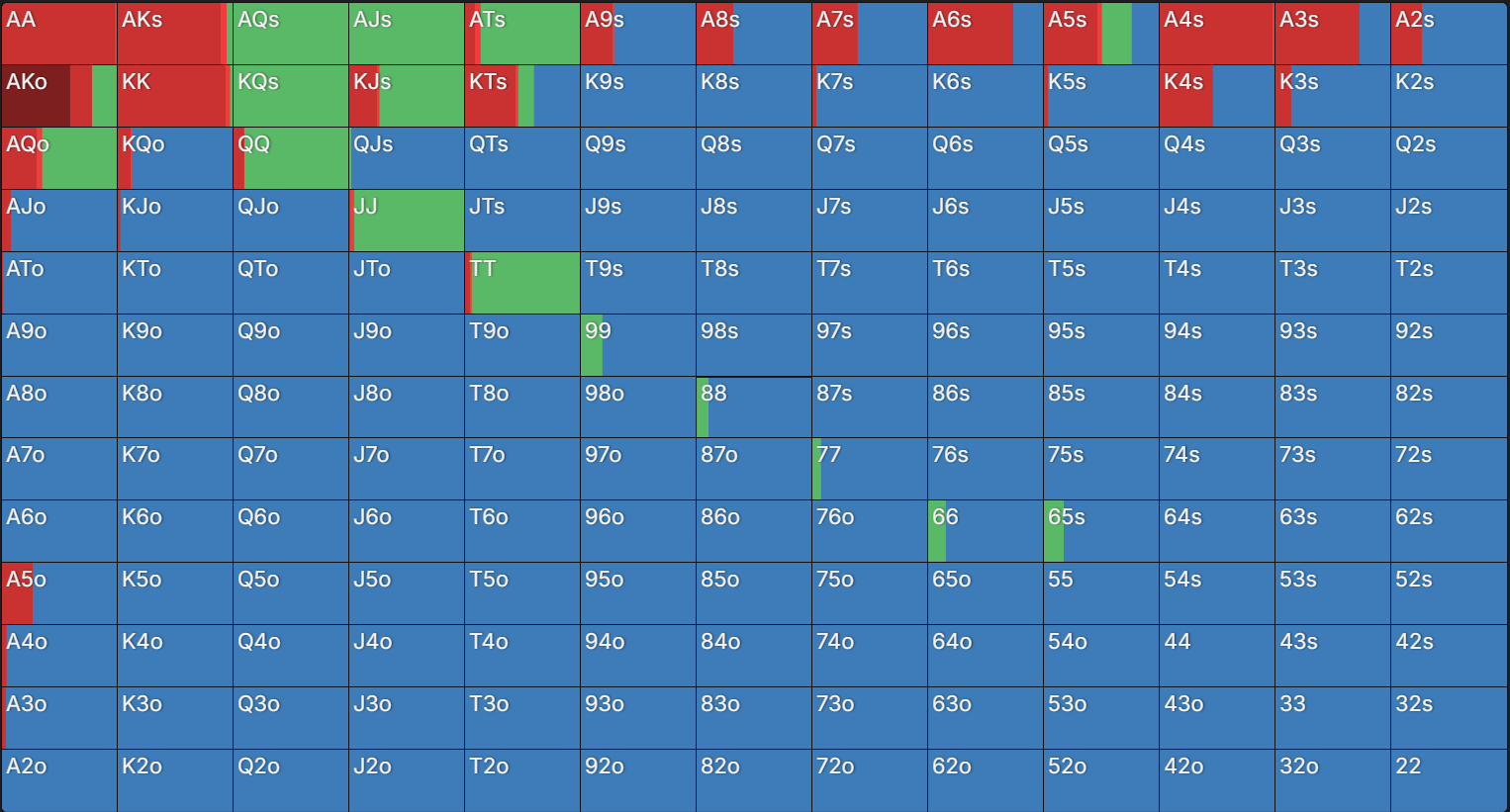
As you can see, they play very passively with TT-QQ, and everything 99 and below is mostly folded. I think most players would struggle to throw away 77+ In this spot, but at elite final tables, you see the players folding to a single open without any hesitation.
The reason for this is that they understand the significant risk premiums involved, which you can see below:
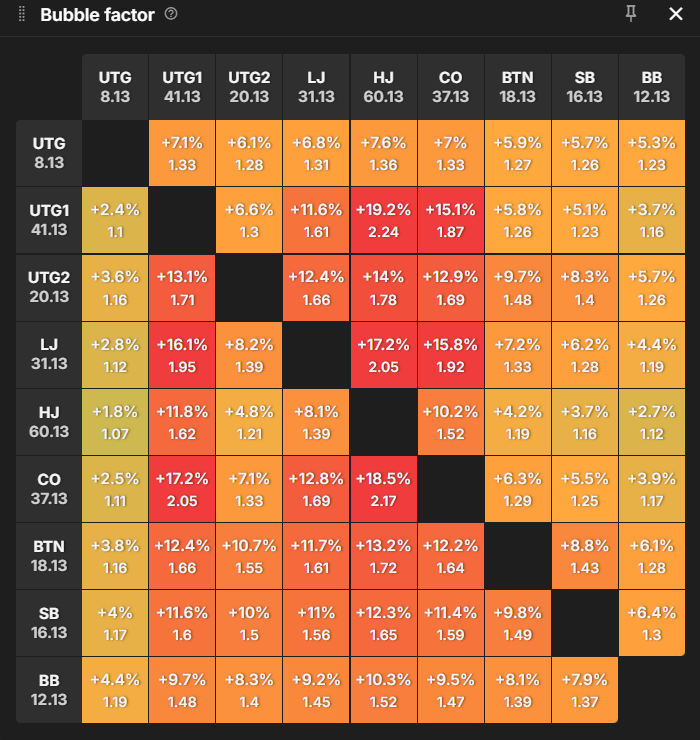
At final tables, it is the medium stacks who have the most ICM pressure on them. Right now, the LJ is likely to ladder ahead of five other players whom they cover, it would be a disaster to go broke against one of the few players who cover them. Against UTG1, their risk premium is 16.1%, which means they'll need to be a 56.1% favourite before factoring in pot odds to justify potentially going broke.
Hands like 77-99 and never going to be in that good a shape against a UTG1 opening range, which is why they become instinct when they would be played 100% of the time if it was a ChipEV scenario.
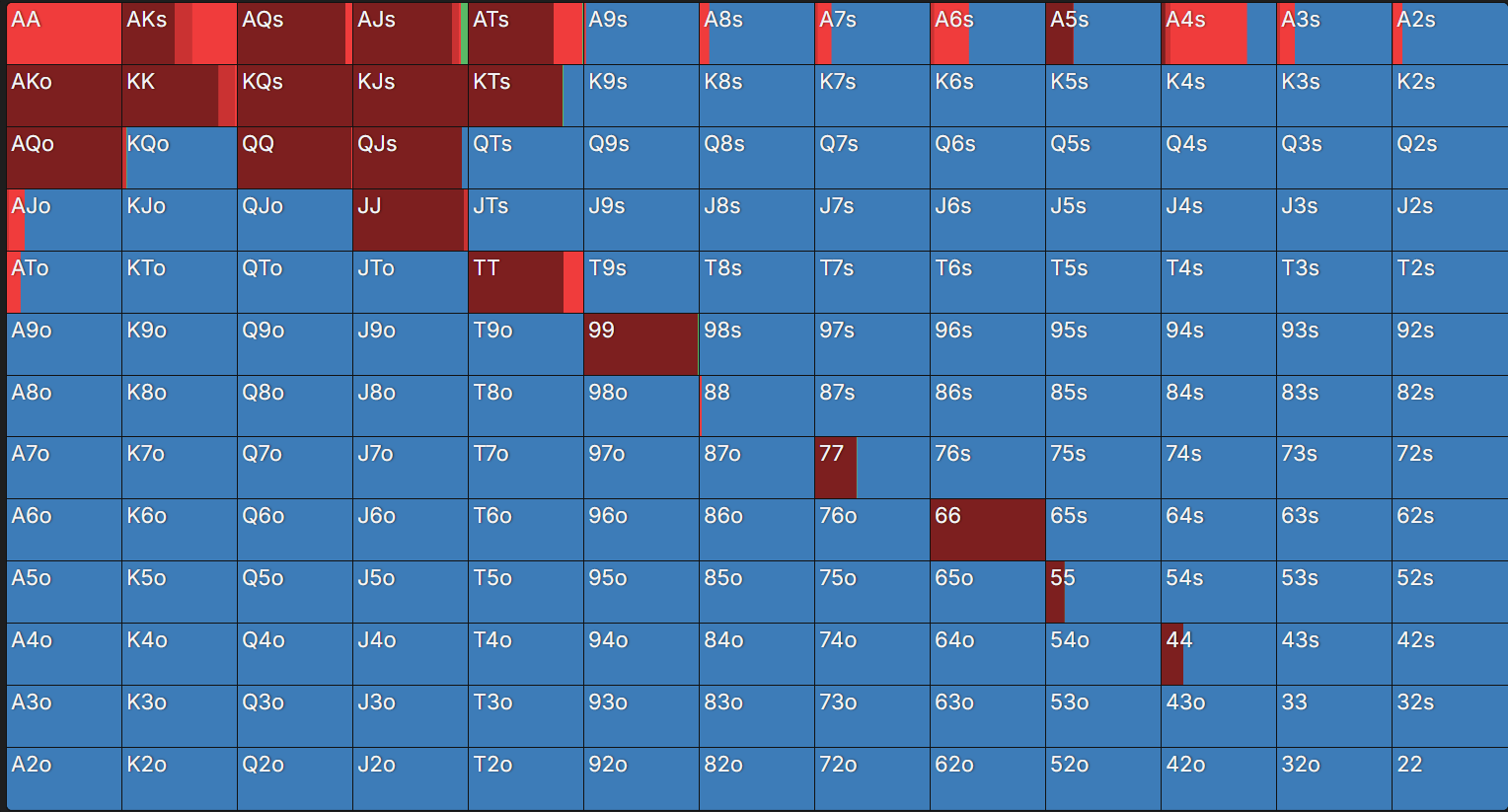
In contrast, if the LJ gets out of the way, this is the BTN range against the UTG1 open. The BTN is one of the shorter players, with 18 bbs and a much lower risk premium. 99 gets it in all of the time, and smaller pairs than that get it in much more often too.
This is one of many recent insights I've uncovered from watching elite final tables. I intend to do it a lot more, and I've been doing them with my coach also, so expect more content like this. I believe it is one of the best free ways to learn from the game in the modern era.